The Helsinki Spring

I spent the month of September lecturing, and interacting with (literally) thousands of entrepreneurs in two emerging startup markets, Finland and Russia. This is the first of two posts about Finland and entrepreneurship.

——

I was invited to Finland as part of Stanford’s Engineering Technology Venture Program partnership with Aalto University. (Thanks to Kristo Ovaska and team for the fabulous logistics!) I presented to 1,000’s of entrepreneurs, talked to 17 startups, gave 12 lectures, had 9 interviews, chatted with 8 VC’s, sat on 4 panels, talked policy with 2 government ministers, 2 members of parliament, 1 head of a public pension fund and was in 1 TV-documentary.

What I found in Finland was:
  • a whole lot of smart, passionate entrepreneurs who want to build a startup hub in Helsinki
  • a government that’s trying to help, but gets in the way
  • a number of exciting startups, but most with a narrow, too-local view of the world
  • and the sense that, before too long, they may well get it right!

While a week is not enough time to understand a country this post – the first of two – looks at the Finnish entrepreneurial ecosystem and its strengths and weaknesses.

The Helsinki Spring
Entrepreneurship and innovation are bubbling around Helsinki and Aalto University. There are thousands of excited students, and Aalto university is working hard to become an outward facing institution. Having a critical mass of people who think startups are cool in the same location is a key indicator of whether a cluster can catch fire. Finnish startup successes on a global stage include MySQL, F-Secure, Rovio, Habbo, PlayfishThe Switch, TectiaTrulia and Linux. While it’s not clear yet whether the numbers of startups in Helsinki are sufficient to ignite, it feels like it’s getting there, (and given the risk-averse and paternal nature of Finland that by itself is a miracle.)

The good news is that for a 5 million person country, there’s an emerging entrepreneurial ecosystem that looks like something this:

9-to-5 Venture Capital
Ironically one of the things that’s holding back the Finnish cluster is Tekes, the government organization for financing research, development and innovation in Finland. It’s hard enough to pick which existing companies with known business models to aid. Yet Tekes does that and is trying to act like a government-run Venture Capital firm. At Tekes, government employees (and their hired consultants) – with no equity, no risk or reward, no startup or venture capital experience – try to pick startup winners and losers.

Tekes has ended up competing with and stifling the nascent VC industry, indiscriminately handing out checks to entrepreneurs like an entitlement. (To be fair this is an extension of the government’s role in almost all parts of Finnish life.)

In addition to Tekes, Vigo, the government’s attempt at funding private business accelerators, started with good intentions and got hijacked by government bureaucrats. The accelerators I met with (the ones the government pointed to as their success stories) said they were leaving the program.

Tekes lacks a long-term plan of what the Finnish government’s role should be in funding startups. I suggested that they might want to consider putting themselves out of the public funding business by using public capital to kick-start private venture capital firms, incubators and accelerators. And they should give themselves a 5-10 year plan to do so.  Instead they seem to be stuck in the twilight zone of not having a long-term vision of their role. (There has been tons of reports on what to do, all seemingly ignored by an entrenched bureaucracy.)

Lack of Business Experience
Direct government funding of startups has also delayed the maturation of business experience of local angels and VC’s. Finnish private investors don’t yet have enough time-in-grade to have developed good pattern recognition skills, and most lack operating backgrounds. I have no doubt they’ll get there by themselves, but in wouldn’t take much imagination to attempt to recruit some seasoned overseas investors to add to the mix.

Even a more serious challenge is the lack of global business competence. The number of serial entrepreneurs is very low and until recently most of the talented sales and marketing professionals choose to work for Nokia.

Part 2 with more observations about Finland and the Lessons Learned is here.
Listen to the post here: Download the Podcast here

The Pay-It-Forward Culture

Foreign visitors to Silicon Valley continually mention how willing we are to help, network and connect strangers.  We take it so for granted we never even to bother to talk about it.  It’s the “Pay-It-Forward” culture.

——-

We’re all in this together – The Chips are Down
in 1962 Walker’s Wagon Wheel Bar/Restaurant in Mountain View became the lunch hangout for employees at Fairchild Semiconductor.

When the first spinouts began to leave Fairchild, they discovered that fabricating semiconductors reliably was a black art. At times you’d have the recipe and turn out chips, and the next week something would go wrong, and your fab couldn’t make anything that would work. Engineers in the very small world of silicon and semiconductors would meet at the Wagon Wheel and swap technical problems and solutions with co-workers and competitors.

We’re all in this together – A Computer in every Home
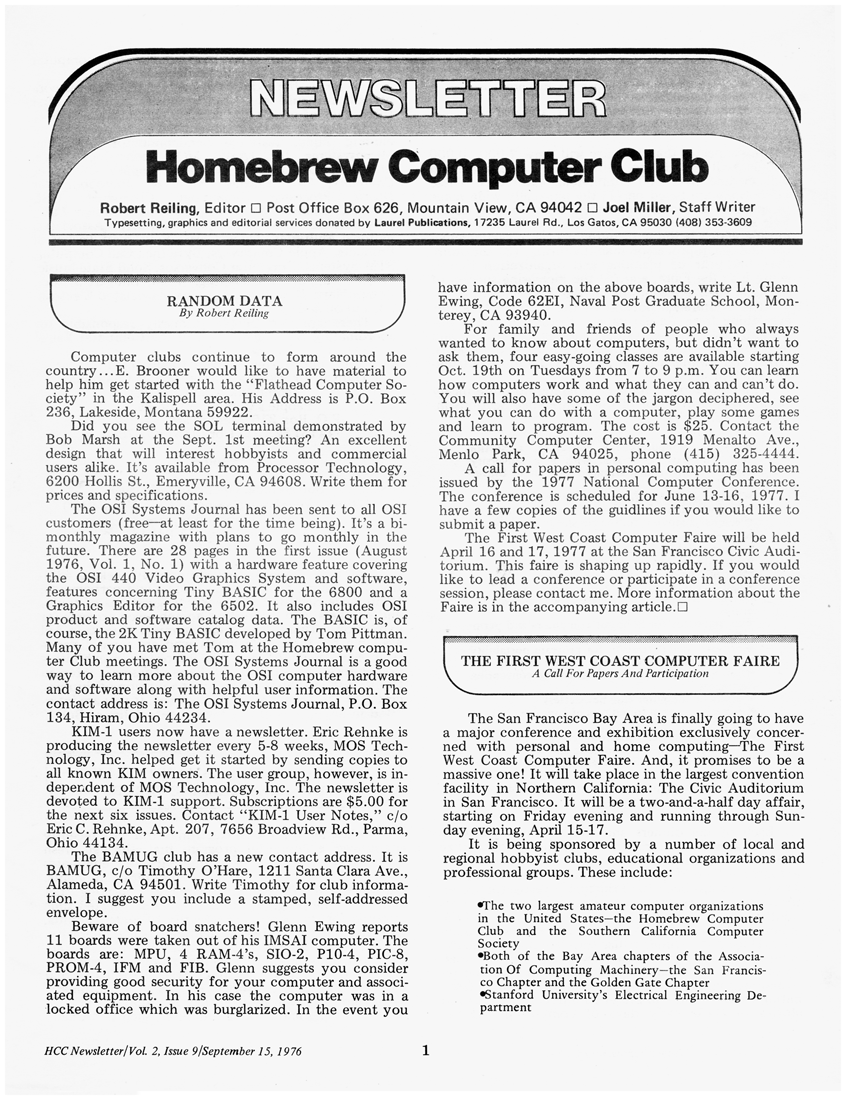
In 1975 a local set of hobbyists with the then crazy idea of a computer in every home formed the Homebrew Computer Club and met in Menlo Park at the Peninsula School then later at the Stanford AI Lab. The goal of the club was: “Give to help others.” Each meeting would begin with people sharing information, getting advice and discussing the latest innovation (one of which was the first computer from Apple.) The club became the center of the emerging personal computer industry.

We’re all in this together – Helping Our Own
Until the 1980’s Chinese and Indian engineers ran into a glass ceiling in large technology companies held back by the belief that “they make great engineers but can’t be the CEO.”  Looking for a chance to run their own show, many of them left and founded startups. They also set up ethnic-centric networks like TIE (The Indus Entrepreneur) and the Chinese Software Professionals Association where they shared information about how the valley worked as well as job and investment opportunities. Over the next two decades, other groups — Russian, Israeli, etc. — followed with their own networks. (Anna Lee Saxenian has written extensively about this.)

We’re all in this together – Mentoring The Next Generation
While the idea of groups (chips, computers, ethnics) helping each other grew, something else happened. The first generation of executives who grew up getting help from others began to offer their advice to younger entrepreneurs. These experienced valley CEOs would take time out of their hectic schedule to have coffee or dinner with young entrepreneurs and asking for nothing in return.

They were the beginning of the Pay-It-Forward culture, the unspoken Valley culture that believes “I was helped when I started out and now it’s my turn to help others.”

By the early 1970’s, even the CEOs of the largest valley companies would take phone calls and meetings with interesting and passionate entrepreneurs. In 1967, when he was 12 years old Steve Jobs called up Bill Hewlett the co-founder of HP.

In 1975, when Jobs was a young unknown, wannabe entrepreneur called the Founder/CEO of Intel, Bob Noyce and asked for advice. Noyce liked the kid, and for the next few years, Noyce met with him and coached him as he founded his first company and went through the highs and lows of a startup that caught fire.

Steve Jobs and Robert Noyce

Bob Noyce took me under his wing, I was young, in my twenties. He was in his early fifties. He tried to give me the lay of the land, give me a perspective that I could only partially understand,” Jobs said, “You can’t really understand what is going on now unless you understand what came before.”

What Are You Waiting For?
Last week in Helsinki Finland at a dinner with a roomful of large company CEO’s, one of them asked, ”What can we do to help build an ecosystem that will foster entrepreneurship?” My guess is they were expecting me talk about investing in startups or corporate partnerships. Instead, I told the Noyce/Jobs story and noted that, as a group, they had a body of knowledge that entrepreneurs and business angels would pay anything to learn. The best investment they could make to help a startup culture in Finland would be to share what they know with the next generation. Even more, this culture could be created by a handful of CEO’s and board members who led by example. I suggested they ought to be the ones to do it.

We’ll see if they do.

——

Over the last half a century in Silicon Valley, the short life cycle of startups reinforced the idea that – the long term relationships that lasted was with a network of people – much larger than those in your current company. Today, in spite of the fact that the valley is crawling with IP lawyers, the tradition of helping and sharing continues. The restaurants and locations may have changed, moving from Rickey’s Garden Cafe, Chez Yvonne, Lion and Compass and Hsi-Nan to Bucks, Coupa Café and Café Borrone, but the notion of competitors getting together and helping each other and experienced business execs offering contacts and advice has continued for the last 50 years.

It’s the “Pay-It-Forward” culture.

Lessons Learned

  • Entrepreneurs in successful clusters build support networks outside of existing companies
  • These networks can be around any area of interest (technology, ethnic groups, etc.)
  • These were mutually beneficial –  you learned and contributed to help others
  • Over time experienced executives “pay-back” the help they got by mentoring others
  • The Pay-It-Forward culture makes the ecosystem smarter

Listen to the post here:

Download the Podcast here

Why Governments Don’t Get Startups

Not understanding and agreeing what “Entrepreneur” and “Startup” mean can sink an entire country’s entrepreneurial ecosystem.

———

I’m getting ready to go overseas to teach, and I’ve spent the last week reviewing several countries’ ambitious attempts to kick-start entrepreneurship.  After poring through stacks of reports, white papers and position papers, I’ve come to a couple of conclusions.

1) They sure killed a ton of trees

2) With one noticeable exception, governmental entrepreneurship policies and initiatives appear to be less than optimal, with capital deployed inefficiently (read “They would have done better throwing the money in the street.”) Why? Because they haven’t defined the basics:

What’s a startup?  Who’s an entrepreneur? How do the ecosystems differ for each one? What’s the role of public versus private funding?

Six Types of Startups – Pick One
There are six distinct organizational paths for entrepreneurs: lifestyle business, small business, scalable startup, buyable startup, large company, and social entrepreneur. All of the individuals who start these organizations are “entrepreneurs” yet not understanding their differences screws up public policy because the ecosystem in supporting each type is radically different.

For policy makers, the first order of business is to methodically think through which of these entrepreneurial paths they want to help and grow.

Lifestyle Startups: Work to Live their Passion
On the California coast where I live, we see lifestyle entrepreneurs like surfers and divers who own small surf or dive shop or teach surfing and diving lessons to pay the bills so they can surf and dive some more.  A lifestyle entrepreneur is living the life they love, works for no one but themselves, while pursuing their personal passion. In Silicon Valley the equivalent is the journeyman coder or web designer who loves the technology, and takes coding and U/I jobs because it’s a passion.

Small Business Startups: Work to Feed the Family
Today, the overwhelming number of entrepreneurs and startups in the United States are still small businesses. There are 5.7 million small businesses in the U.S. They make up 99.7% of all companies and employ 50% of all non-governmental workers.

Small businesses are grocery stores, hairdressers, consultants, travel agents, Internet commerce storefronts, carpenters, plumbers, electricians, etc. They are anyone who runs his/her own business.

They work as hard as any Silicon Valley entrepreneur. They hire local employees or family. Most are barely profitable. Small business entrepreneurship is not designed for scale, the owners want to own their own business and “feed the family.” The only capital available to them is their own savings, bank and small business loans and what they can borrow from relatives. Small business entrepreneurs don’t become billionaires and (not coincidentally) don’t make many appearances on magazine covers. But in sheer numbers, they are infinitely more representative of “entrepreneurship” than entrepreneurs in other categories—and their enterprises create local jobs.

Scalable Startups: Born to Be Big
Scalable startups are what Silicon Valley entrepreneurs and their venture investors aspire to build. Google, Skype, Facebook, Twitter are just the latest examples. From day one, the founders believe that their vision can change the world. Unlike small business entrepreneurs, their interest is not in earning a living but rather in creating equity in a company that eventually will become publicly traded or acquired, generating a multi-million-dollar payoff.

Scalable startups require risk capital to fund their search for a business model, and they attract investment from equally crazy financial investors – venture capitalists. They hire the best and the brightest. Their job is to search for a repeatable and scalable business model.  When they find it, their focus on scale requires even more venture capital to fuel rapid expansion.

Scalable startups tend to group together in innovation clusters (Silicon Valley, Shanghai, New York, Boston, Israel, etc.) They make up a small percentage of the six types of startups, but because of the outsize returns, attract all the risk capital (and press.)

Just in the last few years we’ve come to see that we had been building scalable startups inefficiently. Investors (and educators) treated startups as smaller versions of large companies. We now understand that’s just not true.  While large companies execute known business models, startups are temporary organizations designed to search for a scalable and repeatable business model.

This insight has begun to change how we teach entrepreneurship, incubate startups and fund them.

Buyable Startups: Born to Flip
In the last five years, web and mobile app startups that are founded to be sold to larger companies have become popular. The plummeting cost required to build a product, the radically reduced time to bring a product to market and the availability of angel capital willing to invest less than a traditional VCs– $100K – $1M versus $4M on up – has allowed these companies to proliferate – and their investors to make money. Their goal is not to build a billion dollar business, but to be sold to a larger company for $5-$50M.

Large Company Startups: Innovate or Evaporate
Large companies have finite life cycles. And over the last decade those cycles have grown shorter. Most grow through sustaining innovation, offering new products that are variants around their core products. Changes in customer tastes, new technologies, legislation, new competitors, etc. can create pressure for more disruptive innovation – requiring large companies to create entirely new products sold to new customers in new markets. (i.e. Google and Android.) Existing companies do this by either acquiring innovative companies (see Buyable Startups above) or attempting to build a disruptive product internally. Ironically, large company size and culture make disruptive innovation extremely difficult to execute.

Social Startups: Driven to Make a Difference
Social entrepreneurs are no less ambitious, passionate, or driven to make an impact than any other type of founder. But unlike scalable startups, their goal is to make the world a better place, not to take market share or to create to wealth for the founders. They may be organized as a nonprofit, a for-profit, or hybrid.

So What?
When I read policy papers by government organizations trying to replicate the lessons from the valley, I’m struck how they seem to miss some basic lessons.

  • Each of these six very different startups requires very different ecosystems, unique educational tools, economic incentives (tax breaks, paperwork/regulation reduction, incentives), incubators and risk capital.
  • Regions building a cluster around scalable startups fail to understand that a government agency simply giving money to entrepreneurs who want it is an exercise in failure. It is not a “jobs program” for the local populace. Any attempt to make it so dooms it to failure.
  • A scalable startup ecosystems is the ultimate capitalist exercise. It is not an exercise in “fairness” or patronage. While it’s a meritocracy, it takes equal parts of risk, greed, vision and obscene financial returns. And those can only thrive in a regional or national culture that supports an equal mix of all those.
  • Building an scalable startup innovation cluster requires an ecosystem of private not government-run incubators and venture capital firms, outward-facing universities, and a rigorous startup selection process.
  • Any government that starts public financing entrepreneurship better have a plan to get out of it by building a private VC industry. If they’re still publically funding startups after five to ten years they’ve failed.

To date, Israel is only country that has engineered a successful entrepreneurship cluster from the ground up. It’s Yozma program kick-started a private venture capital industry with government funds, (emulating the U.S. lesson of using SBIC funds.), but then the government got out of the way.

In addition, the Israeli government originally funded 23 early stage incubators but turned them over to the VC’s to own and manage. They’re run by business professionals (not real-estate managers looking to rent out excess office space) and entry is not for life-style entrepreneurs, but is a bootcamp for VC funding.

Unless the people who actually make policy understand the difference between the types of startups and the ecosystem necessary to support their growth, the chance that any government policies will have a substantive effect on innovation, jobs or the gross domestic product is low.
Listen to the post here: Download the Podcast here

Eureka! A New Era for Scientists and Engineers

Silicon Valley was born in an era of applied experimentation driven by scientists and engineers. It wasn’t pure research, but rather a culture of taking sufficient risks to get products to market through learning, discovery, iteration and execution. This approach would shape Silicon Valley’s entrepreneurial ethos: In startups, failure was treated as experience (until you ran out of money).

The combination of Venture Capital and technology entrepreneurship is one of the great business inventions of the last 50 years. It provides private funds for untested and unproven technology and entrepreneurs. While most of these investments fail, the returns for the ones that win are so great they make up for the failures. The cultural tolerance for failure and experimentation, and a financial structure which balanced risk, return and obscene returns, allowed this system flourish in technology clusters in United States, particularly in Silicon Valley.

Yet this system isn’t perfect. From the point of view of scientists and engineers in a university lab, too often entrepreneurship in all its VC-driven glory – income statements, balance sheets, business plans, revenue models, 5-year forecasts, etc. – seems like another planet. There didn’t seem to be much in common between the Scientific Method and starting a company. And this has been a barrier to commercializing the best of our science research.

Until today.

Today, the National Science Foundation (NSF) – the $6.8-billion U.S. government agency that supports research in all the non-medical fields of science and engineering – is changing the startup landscape for scientists and engineers. The NSF has announced the Innovation Corps – a program to take the most promising research projects in American university laboratories and turn them into startups. It will train them with a process that embraces experimentation, learning, and discovery.

The NSF will fund 100 science and engineering research projects every year. Each team accepted into the program will receive $50,000.

To commercialize these university innovations NSF will be putting the Innovation Corps (I-Corps) teams through a class that teaches scientists and engineers to treat starting a company as another research project that can be solved by an iterative process of hypotheses testing and experimentation. The class will be a version of the Lean LaunchPad class we developed in the Stanford Technology Ventures Program, (the entrepreneurship center at Stanford’s School of Engineering).

—–

This is a big deal. Not just for scientists and engineers, not just for every science university in the U.S., but in the way we think about bringing discoveries ripe for innovation out of the university lab. If this program works it will change how we connect basic research to the business world. And it will lead to more startups and job creation.

—–

Introducing the Innovation-Corps
The NSF Innovation-Corps program (I-Corps) is designed to help bridge the gap between the many scientists and engineers with innovative research and technologies, but little knowledge of the first steps to take in starting a company.

I-Corps will help scientists take the first steps from the research lab to commercialization.

Over a period of six months, each I-Corps team, guided by experienced mentors (entrepreneurs and VC’s) will build their product and get out of their labs (and comfort zone) to discover who are their potential customers, and how those customers might best use the new technology/invention. They’ll explore the best way to deliver the product to customers, the resources required, as well as competing technologies.  They will answer the question, “What value will this innovation add to the marketplace? And they’ll do this using the business model / customer development / agile development solution stack.

At the end of the program each team will understand what it will takes to turn their research into a commercial success. They may decide to license their intellectual property based on their research. Or they may decide to cross the Rubicon and try to get funded as a startup (with strategic partners, investors, or NSF programs for small businesses). At the end of the class there will be a Demo Day when investors get to see the best this country’s researchers have to offer.

What Took You So Long
A first reaction to the NSF I-Corps program might be, “You mean we haven’t already been doing this?”  But on reflection it’s clear why.  The common wisdom was that for scientists and engineers to succeed in the entrepreneurial world you’d have to teach them all about business. But it’s only now that we realize that’s wrong.  The insight the NSF had is that we just need to teach scientists and engineers to treat business models as another research project that can be solved with learning, discovery and experimentation.

And Stanford’s Lean LaunchPad class could do just that.

Join the I-Corps
Today at 2pm the National Science Foundation is publishing the application for admission (what they call the “solicitation for proposals”) to the program. See the NSF web page here.

The syllabus for NSF I-Corps version of the Lean LaunchPad class can be seen here.

Along with a great teaching team at Stanford, world-class VC’s who get it, and foundation partners, I’m proud to be a part of it.

This is a potential game changer for science and innovation in the United States.

Join us.

Apply now.
Listen to the post here: Download the Podcast here

How Scientists and Engineers Got It Right, and VC’s Got It Wrong

Scientists and engineers as founders and startup CEOs is one of the least celebrated contributions of Silicon Valley.

It might be its most important.
———-

ESL, the first company I worked for in Silicon Valley, was founded by a PhD in Math and six other scientists and engineers. Since it was my first job, I just took for granted that scientists and engineers started and ran companies.  It took me a long time to realize that this was one of Silicon Valley’s best contributions to innovation.

Cold War Spin Outs
In the 1950’s the groundwork for a culture and environment of entrepreneurship were taking shape on the east and west coasts of the United States. Each region had two of the finest research universities in the United States, Stanford and MIT, which were building on the technology breakthroughs of World War II and graduating a generation of engineers into a consumer and cold war economy that seemed limitless. Each region already had the beginnings of a high-tech culture, Boston with Raytheon, Silicon Valley with Hewlett Packard.

However, the majority of engineers graduating from these schools went to work in existing companies.  But in the mid 1950’s the culture around these two universities began to change.

Stanford – 1950’s Innovation
At Stanford, Dean of Engineering/Provost Fred Terman wanted companies outside of the university to take Stanford’s prototype microwave tubes and electronic intelligence systems and build production volumes for the military. While existing companies took some of the business, often it was a graduate student or professor who started a new company. The motivation in the mid 1950’s for these new startups was a crisis – we were in the midst of the cold war, and the United States military and intelligence agencies were rearming as fast as they could.

Why It’s “Silicon” Valley
In 1956 entrepreneurship as we know it would change forever.  At the time it didn’t appear earthshaking or momentous. Shockley Semiconductor Laboratory, the first semiconductor company in the valley, set up shop in Mountain View. Fifteen months later eight of Shockley’s employees (three physicists, an electrical engineer, an industrial engineer, a mechanical engineer, a metallurgist and a physical chemist) founded Fairchild Semiconductor.  (Every chip company in Silicon Valley can trace their lineage from Fairchild.)

The history of Fairchild was one of applied experimentation. It wasn’t pure research, but rather a culture of taking sufficient risks to get to market. It was learning, discovery, iteration and execution.  The goal was commercial products, but as scientists and engineers the company’s founders realized that at times the cost of experimentation was failure. And just as they don’t punish failure in a research lab, they didn’t fire scientists whose experiments didn’t work. Instead the company built a culture where when you hit a wall, you backed up and tried a different path. (In 21st century parlance we say that innovation in the early semiconductor business was all about “pivoting” while aiming for salable products.)

The Fairchild approach would shape Silicon Valley’s entrepreneurial ethos: In startups, failure was treated as experience (until you ran out of money.)

Scientists and Engineers as Founders
In the late 1950’s Silicon Valley’s first three IPO’s were companies that were founded and run by scientists and engineers: Varian (founded by Stanford engineering professors and graduate students,) Hewlett Packard (founded by two Stanford engineering graduate students) and Ampex (founded by a mechanical/electrical engineer.) While this signaled that investments in technology companies could be very lucrative, both Shockley and Fairchild could only be funded through corporate partners – there was no venture capital industry. But by the early 1960′s the tidal wave of semiconductor startup spinouts from Fairchild would find a valley with a growing number of U.S. government backed venture firms and limited partnerships.

A wave of innovation was about to meet a pile of risk capital.

For the next two decades venture capital invested in things that ran on electrons: hardware, software and silicon. Yet the companies were anomalies in the big picture in the U.S. – there were almost no MBA’s. In 1960’s and ‘70’s few MBA’s would give up a lucrative career in management, finance or Wall Street to join a bunch of technical lunatics. So the engineers taught themselves how to become marketers, sales people and CEO’s. And the venture capital community became comfortable in funding them.

Medical Researchers Get Entrepreneurial
In the 60’s and 70’s, while engineers were founding companies, medical researchers and academics were skeptical about the blurring of the lines between academia and commerce. This all changed in 1980 with the Genentech IPO.

In 1973, two scientists, Stanley Cohen at Stanford and Herbert Boyer at UCSF, discovered recombinant DNA, and Boyer went on to found Genentech. In 1980 Genentech became the first IPO of a venture funded biotech company. The fact that serious money could be made in companies investing in life sciences wasn’t lost on other researchers and the venture capital community.

Over the next decade, medical graduate students saw their professors start companies, other professors saw their peers and entrepreneurial colleagues start companies, and VC’s started calling on academics and researchers and speaking their language.

Scientists and Engineers = Innovation and Entrepreneurship
Yet when venture capital got involved they brought all the processes to administer existing companies they learned in business school – how to write a business plan, accounting, organizational behavior, managerial skills, marketing, operations, etc. This set up a conflict with the learning, discovery and experimentation style of the original valley founders.

Yet because of the Golden Rule, the VC’s got to set how startups were built and managed (those who have the gold set the rules.)

Fifty years later we now know the engineers were right. Business plans are fine for large companies where there is an existing market, product and customers, but in a startup all of these elements are unknown and the process of discovering them is filled with rapidly changing assumptions.

Startups are not smaller versions of large companies. Large companies execute known business models. In the real world a startup is about the search for a business model or more accurately, startups are a temporary organization designed to search for a scalable and repeatable business model.

Yet for the last 40 years, while technical founders knew that no business plan survived first contact with customers, they lacked a management tool set for learning, discovery and experimentation.

Earlier this year we developed a class in the Stanford Technology Ventures Program, (the entrepreneurship center at Stanford’s School of Engineering), to provide scientists and engineers just those tools – how to think about all the parts of building a business, not just the product. The Stanford class introduced the first management tools for entrepreneurs built around the business model / customer development / agile development solution stack. (You can read about the class here.)

So what?

Starting this Thursday, scientists and engineers across the United States will once again set the rules.

Stay tuned for the next post.
Listen to the post here: Download the Podcast here

Reinventing the Board Meeting – Part 2 of 2 – Virtual Valley Ventures

There is nothing more powerful than an idea whose time has come
Victor Hugo

When The Boardroom is Bits
A revolution has taken hold as customer development and agile engineering reinvent the Startup process. It’s time to ask why startup board governance has failed to keep pace with innovation. Board meetings that guide startups haven’t changed since the early 1900’s.

It’s time for a change.

Reinventing the board meeting may allow venture-backed startups a more efficient, productive way to direct and measure their search for a profitable business model.

Reinventing the board meeting may offer angel-funded startups that don’t have formal boards or directors (because of geography or size of investment) to attract experienced advice and investment outside of technology clusters (i.e. Silicon Valley, New York).

Here’s how.

A Hypothesis – The Boardroom As Bits
Startups now understand what they should be doing in their early formative days is search for a business model. The process they use to guide their search is customer development. And to track their progress startups now have a scorecard to document their week-by-week changes – the business model canvas.

Yet even with all these tools, early stage startups still need to physically meet with advisors and investors. That’s great if you can get it.  But what if you can’t?

What’s missing is a way to communicate all this complex information and get feedback and guidance for startups who cannot get advice in a formal board meeting.

We propose that early stage startups communicate in a way that didn’t exist in the 20th century – online – collaboratively through blogs.

We suggest that the founders/CEO invest 1 hour a week providing advisors and investors with “Continuous Information Access” by blogging and discussing their progress online in their startup’s search for a business model. They would:

What Does this Change?
1) Structure. Founders operate in a chaotic regime. So it’s helpful to have a structure that helps “search”
 for a business model. The “boardroom as bits” uses Customer Development as the process for the search, and the business model canvas as the scorecard to keep track of the progress, while providing a common language for the discussion.

This approach offers VC’s and Angels a semi-formal framework for measuring progress and offering their guidance in the “search”
 for a business model. It turns ad hoc startups into strategy-driven startups.

2) Asynchronous Updates. Interaction with advisors and board members can now be decoupled from the – once every six weeks, “big event” – board meeting. Now, as soon as the founders post an update, everyone is notified. Comments, help, suggestions and conversation can happen 24/7. For startups with formal boards, it makes it easy to implement, track, and follow-up board meeting outcomes.

Monitoring and guiding a small angel investment no longer requires the calculus to decide whether the investment is worth a board commitment. It potentially encourages investors who would invest only if they had more visibility but where the small number of dollars doesn’t justify the time commitment.

A board as bits ends the repetition of multiple investor coffees. It’s highly time-efficient for investor and founder alike.

3) Coaching. This approach allows real-time monitoring of a startup’s progress and zero-lag for coaching and course-correction.  It’s not just a way to see how they’re doing. It also provides visibility for a deep look at their data over time and facilitates delivery of feedback and advice.

4) Geography. When the boardroom is bits, angel-funded startups can get experienced advice – independent of geography. An angel investor or VC can multiply their reach and/or depth. In the process it reduces some of the constraints of distance as a barrier to investment.

Imagine if a VC took $4 million (an average Series A investment) and instead spread it across 40 deals at $100K each in a city with a great outward-facing technology university outside of Silicon Valley. In the past they had no way to monitor and manage these investments. Now they can. The result – an instant technology cluster – with equity at a fraction of Silicon Valley prices.  It might be possible to create Virtual Valley Ventures.

We Ran the Experiment
At Stanford our Lean Launchpad class ran an experiment that showed when “the boardroom is bits” can make a radical difference in the outcome of an early stage startup.

Our students used Customer Development as the process to search for a business model. The used a blog to record their customer learning, and their progress and issues. The blog became a narrative of the search by posting customer interviews, surveys, videos, and prototypes. They used the Business Model Canvas as a scorekeeping device to chart their progress. The result invited comment from their “board” of the teaching team.

Here are some examples of how rich the interaction can become when a management team embraces the approach.

We were able to give them near real-time feedback as they posted their results. If we had been a board rather than a teaching team we would have added physical reality checks with Skype and/or face-to-face meetings.

Show Me the Money
While this worked in the classroom, would it work in the real world? I thought this idea was crazy enough to bounce off a five experienced Silicon Valley VC’s. I was surprised at the reaction – all of them want to experiment with it. Jon Feiber at MDV is going to try investing in startups emerging from Universities with great engineering schools outside of Silicon Valley that have entrepreneurship programs, but minimal venture capital infrastructure. (The University of Michigan is a possible first test.) Kathryn Gould of Foundation Capital and Ann Miura-Ko of Floodgate also want to try it.

Shawn Carolan of Menlo Ventures not only thought the idea had merit but seed-funded the LeanLaunchLab, a startup building software to automate and structure this process. (More than 700 startups signed up for the LeanLaunchLab software the day it was first demo’d.) Other entrepreneurs think this is an idea whose time has come and are also building software to manage this process including Alexander Osterwalder, Groupiter, and Angelsoft. Citrix thought this was such a good idea that their Startup Accelerator has offered to provide GoToMeeting and GoToMeeting HD Faces free to participating VC’s and startups. Contact them here.

Summary
For startups with traditional boards, I am not suggesting replacing the board meeting – just augmenting it with a more formal, interactive and responsive structure to help guide the search for the business model. There’s immense value in face-to-face interaction. You can’t replace body language.

But for Angel-funded companies I am proposing that a “board meeting in bits” can dramatically change the odds of success. Not only does this approach provide a way for founders to “show your work” to potential and current investors and advisors, but also it helps expand opportunities to attract investors from outside the local area.

Lessons Learned

  • Startups are a search for a business model
  • Startups can share their progress/get feedback in the search
  • Weekly blog of the customer development narrative
  • Weekly summary of the business model canvas
  • Interactive comments and questions
  • Skype and face-to-face when needed
  • This may be a way to augment traditional board meetings
  • This might be a way to rethink our notion of geography as a barrier to investments

Or watch the video here.
Listen to the post here: Download the Podcast here

Why Board Meetings Suck – Part 1 of 2

There are none so blind as those who will not see.
Jonathan Swift

What’s Wrong With Today’s Board Meetings
As customer and agile development reinvent the Startup, it’s time to ask why startup board governance has not kept up with the pace of innovation. Board meetings that guide startups haven’t changed since the early 1900’s.

It’s time.

Reinventing the board meeting may offer venture-backed startups a more efficient, productive way to direct and measure their search for a profitable business model.

Reinventing the board meeting may offer angel-funded startups – which because of geography or size of investment typically don’t have formal boards or directors – to attract experienced advice and investment outside of technology clusters (i.e. Silicon Valley, New York).

Here’s how.

Because We’ve Always Done It This Way
The combination of Venture Capital and technology startups is only about 50 years old. Rather than invent a new form of corporate governance, venture investors adopted the traditional board meeting structure from large corporations. Yet boards of large companies exist to monitor efficient strategy and execution of a known business model. While startups eventually get into execution mode, their initial stages are devoted to a non-linear, chaotic search for a business model: finding product/market fit to identify a product or service people will buy in droves at a sustainable, profitable pace.

In the last few years, our understanding that startups are not smaller versions of large companies, made us recognize that startups need their own tools, different from those used in existing companies: Customer Development – the process to search for a Business Model, the Business Model Canvas – the scorecard to measure progress in the search, and Agile Engineering – the tools to physically construct the product.

Yet while we’ve reinvented how startups build their companies, startup investors are still having board meetings like it’s the 19th century.

Why Have a Board Meeting?
From a VC’s point of view there are two reasons for board meetings.

1) It’s their fiduciary responsibility. Once a startup gets going, it has asymmetric information. Investors get board seats to assure themselves and their limited partners that they are duly informed about their investment.

2) Investors believe that their experience and guidance can maximize their return. Here it’s the board that has asymmetric knowledge. A veteran board can bring 50-100x more experience into a board meeting than a first time founder. (VC’s sit on 6 – 12 boards at a time. Assume an average tenure of 4 years per board. Assume two veteran VC’s per board.
=
50-100x more experience.)

From a founder’s point of view there are three reasons for board meetings.

1) It’s an obligation that came with the check.

2) Founders who have a great board do recognize the uncanny pattern recognition skills that good VC’s bring.

3) An experienced board brings an extensive network of customers, partners, help in recruiting, follow-on financing, etc.

What’s Wrong With a Board Meeting?
The Wrong Metrics. Traditional startup board meetings spend an insane amount of wasted time using Fortune 100 company metrics like income statements, cash flow, balance sheet, waterfall charts. The only numbers in those documents that are important in the first year of a startup’s life are burn rate and cash balance. Most board meetings never get past big company metrics to focus on the crucial startup numbers. That’s simply a failure of a startup board’s fiduciary responsibility.

The Wrong Discussions. The most important advice/guidance that should come from investors in a board meeting is about a startup’s search for a business model: What are the business model hypotheses? What are the most important hypotheses to test now? How are we progressing validating each hypothesis? What do those numbers/metrics look like? What are the iterations and Pivots – and why?

Not Real-time.  Startup board meetings occur every 4-6 weeks. While that’s great when you showed up in your horse and buggy, the strategy-to-tactic-to implementation lag is painful at Internet speeds. And unless there’s rigor in the process, because there is no formal structure for follow up, tracking what happened as a result of meeting recommendations and action items gets lost in the daily demands of everyone’s work. (Of course great VC’s mix in coffees, phone calls, coaching and other non-board meeting interactions but it’s ad hoc and not always done.)

Wastes Founders Time. For the founders, “the get ready for the board meeting” drill is often a performance rather than a snapshot. Powerpoints, spreadsheets and rehearsals consume time for materials that are used once and discarded. There are no standards for what each side (board versus management) does. What is the entrepreneur supposed to be doing? What are the board members supposed to be contributing?

The Wrong Structure. If you read advice on how to run a board meeting you’ll get advice that would have felt comfortable to Andrew Carnegie or John D. Rockefeller.

In the age of the Internet why do we need to get together in one room on a fixed schedule? Why do we need to wait a month to six weeks to see progress? Why don’t we have standards for what metrics VC’s want to see from their early stage startup teams?

Angels In America
For angel-funded startups, life is even tougher. Data from the Startup Genome project shows that startups that have helpful mentors, listen to customers, and learn from startup thought leaders raise 7x more money and have 3.5x better user growth. If you’re in a technology cluster like Silicon Valley you may be able to attract ad hoc advice from experienced investors. But very little of it is formal, and almost none of it approaches the 50-100x experience level of professional investors.

As there’s no formal board, most of these angel/investors meetings are over coffees. And lacking a board meeting there’s no formal mechanism to get investor advice. Angel investments in mobile and web apps today are approaching the “throw it against the wall and see if it sticks” strategy.

And for startups outside of technology clusters, there’s almost no chance of attracting Silicon Valley VC’s or angels. Geography is a barrier to investment.

So given all this, the million dollar question is: Why in the age of the Internet haven’t we adopted the tools we build/sell to solve these problems?

In the next post – Reinventing the Board Meeting.

Lessons Learned

  • Early stage board meetings are often clones of large company board meetings
  • That’s very, very wrong
  • Angel-funded startups have no formal mechanism for experienced advice
  • There’s a better way

Listen to the post here: Download the Podcast here

Tune In, Turn On, Drop Out – The Startup Genome Project

In April 2010 I received an email that said, “I’m an incoming Stanford student in the fall and working on a project that a number of people suggested I get in touch with you about.”

Ok, I get a lot of these. Is this some grad student or post doc who wanted to do some independent study?

The email continued,  “The problem I’m working on is that many founders are either making uninformed decisions or inefficiently learning the new skills they need. The solution I’m exploring is a just in time learning methodology that accelerates founders’ learning curve by aggregating relevant content, peers and mentors.”

Hmm, now I’m getting intrigued. This sounded like one heck of an interesting guy and it’s a subject I care about. I wondered where he got his MBA from?

The email closed by saying, “The project is a hybrid between academic and entrepreneurial circles and I’d really love to begin a dialogue with people in the academic world also interested in solving this problem. Your name has come up a lot in that regard. Let me know if this interests you and if you have any time to speak.”

It was signed Max Marmer.

I set up a meeting and at Cafe Borrone some kid who looked 18-years old came up to me and introduced himself as Max. “How old are you? I asked. “18,” he replied.

Holy sx!t.

When I asked Max why he was interested in solving entrepreneurial education problems he replied, “I was always interested in big picture trends for where the world is headed. I spent time with organizations like the Institute for the Future and Singularity University. My conjecture became that the world’s biggest problem isn’t poverty or disease or any oft-stated major problem, but that we don’t have enough people engaged in trying to solve these problems. A big piece of the solution lies in the scalable impact of entrepreneurship and an increase of successful entrepreneurs. But potential impact consistently fails to be realized because of self-destruction.”

I don’t think I touched my sandwich. I tried to remember what I was doing at 18 and whatever it was I wasn’t this. Max continued, “That’s why I’m really interested in ways of optimizing the entrepreneurship ecosystem to allow more entrepreneurs to go from idea to reality. To do this requires: a methodology, tools and systematically reducing friction.”

I was feeling pretty old. Max set the record for smarts divided by age.

Tune In, Turn On, Drop Out
Max entered Stanford in the fall of 2010 as a freshman, took as many of the engineering entrepreneurship classes as he could and independent study with me. (He was part of the Sandbox network – a group of incredibly smart under 30 year olds.)

Max dropped out of Stanford after his first quarter.

But he left to work on what he told me he came to do – crack the innovation code of Silicon Valley and share it with the rest of the world. He set up Blackbox.vc, a seed accelerator for technology startups (and one of the tour stops for entrepreneurs from around the world.) They went to work gathering deep knowledege of what makes successful Internet startups.

Max and his partners interviewed and analyzed over 650 early-stage Internet startups. Today they released the first Startup Genome Report— a 67 page in-depth analysis on what makes early-stage Internet startups successful.

Startup Genome Report
Some of their key findings:

1. Founders that learn are more successful: Startups that have helpful mentors, track metrics effectively, and learn from startup thought leaders raise 7x more money and have 3.5x better user growth.

2. Startups that pivot once or twice times raise 2.5x more money, have 3.6x better user growth, and are 52% less likely to scale prematurely than startups that pivot more than 2 times or not at all.

3. Many investors invest 2-3x more capital than necessary in startups that haven’t reached problem solution fit yet. They also over-invest in solo founders and founding teams without technical cofounders despite indicators that show that these teams have a much lower probability of success.

4. Investors who provide hands-on help have little or no effect on the company’s operational performance. But the right mentors significantly influence a company’s performance and ability to raise money. (However, this does not mean that investors don’t have a significant effect on valuations and M&A)

5. Solo founders take 3.6x longer to reach scale stage compared to a founding team of 2 and they are 2.3x less likely to pivot.

6. Business-heavy founding teams are 6.2x more likely to successfully scale with sales driven startups than with product centric startups.

7. Technical-heavy founding teams are 3.3x more likely to successfully scale with product-centric startups with no network effects than with product-centric startups that have network effects.

8. Balanced teams with one technical founder and one business founder raise 30% more money, have 2.9x more user growth and are 19% less likely to scale prematurely than technical or business-heavy founding teams.

9. Most successful founders are driven by impact rather than experience or money.

10. Founders overestimate the value of IP before product market fit by 255%

11. Startups need 2-3 times longer to validate their market than most founders expect. This underestimation creates the pressure to scale prematurely.

12. Startups that haven’t raised money over-estimate their market size by 100x and often misinterpret their market as new.

13. Premature scaling is the most common reason for startups to perform worse. They tend to lose the battle early on by getting ahead of themselves.

14. B2C vs. B2B is not a meaningful segmentation of Internet startups anymore because the Internet has changed the rules of business. We found 4 different major groups of startups that all have very different behavior regarding customer acquisition, time, product, market and team.

———

I’m not sure I believe every one of the report conclusions – it just covers very early stage web startups, and the methodology is still shaky – but this is a landmark study. I think these guys have gone a long way to turn hypotheses about early-stage Internet startups into facts. And they’re just getting started.

Congratulations.  A+

Download the full Startup Genome report here.

——-

I can’t wait to see what Max does by the time he’s 21.
Listen to the post here: Download the Podcast here

Greatest Hits – The Gigaom Interview

Om Malik runs Gigaom, probably the most interesting and technically accurate sites on the blogosphere.

He had me in for an interview. We covered a wide range of topics.

0:22 – the Entrepreneurial explosion
1:45 – Are we in a Bubble?
3:20  – The Last Bubble
6:30 – Rules for the New Bubble
8:05 – Metrics for Success
10:10 – Total Available Market in the Billions
11:45 – Is this a Really a Bubble – the greater fool theory
13:00 – VC’s – The Pact With the Devil
14:10 – What to Use VC’s $’s for?
15:36 – How to Get Customer Centric – an unnatural act
17:00 – The Secrets to Social Networks – Bowling Alone
17:45 – Who Are the Best Entrepreneurs?
18:45 – Entrepreneurs are Artists
21:39 – What Makes Silicon Valley Special?
22:50 – Risk and Culture in Silicon Valley

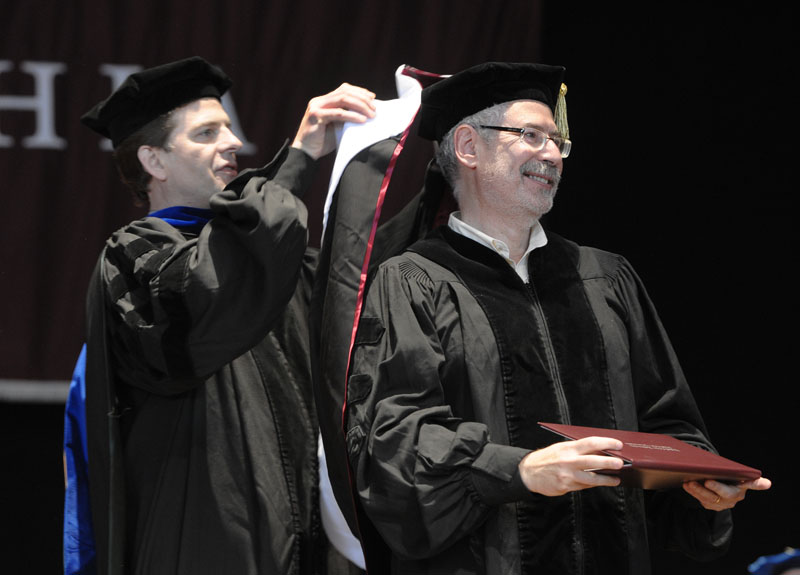
Philadelphia University Commencement Speech – May 15th 2011

I am honored to be with you as we gather to celebrate your graduation from Philadelphia University.

While I teach at Stanford and Berkeley, to be honest… this is the closest I’ve ever gotten to a college graduation.

I realize that my 15 minutes up here is all that’s between you and the rest or your life, so if I can keep you awake, I’m going to share 4 short stories from my life.

My first story is about finding your passion.
My parents were immigrants…  Neither of them had been to college—my mother graduated from high school but my father left school after the 7th grade.  Still, like many immigrants, they dreamed that someday their children would go to college…  Unfortunately that was their dream—but it wasn’t mine.

I ended up at Michigan State because I got a scholarship…Once I got there, I was lost…unfocused…and had no idea of who I was and why I was in school. I hated school.

One day my girlfriend said, “You know some of us are working hard to stay here. But you don’t seem to care.Why don’t you find out what you really want to do?”

That was the moment I realized I, …not anyone else…was in charge of my life.

I took her advice. I dropped out of Michigan State University after the first semester.

In the middle of a Michigan winter, I stuck out my thumb and hitchhiked to Miami, the warmest place I could think of.

I had no idea what would be at the end of the highway. But that day I began a pattern that I still follow—stick out your thumb and see where the road takes you.

I managed to find a job at the Miami International Airport loading racehorses onto cargo planes. I didn’t like the horses, but the airplanes caught my interest.

Airplanes were the most complicated things I had ever seen. Unlike other kids who were fans of the pilots, I was in awe of the electronics technicians in charge of the planes’ instruments. I would hang around the repair shop just helping out wherever I could. I didn’t know anything, so I didn’t get paid…

But soon some technician took me under his wing and gave me my first tutorial on electronics, radar and navigation. I was hooked. I started taking home all the equipment manuals and would read them late into the night.

For the first time in my life, I found something I was passionate about.

And the irony is that if I hadn’t dropped out, I would never have found this passion…the one that began my career. If I hadn’t discovered something I truly loved to do, I might be driving a cab at the Miami airport.

My life continued to follow this same pattern…I’d pursue my curiosity, volunteer to help, and show up a lot. Again and again, the same thing would happen… people would notice that I cared…and I’d get a chance to learn something new.

Now that you paid for your degree…I’m going to let you in on a secret. It’s your curiosity and enthusiasm that will get you noticed and make your life interesting—not your grade point average.

But at the time…as excited as I was…I couldn’t see how my passion for airplanes and avionics could ever get me anywhere.  Without money, or a formal education, how could I learn about them?

The answer turned out to be a war.

My second story is about Volunteering and Showing Up.
In the early 1970’s, as some of you might remember, our country was in the middle of the Vietnam War—-and the Air Force was happy to have me.

I enlisted to learn how to repair electronics. The Air Force sent me to a year of military electronics school. While college had been someone else’s dream, learning electronics had become mine.

After electronics school, when most everyone else was being sent overseas to a war-zone, I was assigned to one of the cushiest bases in the Air Force, right outside of Miami.

My first week on the base… our shop chief announced: “We’re looking for some volunteers to go to Thailand.” I still remember the laughter and comments from my fellow airmen. “You got to be kidding… leave Miami for a war in Southeast Asia?”

Others wisely remembered the first rule in the military: never volunteer for anything. Listening to them, I realized they were right. Not volunteering was the sane path of safety, certainty and comfort.

So I stepped forward, raised my hand—and I said, “I’ll go.”

Once again, I was going to see where the road would take me. Volunteering for the unknownwhich meant leaving the security of what I knew…would continually change my life.

Two weeks later I was lugging heavy boxes across the runway under the broiling Thailand sun. My job was to replace failed electronic warfare equipment in fighter planes as they returned from bombing missions over North Vietnam.

As I faced yet another 110-degree day, I did consider that perhaps my decision to leave Miami might have been a bit hasty. Yet every day I would ask, “Where does our equipment come from… and how do we know it’s protecting our airplanes?”

The answer I got was, “Don’t you know there’s a war on? Shut up and keep doing what you’re told.”

Still I was forever curious. At times continually asking questions got me in trouble…

once it almost sent me to jail

but mostly it made me smarter.

I wanted to know more.  I had found something I loved to do.. …and I wanted to get better at it.

When my shift on the flightline was over, my friends would go downtown drinking. Instead, I’d often head into the shop and volunteer to help repair broken jammers and receivers. Eventually, the shop chief who ran this 150-person shop approached me and asked, “You’re really interested in this stuff, aren’t you?” He listened to me babble for a while, and then walked me to a stack of broken electronic equipment and challenged me troubleshoot and fix them.

Hours later when I was finished, he looked at my work and told me, “We need another pair of hands repairing this equipment. As of tomorrow you no longer work on the flightline.” He had just given me a small part of the electronic warfare shop to run.

People talk about getting lucky breaks in their careers. I’m living proof that the “lucky breaks” theory is simply wrong. You get to make your own luck. 80% of success in your career will come from just showing upThe world is run by those who show up…not those who wait to be asked.

Eighteen months after arriving in Thailand, I was managing a group of 15 electronics technicians.

I had just turned 20 years old.

My third story is about Failure and Redemption
After I left the military, I ended up in Palo Alto, a town south of San Francisco. Years later this area would become known as Silicon Valley.

For a guy who loved technology, I was certainly in the right place. Endlessly curious, I went from startups in military intelligence to microprocessors to supercomputers to video games.

I was always learning. There were times I worried that my boss might find out how much I loved my job…and if he did, he might make me pay to work there. To be honest, I would have gladly done so.  While I earned a good salary, I got up and went to work every day not because of the pay, but because I loved what I did.

As time went on, I was a co-founder or member of the starting team for six high-tech startups…

With every startup came increasing responsibility. I reached what I then thought was the pinnacle of my career when I raised tens of millions of dollars and became CEO of my seventh startup… a hot new video game company. My picture was in all the business magazines, and made it onto the cover of Wired magazine. Life was perfect.

And then one day it wasn’t.

It all came tumbling down. We had believed our own press, inhaled our own fumes and built lousy games. Customers voted with their wallets and didn’t buy our products. The company went out of business. Given the press we had garnered, it was a pretty public failure.

We let our customers, our investors, and our employees down. While it was easy to blame it on others…and trust me at first I tried… in the end it was mostly a result of my own hubris—the evil twin of entrepreneurial passion and drive.

I thought my career and my life were over. But I learned that in Silicon Valley, honest failure is a badge of experience.

In fact, unlike in the movies, most startups actually fail. For every Facebook and Google that make the press, thousands just never make it at all.

All of you will fail at some time in your career…or in love, or in life.

No one ever sets out to fail. But being afraid to fail means you’ll be afraid to try.  Playing it safe will get you nowhere.

As it turned out, rather than run me out of town on a rail, the two venture capital firms that had lost $12 million in my failed startup actually asked me to work with them.

During the next couple years…and much humbler… I raised more money and started another company, one that was lucky enough to go public in the dot.com bubble.

In 1999… with the company’s revenue north of $100 million…I handed the keys to a new CEO and left. I had married a wonderful woman and together we had two young daughters.

I decided that after 20 years of working 24/7 in eight startups, I wanted to go home and watch my kids grow up.

Which brings me to my last story—There’s a Pattern Here.
When I retired I found myself with lots of time to think.

I began to reflect about my career and what had happened in my 21 years with startups in Silicon Valley.

I was all alone in a ski cabin with the snow falling outside…with my wife and daughters out on the slopes all day… I started to collect my thoughts by writing what I had hoped would become my memoirs.

Eighty pages later, I realized that I had some great stories as an entrepreneur and a failed CEO. But while writing them was a great catharsis, it was quickly becoming clear that I’d even have to pay my wife and kids to read the stories.

But the more I thought about what I had done, and what other entrepreneurs had tried, I realized something absurdly simple was staring at me.  I saw a repeatable pattern that no else had ever noticed.

Business schools and investors were treating new companies like they were just small versions of large companies. But it struck me that startups were actually something totally different. Startups were actually like explorers—searching for a new world, where everything—customers, markets, prices—were unknown and new.

These startups needed to be inventive as they explore, trying new and different things daily. In contrast, existing companies, the Wal-Mart’s and McDonalds, already had road maps, guide books and playbooks—they already know their customers, markets, and prices. To succeed they just need to do the same thing every day.

Now it would have been easy to say, “Nah, this can’t be right—every smart professor at Harvard and Wharton and Stanford believes something different.”

In fact, in your lives this will happen to you.

You will have a new idea, and people will tell you, “That can’t be right because we’ve always done it this way.”

Ignore them…..  Be persistent… Never give up. Innovation comes from those who see things that other don’t.

As a retired CEO, I had a lot of free time.  So I was often invited to be a guest lecturer at the business school at Berkeley. They thought I could tell stories about what it was like to start a company. I was generous with my time…and I showed up a lot.

But I began to nag the head of the department about this new idea I had…one that basically said that everything you learn about starting new companies in business schools was wrong. I thought that there was a better a way to teach and manage startups than the conventional wisdom of the last 40 years. And to their credit…Berkeley’s Business School and then Stanford’s Engineering School let me write and teach a new course based on my ideas.

Now…a decade later… that course called Customer Development is the basis of an entirely new way to start companies.

If you’re in a technology company or build a web or mobile application, it’s probably the only way to start a company.

How did this happen?  By showing up a lot and questioning the status quo.

These days I write a weekly blog about entrepreneurship.  At the end of each post, I conclude with lessons learned—a kind of Cliff Notes of my key takeaways.  So in case you haven’t been listening, that’s how I’ll finish up today.

Be forever curious.
Volunteer for everything.
Show up a lot.
Treat failure as a learning experience.

Live life with no regrets.
Remembering…There is no undo button.

Congratulations again to you all…and thank you very much.


Download the Podcast here