Reinventing Life Science Startups – Evidence-based Entrepreneurship

What if we could increase productivity and stave the capital flight by helping Life Sciences startups build their companies more efficiently?

We’re going to test this hypothesis by teaching a Lean LaunchPad class for Life Sciences and Health Care (therapeutics, diagnostics, devices and digital health) this October at UCSF with a team of veteran venture capitalists.

Part 1 of this post described the issues in the drug discovery. Part 2 covered medical devices and digital health. This post describes what we’re going to do about it.  And why you ought to take this class.

——

When I wrote Four Steps to the Epiphany and the Startup Owners Manual, I believed that Life Sciences startups didn’t need Customer Discovery. Heck how hard could it be?  You invent a cure for cancer and then figure out where to put the bags of money. (In fact, for oncology, with a successful clinical trial, this is the case.)

Pivots in life sciences companies

But I’ve learned that’s not how it really works. For the last two and a half years, we’ve taught hundreds of teams how to commercialize their science with a version of the Lean LaunchPad class called the National Science Foundation Innovation Corps.  Quite a few of the teams were building biotech, devices or digital health products.  What we found is that during the class almost all of them pivoted – making substantive changes to one or more of their business model canvas components.

In the real world a big pivot in life sciences far down the road of development is a very bad sign due to huge sunk costs.  But pivoting early, before you raise and spend millions or tens of millions means potential disaster avoided.

Some of these pivots included changing their product/service once the team had a better of understanding of customer needs or changing their position in the value chain (became an OEM supplier to hospital suppliers rather than selling to doctors directly.) Other pivots involved moving from a platform technology to become a product supplier, moving from a therapeutic drug to a diagnostic or moving from a device that required a PMA to one that required a 510(k).

Some of these teams made even more radical changes.  For example when one team found the right customer, they changed the core technology (the basis of their original idea!) used to serve those customers. Another team reordered their device’s feature set based on customer needs.

These findings convinced me that the class could transform how we thought about building life science startups.  But there was one more piece of data that blew me away.

Control versus Experiment – 18% versus 60%
For the last two and a half years, the teams that were part of the National Science Foundation Innovation Corps were those who wanted to learn how to commercialize their science, applied to join the program, fought to get in and went through a grueling three month program.  Other scientists attempting to commercialize their science were free to pursue their startups without having to take the class.

Both of these groups, those who took the Innovation Corps class and those who didn’t, applied for government peer-reviewed funding through the SBIR program. The teams that skipped the class and pursued traditional methods of starting a company had an 18% success rate in receiving SBIR Phase I funding.

The teams that took the Lean Launchpad class  – get ready for this – had a 60% success rate. And yes, while funding does not equal a successful company, it does mean these teams knew something about building a business the other teams did not.

The 3-person teams consisted of Principal Investigators (PI’s), mostly tenured professors (average age of 45,) whose NSF research the project was based on. The PI’s in turn selected one of their graduate students (average age of 30,) as the entrepreneurial lead. The PI and Entrepreneurial Lead were supported by a mentor (average age of 50,) with industry/startup experience.

This was most definitely not the hoodie and flip-flop crowd.

Obviously there’s lots of bias built into the data – those who volunteered might be the better teams, the peer reviewers might be selecting for what we taught, funding is no metric for successful science let alone successful companies, etc.  – but the difference in funding success is over 300%.

The funding criteria for these new ventures wasn’t solely whether they had a innovative technology. It was whether the teams understood how to take that idea/invention/patent and transform it into a company. It was whether after meeting with partners and regulators, they had a plan to deal with the intensifying regulatory environment. It was whether after talking to manufacturing partners and clinicians, they understood how they were going to reduce technology risk. And It was after they talked to patients, providers and payers whether they understood the customer segments to reduce market risk by having found product/market fit.

Scientists and researchers have spent their careers testing hypotheses inside their labs. This class teaches them how to test the critical hypotheses that turn their idea into a business as they deal with the real world of regulation, customers and funding.

So after the team at UCSF said they’d like to prototype a class for Life Sciences, I agreed.

Here’s what we’re going to offer.

The Lean LaunchPad Life Sciences and Health Care class

The goal of the Lean LaunchPad Life Sciences class at UCSF is to teach researchers how to move their technology from an academic lab into the commercial world.UCSF Logo

We’re going to help teams:

  • assess regulatory risk before they design and build
  • gather data essential to customer purchases before doing the science
  • define clinical utility now, before spending millions of dollars
  • identify financing vehicles before you need them

We’ve segmented the class into four cohorts: therapeutics, diagnostics, devices and digital health.  And we recruited a team of world class Venture Capitalists and entrepreneurs to teach and mentor the class including Alan May, Karl Handelsman, Abhas Gupta, and Todd Morrill.

The course is free to UCSF, Berkeley, and Stanford students; $100 for pre-revenue startups; and $300 for industry. – See more here

The syllabus is here.

Class starts Oct 1st and runs through Dec 10th.

Download the all three parts of the Life Science series here.

Listen to the podcast here [audio http://traffic.libsyn.com/albedrio/steveblank_clearshore_130821.mp3]

Download the podcast here

Reinventing Life Science Startups – Medical Devices and Digital Health

What if we could increase productivity and stave the capital flight by helping Life Sciences startups build their companies more efficiently?

We’re going to test this hypothesis by teaching a Lean LaunchPad class for Life Sciences and Healthcare (therapeutics, diagnostics, devices and digital health) this October at UCSF with a team of veteran venture capitalists.

In this three post series, Part 1 described the challenges Life Science companies face in Therapeutics and Diagnostics. This post describes the issues in Medical Devices and Digital Health.  Part 3 will offer our hypothesis about how to change the dynamics of the Life Sciences industry with a different approach to commercialization of research and innovation.  And why you ought to take this class.

——–

Medical devices prevent, treat, mitigate, or cure disease by physical, mechanical, or thermal means (in contrast to drugs, which act on the body through pharmacological, metabolic or immunological means). They span they gamut from tongue depressors and bedpans to complex programmable pacemakers and laser surgical devices. They also diagnostic products, test kits, ultrasound products, x-ray machines and medical lasers.

Incremental advances are driven by the existing medical device companies, while truly innovative devices often come from doctors and academia. One would think that designing a medical device would be a simple engineering problem, and startups would be emerging right and left. The truth is that today it’s tough to get a medical device startup funded.

Life Sciences II – Medical Devices

Regulatory Issues
In the U.S. the FDA Center for Devices and Radiological Health (CDRH) regulates medical devices and puts them into three “classes” based on their risks.

Class I devices are low risk and have the least regulatory controls. For example, dental floss, tongue depressors, arm slings, and hand-held surgical instruments are classified as Class I devices. Most Class I devices are exempt Premarket Notification 510(k) (see below.)

Class II devices are higher risk devices and have more regulations to prove the device’s safety and effectiveness. For example, condoms, x-ray systems, gas analyzers, pumps, and surgical drapes are classified as Class II devices.FDA approvals

Manufacturers introducing Class II medical devices must submit what’s called a 510(k) to the FDA. The 510(k) identifies your medical device and compares it to an existing medical device (which the FDA calls a “predicate” device) to demonstrate that your device is substantially equivalent and at least as safe and effective.

Class III devices are generally the highest risk devices and must be approved by the FDA before they are marketed. For example, implantable devices (devices made to replace/support or enhance part of your body) such as defibrillators, pacemakers, artificial hips, knees, and replacement heart valves are classified as Class III devices. Class III medical devices that are high risk or novel devices for which no “predicate device” exist require clinical trials of the medical device a PMA  (Pre-Market Approval).Life Science Decline

  • The FDA is tougher about approving innovative new medical devices. The number of 510(k)s being required to supply additional information has doubled in the last decade.
  • The number of PMA’s that have received a major deficiency letter has also doubled.
  • An FDA delay or clinical challenge is increasingly fatal to Life Science startups, where investors now choose to walk away rather than escalate the effort required to reach approval.

med device pipeline

Business Model Issues

  • Cost pressures are unrelenting in every sector, with pressure on prices and margins continuing to increase.
  • Devices are a five-sided market: patient, physician, provider, payer and regulator. Startups need to understand all sides of the market long before they ever consider selling a product.
  • In the last decade, most device startups took their devices overseas for clinical trials and first getting EU versus FDA approval
  • Recently, the financing of innovation in medical devices has collapsed even further with most Class III devices simply unfundable.
  • Companies must pay a  medical device excise tax of 2.3% on medical device revenues, regardless of profitability delays or cash-flow breakeven.
  • The U.S. government is the leading payer for most of health care, and under ObamaCare the government’s role in reimbursing for medical technology will increase. Yet two-thirds of all requests for reimbursement are denied today, and what gets reimbursed, for how much, and in what timeframe, are big unknowns for new device companies.

Venture Capital Issues

  • Early stage Venture Capital for medical device startups has dried up. The amount of capital being invested in new device companies is at an 11 year low.
  • Because device IPOs are rare, and M&A is much tougher, liquidity for investors is hard to find.
  • Exits have remained within about the same, while the cost and time to exit have doubled.

Life Sciences III – The Rise of Digital Health
Over the last five years a series of applications that fall under the category of “Digital Health” has emerged. Examples of these applications include: remote patient monitoring, analytics/big data (aggregation and analysis of clinical, administrative or economic data), hospital administration (software tools to run a hospital), electronic health records (clinical data capture), and wellness (improve/monitor health of individuals). A good number of these applications are using Smartphones as their platform.digital health flow

Business Model Issues

  • A good percentage of these startups are founded by teams with strong technical experience but without healthcare experience. Yet healthcare has its own unique regulatory and reimbursement issues and business model issues that must be understood
  • Most of these startups are in a multisided market, and many have the same five-sided complexity as medical devices: patient, physician, provider, payer and regulator.  (Some are even more complex in an outpatient / nurse / physical therapy setting.)
  • Reimbursement for digital health interventions is still a work in progress
  • Some startups in this field are actually beginning with Customer Development while others struggle with the classic execution versus search problem

Regulatory Issues

  • Digital Health covers a broad spectrum of products, unless the founders have domain experience startups in this area usually discover the FDA and the 510(k) process later than they should. 

Venture Capital

  • Seed funding is still scarce for Digital Health, but a number of startups (particularly those making physical personal heath tracking devices) are turning to crowdfunding.
  • Moreover, the absence of recent IPOs and public companies benchmarks creates uncertainty for VCs evaluating later investments too

Try Something New
The fact that the status quo for Life Sciences is not working is not a new revelation. Lots of smart people are running experiments in search of ways to commercialize basic research  more efficiently.

Universities have set up translational R&D centers; (basically university/company partnerships to commercialize research).  The National Institute of Health (NIH) is also setting up translational centers through its NCATS program.  Drug companies have tried to take research directly out of university labs by licensing patents, but once inside Pharma’s research labs, these projects get lost in the bureaucracy.  Realizing that this is not optimal, drug companies are trying to incubate projects directly with universities and the researchers who invented the technology, such as the recent Janssen Labs program.

But while these are all great programs, they are likely to fail to deliver on their promise. The assumption that the pursuit of drugs, diagnostics, devices and digital health is all about the execution of the science is in most cases a mistake.

The gap between the development of intriguing but unproven innovations, and the investment to commercialize those innovations is characterized as “the Valley of Death.”valley of death

We believe we need a new model to attract private investment capital to fuel the commercialization of clinical solutions to todays major healthcare problems that is in many ways technology agnostic. We need a “Needs Driven/Business Model Driven” approach to solving the problems facing all  the stakeholders in the vast healthcare system.

We believe we can reduce the technological, regulatory and market risks for early-stage life science and healthcare ventures, and we can do it by teaching founding teams how to build new ventures with Evidence-Based Entrepreneurship.

——

Part 3 in the next post will offer our hypothesis how to change the dynamics of the Life Sciences industry with a different approach to commercialization of research and innovation. And why you ought to take this class.

Listen to the post here

Download the post here

Reinventing Life Science Startups–Therapeutics and Diagnostics

It was the best of times, it was the worst of times, it was the age of wisdom, it was the age of foolishness, it was the epoch of belief, it was the epoch of incredulity, it was the season of Light, it was the season of Darkness, it was the spring of hope, it was the winter of despair, we had everything before us, we had nothing before us, we were all going direct to Heaven, we were all going direct the other way.

Charles Dickens

Life Science (therapeutics- drugs to cure or manage diseases, diagnostics- tests and devices to find diseases, devices to cure and monitor diseases; and digital health –health care hardware, software and mobile devices and applications streamline and democratize the healthcare delivery system) is in the midst of a perfect storm of decreasing productivity, increasing regulation and the flight of venture capital.

But what if we could increase productivity and stave the capital flight by helping Life Sciences startups build their companies more efficiently?

We’re going to test this hypothesis by teaching a Lean LaunchPad class for Life Sciences and Healthcare (therapeutics, diagnostics, devices and digital health) this October at UCSF with a team of veteran venture capitalists and angels.

It was the best of times and the worst of times
The last 60 years has seen remarkable breakthroughs in what we know about the biology underlying diseases and the science and engineering of developing commercial drug development and medical devices that improve and save lives. Turning basic science discoveries into drugs and devices seemed to be occurring at an ever increasing rate.

Yet during those same 60 years, rather than decreasing, the cost of getting a new drug approved by the FDA has increased 80 fold.  Yep, it cost 80 times more to get a successful drug developed and approved today than it did 60 years ago.Overall efficiency

75% or more of all the funds needed by a Life Science startup will be spent on clinical trials and regulatory approval. Pharma companies are staggering under the costs.  And medical device innovation in the U.S. has gone offshore primarily due to the toughened regulatory environment.

At the same time, Venture Capital, which had viewed therapeutics, diagnostics and medical devices as hot places to invest, is fleeing the field. In the last six years half the VC’s in the space have disappeared, unable to raise new funds, and the number of biotech and device startups getting first round financing has dropped by half. For exits, acquisitions are the rule and IPOs the exception.

While the time, expense and difficulty to exit has soared in Life Sciences, all three critical factors have been cut by orders of magnitude in other investment sectors such as internet or social-local-mobile.  And while the vast majority of Life Science exits remain below $125M, other sectors have seen exit valuations soar.  It has gotten so bad that pension funds and other institutional investors in venture capital funds have told these funds to stay away from Life Science – or at the least, early stage Life Science.

WTF is going on?  And how can we change those numbers and reverse those trends?

We believe we have a small part of the answer.  And we are going to run an experiment to test it this fall at UCSF.

In this three post series, the first two posts are a short summary of the complex challenges Life Science companies face; in Therapeutics and Diagnostics in this post and in Medical Devices and Digital Health in Part 2.  Part 3 explains our hypothesis about how to change the dynamics of the Life Sciences industry with a different approach to commercialization of research and innovation.  And why you ought to take this class.

——-

Life Sciences I—Therapeutics and Diagnostics

It was the Age of Wisdom – Drug Discovery
There are two types of drugs. The first, called small molecules (also referred to as New Molecular Entities or NMEs), are the bases for classic drugs such as aspirin, statins or high blood pressure medicines. Small molecules are made by reactions between different organic and/or inorganic chemicals. In the last decade computers and synthesis methods in research laboratories enable chemists to test a series of reaction mixtures in parallel (with wet lab analyses still the gold standard.) Using high-throughput screening to search for small molecules, which can be a starting point (or lead compound) for a new drug, scientists can test thousands of candidate molecules against a database of millions in their libraries.

Ultimately the FDA Center for Drug Evaluation and Research (CDER) is responsible for the approval of small molecules drugs.Drug discovery pipeline

The second class of drugs created by biotechnology is called biologics (also referred to as New Biological Entities or NBEs.) In contrast to small molecule drugs that are chemically synthesized, most biologics are proteins, nucleic acids or cells and tissues. Biologics can be made from human, animal, or microorganisms – or produced by recombinant DNA technology. Examples of biologics include: vaccines, cell or gene therapies, therapeutic protein hormones, cytokines, tissue growth factors, and monoclonal antibodies.

The FDA Center for Biologics Evaluation and Research (CBER) is responsible for the approval of biologicals.

It was the Season of Light
The drug development pipeline for both small molecules and biologics can take 10-15 years and cost a billion dollars. The current process starts with testing thousands of compounds which will in the end, produce a single drug.

In the last few decades scientists searching for new drugs have had the benefit of new tools — DNA sequencing, 3D protein database for structure data, high throughput screening for “hits”, computational drug design, etc. — which have sped up their search dramatically.Drug funnel

The problem is that the probability that a small molecule drug gets through clinical trials is unchanged after 50 years. In spite of the substantial scientific advances and increased investment, over the last 20 years the FDA has approved an average of 23 new drugs a year. (To be fair, this is indication-dependent. For example, in oncology, things have gotten significantly better. In most other areas, particularly drugs for the central nervous system and metabolism, they have not.)

drugs approved

It was the Season of Despair
With the exception of targeted therapies, the science and tools haven’t made the drug discovery pipeline more efficient. Oops.

There are lots of reasons why this has happened.

Regulatory and Reimbursement Issues

  • Drug safety is a high priority for the FDA. To avoid problems like Vioxx, Bexxar etc., the regulatory barriers (i.e. proof of safety) are huge, expensive, and take lots of time. That means the FDA has gotten tougher, requiring more clinical trials, and the stack of regulatory paperwork has gotten higher.
  • Additional trials to demonstrate both clinical efficacy (if not superiority) and cost outcomes effectiveness are further driving up the cost, time and complexity of clinical trials.

Drug Discovery Pipeline Issues

Drug target Issues

  • In a perfect world the goal is to develop a drug that will go after a single target (a protein, enzyme, DNA/RNA, etc. that will undergo a specific interaction with chemicals or biological drugs) that is linked to a disease.
  • Unfortunately most diseases don’t work that simply. There are a few diseases that do, (i.e. insulin and diabetes, GleevecPhiladelphia Chromosome and chronic myeloid leukemia), but most small molecule drugs rarely act on a single target (target-based therapy in oncology being the bright spot.)
  • To get FDA approval new drugs have to be proven better than existing ones.  Most of the low-hanging fruit of easy drugs to develop are already on the market.

Venture Capital Issues

  • For the last two decades, biotech venture capital and corporate R&D threw dollars into interesting science (find a new target, publish a paper in Science, Nature or Cell, get funded.) The belief was that once a new target was found, finding a drug was a technology execution problem.  And all the new tools would accelerate the process.  It often didn’t turn out that way, although there are important exceptions.
  • Moreover, the prospect of the FDA also evaluating drugs for their cost-effectiveness is adding another dimension of uncertainty as the market opportunity at the end of the funnel needs to be large enough to justify venture investment

drug dev pipeline fundedIn Part 2 of this series, we describe the challenges new Medical Device and Digital Health companies face.  Part 3 will offer our hypothesis how to change the dynamics of the Life Sciences industry with a different approach to commercialization of research and innovation in this sector.  And why you ought to take this class.
Listen to the post here
Download the post here

How to get meetings with people too busy to see you

Asking, “Can I have coffee with you to pick your brain?” is probably the worst possible way to get a meeting with someone with a busy schedule.  Here’s a better approach.

——

Jason, an entrepreneur I’ve known for over a decade, came out to the ranch today. He was celebrating selling his company and just beginning to think through his next moves. Since he wasn’t from Silicon Valley, he decided to use his time up here networking with other meetings with VC’s and company executives.

I get several hundred emails a day, and a good number of them are “I want to have coffee with you to bounce an idea off.” Or, “I just want to pick your brain.” I now have a filter for which emails get my attention, so I was curious in hearing what Jason, who I think of as pretty good at networking, was asking for when he was trying to set up meetings.

“Oh, I ask them if I can have coffee to bounce an idea off of them.”…Sigh.

I realized most entrepreneurs don’t know how to get meetings with people too busy to see you.

Perfect World
Silicon Valley has a “pay-it-forward” culture where we try to help each other without asking for anything in return. It’s a culture that emerged in the 60’s semiconductor business when competitors would help each other solve bugs in their chip fabrication process. It continued in the 1970’s with the emergence of the Homebrew Computer Club, and it continues today.  Since I teach, I tend to prioritize my list of meetings with first my current students, then ex-students, then referrals from VC firms I’ve invested in, and then others.  But still with that list, and now with a thousand plus ex-students, I have more meeting requests than I possibly can handle. (One of the filters I thought would keep down the meetings is have meetings at the ranch; an hour from Stanford on the coast, but that hasn’t helped.)

So I’ve come up with is a method to sort out who I take meetings with.

What are you offering?
I’m not an investor, and I’m really not looking for meetings with entrepreneurs for deal flow. I’m having these meetings because someone is asking for something from me – my time – and they think I can offer them advice.

If I’d had infinite time I’d take every one of these “can I have coffee” meetings. But I don’t.  So I now prioritize meetings with a new filter: Who is offering me something in return.

No, not offering me money.  Not for stock.  But who is offering to teach me something I don’t know.

The meeting requests that now jump to the top of my list are the few, very smart entrepreneurs who say, “I’d like to have coffee to bounce an idea off of you and in exchange I’ll tell you all about what we learned about xx.”


This offer of teaching me something changes the agenda of the meeting from a one-way, you’re learning from me, to a two-way, we’re learning from each other.

It has another interesting consequence for those who are asking for the meeting – it forces them to think about what is it they know and what is it they have learned – and whether they can explain it to others in a way that’s both coherent and compelling.

Irony – it’s Customer Discovery
While this might sound like a, “how to get a meeting with Steve” post, the irony is that this “ask for a two-way meeting” is how we teach entrepreneurs to get their first customer discovery meetings; don’t just ask for a potential customers time, instead offer to share what you’ve learned about a technology, market or industry.

It will increase your odds in any situation you’re asking for time from very busy people – whether they are VC’s, company executives or retired entrepreneurs.

  • Lessons Learned
  • Wanting to have coffee is an ask for a favor
  • Offering to share knowledge is a different game
  • Try it, your odds of getting a meeting will increase
  • And the meetings will be more productive

How Kevin O’Connor, and FindTheBest Got Lean

When we started E.piphany there was an equally scrappy startup called DoubleClick (later acquired by Google for $3.1 billon). Over the years Kevin O’Connor, former CEO and founder of DoubleClick and I got to know each other.  It’s been fun watching a 20th Century entrepreneur learn new tricks as he builds his next startup, FindTheBest using Lean Methodology.  Here’s Kevin’s story to date.kevin_oconnor_headshot

——–

You might say Steve and I have lived parallel lives. We’re both serial entrepreneurs. We’ve both used a combination of luck, hard work, and mild insanity to get where we are today. We’ve both published bestselling books.*map_of_innovation_kevin_oconnor

* Okay: my book sold way less copies than Steve’s.

Steve and I have long held similar beliefs about how to run start-ups, even if we’ve used different names to describe the key principles. He came down a few weeks ago to visit our company, FindTheBest, where we chatted about his lean start-up concept and held a Q&A for the FindTheBest team and others in the Santa Barbara tech community. Here’s how our company is following the Steve Blank blueprint.

1. An Untested Hypothesis
Lean Start-up Connection: Business Model Canvas

By 2009, I was fed up. I remember trying to search for the best college for my son and the top ski resort for a family vacation, only to find scam sites promoting a “top 10” list or “featured” options, meaning they were getting paid to promote them. Visiting each official site took too long, and the information wasn’t always easy to compare (ex: “Net Cost of Attendance” vs. “Resident Tuition per Semester”).

That’s when it hit me: what if there was a site where you get all the best information in one place, and have access to great research tools to help make a decision? What if you could think like an expert on any topic in a matter of minutes, instead of after hours of inefficient web browsing? Granted, the idea was a little crazy. To really be a game-changer, FindTheBest would have to compete against the thousands of niche sites that focus exclusively on a single market.

When we started building the site, we had to assume a lot. We figured our key partners would include consumers (to contribute data much like Wikipedia’s users), manufacturers (to keep their product information updated) and the US government (to supply datasets to power our content). We assumed our customers would be any smart Internet users looking to make a decision—granted, an extremely broad customer segment. We guessed that these customers would find value in the ability to make quick decisions on complicated topics. We hoped to start acquiring customers mostly through responsible, focused SEO, where we would target a variety of high-value search terms and provide relevant, useful content to users.

From day one, we knew our biggest cost would be hiring more employees, but we didn’t know exactly how much it would cost to enter each new market (ex: smartphones, then mountain bikes, then business schools, etc.). By leaning on our technology, we knew we could build cheaply, we just didn’t know how cheaply. We resolved to build out the first dozen comparisons before we started calculating an exact cost per new market.

Regarding revenue, we made a big bet on “purchase intent.” We looked at social sites—like Facebook and Twitter—with huge user bases, but comparably small revenue. We then looked at wildly profitable ventures—like Google or Kayak—noting that their users were much more likely to make purchases. When you enter a search query for “car insurance,” or submit details for a trip to London, you’re much more likely to end up spending money. We hypothesized that FindTheBest, with its focus on making big decisions, would attract the same purchase-minded users found on Google or Kayak.

We didn’t need to spend months researching; we just needed to create a viable product to test these hypotheses against. As we went out and started building, many people thought we were insane, stupid, or both. In fact, some probably still do.

Our First FIndtheBest Wireframe

A very early FindTheBest screenshot

2. Validation
Lean Start-up Connection: Customer Development

Over the next couple of years, several of our hypotheses were confirmed. Thousands, then millions of new customers were coming to the site through SEO, just like we’d guessed with our customer acquisition hypothesis. Our assumptions about cost also proved correct—we were entering new markets incredibly cheaply. Here, we even beat our most optimistic assumptions.

Once we built out a sales team, revenue also started to grow nicely. We’ve confirmed our ability to harness purchase intent, like Google and Kayak before us, verifying our revenue stream hypothesis.

That said, a few of our hypotheses were proven at least partially wrong. First, our assumption that consumers would be a key supplier of content (like Wikipedia contributors) was wrong. While user adds and edits grew at a small rate, it wasn’t nearly enough to support the hundreds of topics on the site. Visitors loved using the site to research new topics, but were less likely to add their own listings or consistently update old content. Our customers had identified a flaw in our original plan. We realized our internal team would need to be bigger, and adjusted our business model canvas accordingly .

Additionally, our value proposition needed adjustment. We had focused on quick decisions, when really, users wanted a sophisticated research tool for making carefully considered decisions. As a result, we’ve had to adjust our positioning and messaging to better capture the value users see in our product. We’re now promoting FindTheBest as a research hub that helps you think like an expert, much closer to what users were telling us in feedback surveys.

3. Staying Agile
Lean Start-up Connection: Agile Development

At FindTheBest, we constantly practice a “test-fail-learn-test-succeed-scale” approach, which is simply another way of describing the philosophy of “agile development.” We’re happy to fail, as long as we do so quickly, learn the appropriate lesson, and move to a new hypothesis. Once we find one that works, we scale the hell out of it.

For example, we tested out two features early on that didn’t end up as popular as we’d wanted: video guides (a how-to video about researching the topic) and green guides (an environmental report on which products and services were most eco-friendly). Each time, we hoped to capture a new audience by appealing to a specific subset of Internet users. We rolled them out on a limited number of pages to test. Once we saw that these new guides weren’t attracting significant visits or creating increased interaction, we quickly ended the projects.

On the flip side, we’ve had many major successes that have helped inform our product’s direction. Sister sites FindTheData (a site for researching huge datasets on topics like crime, salaries, and government spending) and FindTheCompany (a tool for finding key information on millions of companies and organizations) have grown user bases of several million visitors per month. We’ve found that people love our platform and use our technology for doing research in a variety of different ways.

* * *

At just 3 years in, FindTheBest is real-time proof of Steve Blank’s lean start-up blueprint. Even as we make the transition from startup to established company (which I call “company puberty”), we’ll continue to test our hypotheses, seek customer feedback, and test before we scale.

Hopefully we’ll find that FindTheBest will have a bigger exit than DoubleClick – this time as a Lean Startup.
Listen to this post here: Download the podcast here

Building Great Founding Teams

There’s been a lot written about the individual characteristics of what makes a great founder, but a lot less about what makes a great founding team and how that’s different from a great founding  CEO

founders

I think we’ve been imprecise in defining three different roles. In doing so we’ve failed to help founders understand what it takes to build a great founding team.

Here are my definitions.

Founders – the idea
A Founder is the one with the original idea, scientific discovery, technical breakthrough, insight, problem description, passion, etc. A founder typically recruits co-founders and then becomes part of the founding team involved in day-to-day company operations. (However, in some industries such as life sciences, founders may be tenured professors who are not going to give up their faculty positions, so they often become the head of a startup’s scientific advisory board, but aren’t part of the founding team.)

A couple of caveats about founders with “ideas.”  It’s important to differentiate between ideas that have been or can be patented and ideas thought up late night in a dorm-room. One of the hardest concepts for my students to grasp is that “an idea is not a company.”  The reality is that in most cases, without the company to commercialize it, the idea is worthless (except to a patent troll.)

Even if they become part of the founding team, it’s not a given that the founder, having come up with the idea has a “guaranteed” leadership role (CEO or VP) in the new company. For some entrepreneurs this idea that the founder is not necessarily the CEO, is a surprise. When I hear, “What do you mean I’m not CEO? It’s my idea!” I get nervous that the founder is clueless about what makes the founding CEO special, and what else it actually takes to build a company. (Read on to see the difference in the roles.)

Founding Team – the rock on which to build the company
The founding team includes the founder and a few other co-founders with complementary skills to the founder. This is the group who will build the company. Its goal is to take the original idea and search for a repeatable and scalable business model– first by finding product/market fit, then by testing all the parts of the business model (pricing, channel, acquisition/activation, partners, costs, etc.)

In web/mobile startups the canonical view is the founding team consists of a hacker, a hustler, and a designer. In other domains, the skill sets differ, but the key idea is that you want a team with complementary skills.

There’s no magic number about the “right” number of founders for a founding team, but two to four seems to be the sweet spot. One of the biggest mistakes in assembling a founding team is not thinking through the need for skills but instead settling for who’s around. The two tests of whether someone belongs on a founding team are: “Do we have a company without them?” and, “Can we find someone else just like them?” If both answers are no, you’ve identified a co-founder.  If any of the answers are “Yes,” then hire them a bit later as an early employee.

Key attributes of an entrepreneur on a founding team are passion, determination, resilience, tenacity, agility and curiosity. It helps if the team has had a history of working together, but what is essential is mutual respect. And what is critical is trust. You need to be able to trust your co-founders to perform, to do what they say they will, and to have your back.

Most startups that fail over team issues fail because co-founders hadn’t dated first, (spent time together in a Startup Weekend, worked together in an incubator, etc.) but instead jumped into bed to start a company.

Everyone has ideas. It’s the courage, passion and tenacity of the founding team that turn ideas into businesses.

Founding CEO – Reality Distortion Field and Comfort in Chaos
Idealistic founders trying to run a venture with collective leadership, without a single person in charge, find that’s the fastest way to go out of business. Speed, tempo and fearless decision-making are a startups strategic advantage. More often than not, conditions on the ground will change so rapidly that the need for immediate decisions overwhelms a collective decision process.

The founding team CEO is the first among equals in the founding team. Ironically they are almost never the most intelligent or technically astute person on the team. What sets them apart from the rest of the team is that they can project a fearless reality distortion field that they use to recruit, fund raise, pivot and position the company. They are the ultimate true believers in the company and have the vision, passion and skill to communicate why this seemingly crazy idea will work and change the world.

In addition, the founding CEO thrives operating in chaos and uncertainty. They deal with the daily crisis of product development and acquiring early customers.  And as the reality of product development and customer input collide, the facts change so rapidly that the original well-thought-out product plan becomes irrelevant. While the rest of the team is focused on their specific jobs, the founding CEO is trying to solve a complicated equation where almost all the variables are unknown – unknown customers, unknown features that will make those customers buy, unknown pricing, unknown demand creation activities that will get them into your sales channel, etc.

They’re biased for action and they don’t wait around for someone else to tell them what to do. Great founding CEO’s live for these moments.

FIgure out who you are
Many founding teams fail because they’ve never had the conversation about founder, founding team and founding CEO.  Spend the time and take stock of who’s on the journey with you.

Lessons Learned

  • Founder, Founding team, Founding CEO all have word “founder” in them but have different roles
  • Founder has the initial idea. May or may not be on the founding team or have a leadership role
  • Founding team – complementary skills – builds the company
  • Founding CEO – reality distortion field and comfort in chaos – leads the company

Listen to this post here: Download the podcast here

An MVP is not a Cheaper Product, It’s about Smart Learning

A minimum viable product (MVP) is not always a smaller/cheaper version of your final product. Defining the goal for a MVP can save you tons of time, money and grief.

Drones over the Heartland
I ran into a small startup at Stanford who wants to fly Unmanned Aerial Vehicles (drones) with a Hyper-spectral camera over farm fields to collect hyper-spectral images. These images would be able to tell farmers how healthy their plants were, whether there were diseases or bugs, whether there was enough fertilizer, and enough water. (The camera has enough resolution to see individual plants.) Knowing this means farms can make better forecasts of how much their fields will produce, whether they should treat specific areas for pests, and put fertilizer and water only where it was needed.drone over farm

(Drones were better than satellites because of higher resolution and the potential for making more passes over the fields, and better than airplanes because of lower cost.)

All of this information would help farmers increase yields (making more money) and reduce costs by using less water and fertilizer/chemicals but only applying where it was needed.

Their plan was to be a data service provider in an emerging business called “precision agriculture.” They would go out to a farmer fields on a weekly basis, fly the drones, collect and process the data and then give it to the farmers in an easy understandable form.

Customer Discovery on Farms
I don’t know what it is about Stanford, but this was the fourth or fifth startup I’ve seen in precision agriculture that used drones, robotics, high-tech sensors, etc. This team got my attention when they said, “Let us tell you about our conversations with potential customers.”  I listened, and as they described their customer interviews, it seemed like they had found, that – yes, farmers do understand that not being able to see what was going on in detail on their fields was a problem – and yes, – having data like this would be great – in theory.

So the team decided that this felt like a real business they wanted to build.  And now they were out raising money to build a prototype minimum viable product (MVP.) All good. Smart team, real domain experts in hyper-spectral imaging, drone design, good start on customer discovery, beginning to think about product/market fit, etc.

Lean is Not an Engineering Process
They showed me their goals and budget for their next step. What they wanted was a happy early customer who recognized the value of their data and is willing to be an evangelist. Great goal.

They concluded that the only way to get a delighted early customer was to build a minimum viable product (MVP). They believed that the MVP needed to, 1) demonstrate a drone flight, 2) make sure their software could stitch together all the images of a field, and then 3) present the data to the farmer in a way he could use it.

And they logically concluded that the way to do this was to buy a drone, buy a hyper-spectral camera, buy the software for image processing, spend months of engineering time integrating the camera, platform and software together, etc  They showed me their barebones budget for doing all this. Logical.

And wrong.

Keep Your Eyes on the Prize
The team confused the goal of the MVP, (seeing if they could find a delighted farmer who would pay for the data) with the process of getting to the goal. They had the right goal but the wrong MVP to test it. Here’s why.

The teams’ hypothesis was that they could deliver actionable data that farmers would pay for. Period. Since the startup defined itself as a data services company, at the end of the day, the farmer couldn’t care less whether the data came from satellites, airplanes, drones, or magic as long as they had timely information.

That meant that all the work about buying a drone, a camera, software and time integrating it all was wasted time and effort – now. They did not need to test any of that yet. (There’s plenty of existence proofs that low cost drones can be equipped to carry cameras.) They had defined the wrong MVP to test first. What they needed to spend their time is first testing is whether farmers cared about the data.

So I asked, “Would it be cheaper to rent a camera and plane or helicopter, and fly over the farmers field, hand process the data and see if that’s the information farmers would pay for?  Couldn’t you do that in a day or two, for a tenth of the money you’re looking for?”  Oh…

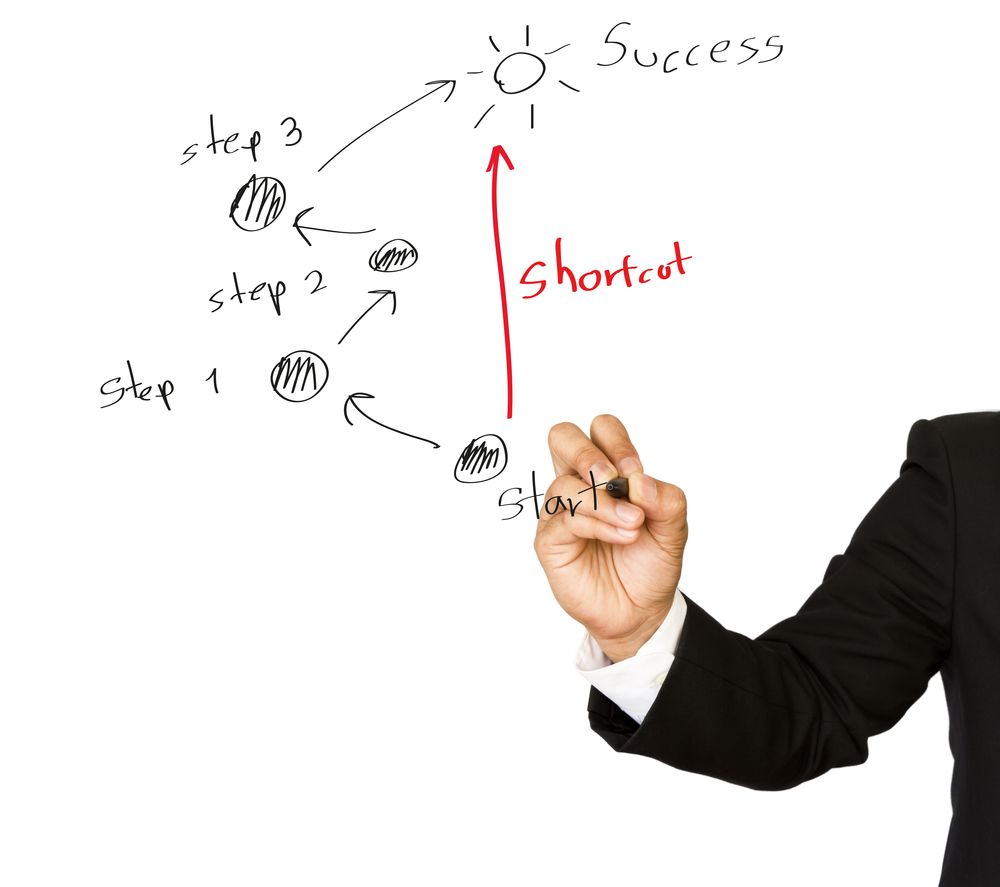
ShortcutThey thought about it for a while and laughed and said, “We’re engineers and we wanted to test all the cool technology, but you want us to test whether we first have a product that customers care about and whether it’s a business. We can do that.”

Smart team. They left thinking about how to redefine their MVP.

Lessons Learned

  • A minimum viable product is not always a smaller/cheaper version of your final product
  • Think about cheap hacks to test the goal
  • Great founders keep their eye on the prize

Don’t Give Away Your Board Seats

I had a group of ex-students out to the ranch who were puzzling over a dilemma – they’ve been working hard on their startup, were close at finding product/market fit and had been approached by Oren, a potential angel investor. Oren had been investing since he left Google four years ago and was insisting on not only a board seat, but he wanted to be chairman of the board. The team wasn’t sure what to do.

I listened for a while as they went back and forth about whether he should be chairman. Then I asked, “Why should he even be on your board at all?”  I got looks of confusion and then they said, “We thought all investors get a board seat. At least that’s what Oren told us.”

Uh oh.  Red flags just appeared in front of my eyes. I realized it was time for the board of directors versus advisors talk.

Roles for Financial Investors
I pointed out that there are four roles a financial investor can take in your company: a board member, a board observer (a non-voting attendee of board meetings,) an advisory board member, or no active role. I explained that as a non-public company there was no legal requirement for any investor to have a board seat. Period. That said, professional venture capital firms that lead a Series investment round usually make their investment contingent on a board seat. And it sounded like if successful, their startup was going to need additional funding past an angel round to scale.

In the last few years, it’s become more common for angel investors to ask for a board seat, but I suggested they really want to think hard about whether that’s something they need to do now.

“But how do we get the advice we need? We’re getting to the point that we have lots of questions about strategic choices and relationships. Isn’t that what a board is for?  That’s what we learned in business school.”

What’s a board for?
I realized that while my students had been through the theory it was time for some practice. So I told them, “At the end of the day your board is not your friend. You may like them and they might like you, but they have a fiduciary duty to the shareholders, not the founders. (And they have a fiduciary responsibility to their own limited partners.) That means the board is your boss, and they have an obligation to optimize results for the company. You may be the ex-employees one day if they think you’re holding the company back.”

I let that sink it for a bit and then asked, “How long have you worked with Oren?”

I kind of expected the answer, but still was a bit disappointed. “Well we met him twice, once over coffee and then over lunch.”

“You want to think hard about appointing someone to be your boss just because they’re going to write you what in the scheme of things will be a small check.”

Now they looked really confused. “But we need people with great advice who we can help us with our next moves.”

Advisory Board
“Do you know what an advisory board is?” I asked.  From the look on their faces, I realized they didn’t so I continued, “Advisors are just like they sound. They provide advice, introductions, investment, and visual theater – (proof that you can attract A+ talent.) An advisor that provides a combination of at least two of these is useful.”

A “board” of advisors is not a formal legal entity like a board of directors. That means that they can’t fire you or have any control of your company. While some founders like to meet their advisors in quarterly advisory board meetings, most companies don’t really have their advisory board meet as group. You can connect with them with them on an “as needed” basis. While you traditionally compensate advisors by giving them stock, I suggest you ask them to match any grant with an equal investment in the company – so they have “skin in the game.”

shutterstock_70458487Equally important is that an advisory board is a great farm team for potential outside board members. It allows you to work with them over an extended period of time and see the quality of their advice and how it’s delivered. If they are world-class contributors, when you raise a Series A round and you need to bring in an outside board member, picking someone you’ve worked with on your advisory board is ideal.”

Finally I suggested that Oren’s request to be chairman of a five-person startup seemed to be coming from someone looking to upgrade their resume, not to optimize their startup.

No Outsiders Until a Series A
As we wrapped up, I offered that there was no “right answer” (see Brad Feld’s post) but they should think about their board strategy as a balance between the amount of control given to outsiders versus the great advice outsiders can bring. I suggested that if they could pull it off they might want to consider keeping the board to the two founders for now, surrounded by great advisors which may include their seed investors. Then when they got a Series A, they’ll probably add one or two professional VC’s on the board with one great advisor as an outside board member.

As they left they were going through the experienced execs they knew who they were going to take out for coffee.

Lessons Learned

  • Your board of directors is your boss
  • Your advisory board is your friend
  • Not all investors get board seats, it’s your choice
  • Date advisors, marry board members

Listen to the post here
or download the podcast here

In Defense of Unreasonableness – Saving the California Coast

CLCV Enviro AwardsLast night Alison and I along with others were honored for environmental leadership by the California League of Conservation Voters. Here are the remarks I made.

——

Alison and I both grew up on the East Coast but we’ve been fortunate to live in California for 30 years.  One of the things we love most about living here is how beautiful the natural landscapes are and how close nature is to urban areas.  When we had kids, we began to think about our role in protecting these California landscapes for future generations.

Alison got a head start on me by joining the board of the State Parks Foundation. I soon followed by joining the board of Audubon, Peninsula Open Space Trust and the California League of Conservation Voters. And 6 ½ years ago I was appointed to the California Coastal Commission.

As you know, for the last 35 years we’ve been running a science experiment on the California Coast: How would the Coastal Act affect California’s coastal economy?

The results are now in.

California has some of the most expensive land in the country and as we all know, our economy is organized to extract the maximum revenue and profits from any asset. Visitors are amazed that there aren’t condos, hotels, houses, shopping centers and freeways, wall-to-wall, for most of the length of our state’s coast.shutterstock_127554866

It was the Coastal Act that saved California from looking like the coast of New Jersey.

In 1976 the voters of California wisely supported the Coastal Act and the creation of a California Coastal Commission with 2 goals.

First, to maximize public access and public recreational opportunities in the coastal zone while preserving the  rights of private property owners, and

Second, to assure priority for coastal-dependent and coastal-related development over other development on the coast.

For the last three decades, the Coastal Commission has upheld these directives while miraculously managing to avoid regulatory capture. It was able to do so because of three forces that sustained it: 1) an uncompromising executive director, 2) a majority of commissioners who looked past local parochial interests and voted for the interests of all Californians, and 3) an environmental community that acted as a tenacious watchdog.

The Commission has been able to stave off the tragedy of the commons for the California coast. Upholding the Coastal Act meant the Commission took unpopular positions upsetting developers who have fought with the agency over seaside projects, homeowners who strongly feel that private property rights unconditionally trump public access, and local governments who believe they should have the final say in what’s right for their community, regardless of its impact on the rest of the state.

During the last three decades, Peter Douglas ran the Coastal Commission. Unlike Robert Moses who built modern New York City’s or Baron Haussmann who built 19th century Paris in concrete and steel, the legacy of Peter Douglas is all the things you don’t see in the 1,100 miles of the California coast: wetlands that have not been filled, public access that has not been lost, coastal views that have not been blocked by hotels or condominiums. Douglas did this by standing up to developers, speakers of the state assembly, governors, and others who wanted him to be “reasonable” and to come to a “compromised solution”.

I was appointed to the Coastal Commission by a governor hoping to find a candidate with “green enough” credentials who would be “reasonable” and understand how “compromises” are made in California politics.

And for the first few years, I was reasonable.  New development, sure –just avoid the wetland.  More condos—OK but watch out for the Environmentally Sensitive Habitat Areas (ESHA).

I’m a slow learner but over the last few years, I realized that the coast of California exists as it is because the Commission had an unreasonable leader, who refused the political allure of “compromise” and who managed to keep the commission independent despite enormous pressure. And we as commissioners had to stand up to those pressures and be at times unreasonable in order to not compromise the essence of the Coastal Act.

Unfortunately Peter Douglas is gone and his unbending vision to save the coast is fading. Some current commissioners seem to want the Commission to be reasonable, and understand the reality of politics. In fact, some may even want a new “reasonable” executive director who will turn the commission into just another regulatory organization driven by the people they are supposed to regulate.

Sadly, even today with the results of an independent commission in front of us, some of our appointing authorities haven’t understood the gift that has been handed them – 100’s of miles of Pacific coastline, much of it unspoiled and accessible to all. And unlike other regulatory agencies, the unspoiled California Coast is finite, and bad decisions are virtually impossible to turn back once a development decision is implemented.

Over the last few years I learned that unless there is a vigilant and engaged public, lobbyists and developers will take over the commission using “reasonableness” and “fair compromise” as their watch words. It is up to individuals and our environmental organizations to become more active on coastal issues.

As Peter Douglas used to say, the coast is never saved, rather it is being saved every day,” as an ongoing process.

Unless we insist that our elected officials appoint people who are willing to prioritize the principals of the Coastal Act over both their own careers and the notion of being “reasonable” within the larger ecosystem of day-to-day California Politics, our children may one day look back at pictures of the California coast and wistfully say, “Look what our parents lost.”

Today it was with a feeling of a mission yet to be accomplished, I let the governor know that I am resigning from the Coastal Commission. My work on innovation, job creation and entrepreneurship for the Federal Government is taking an increasing amount of my time.

I’ve had a great time at the Commission. I’ve learned a lot from my fellow commissioners and hope I’ve done my part for my fellow Californians. I’d like to thank my alternate Jim Wickett on the Commision who has also dedicated his time and uncompromising votes towards carrying out the Coastal Act.

Most of all, I’m proud to have been “unreasonable” and “uncompromising” in defense of the California Coast. To be anything less risks the loss of what the Coastal Act and Peter Douglas has uniquely brought to all Californians.

Thank you for this award, and I very much appreciate all the support you have provided to me to be able to make my contribution to the California Coast and the Environment.

Poppies full size

Strangling Innovation: Tesla versus “Rent Seekers”

The greatest number of jobs is created when startups create a new market – one where the product or service never existed before or is radically more convenient. Yet this is where startups will run into anti-innovation opponents they may not expect. These opponents have their own name –  “rent seekers” – the landlords of the status-quo.

Smart startups prepare to face off against rent seekers and map out creative strategies for doing so…. First, however, they need to understand what a rent seeker is and how they operate…

———-

Recently, the New York and North Carolina legislatures considered a new law written by Auto Dealer lobbyists that would make it illegal for Tesla to sell cars directly to consumers. This got me thinking about the legal obstacles that face innovators with new business models.

Examples of startups challenging the status quo include: Lyft, SquareUber, Airbnb, SpaceX, Zillow, BitcoinLegalZoom, food trucks, charter schools, and massively open online courses. Past examples of startups that succeeded in redefining current industries include Craigslist, Netflix, Amazon, Ebay and Paypal.

While Tesla, Lyft, Uber, Airbnb, et al are in very different industries, they have two things in common: 1) they’re disruptive business models creating new markets and upsetting the status quo and 2) the legal obstacles confronting them weren’t from direct competitors, but from groups commonly referred to as “rent seekers.”

Rent Seekers
Rent seekers are individuals or organizations that have succeeded with existing business models and look to the government and regulators as their first line of defense against innovative competition. They use government regulation and lawsuits to keep out new entrants with more innovative business models. They use every argument from public safety to lack of quality or loss of jobs to lobby against the new entrants. Rent seekers spend money to increase their share of an existing market instead of creating new products or markets. The key idea is that rent seeking behavior creates nothing of value.

These barriers to new innovative entrants are called economic rent. Examples of economic rent include state automobile franchise laws, taxi medallion laws, limits on charter schools, auto, steel or sugar tariffs, patent trolls, bribery of government officials, corruption and regulatory capture. They’re all part of the same pattern – they add no value to the economy and prevent innovation from reaching the consumer.

No regulation?
Not all government regulation is rent or rent seeking. Not all economic rents are bad. Patents for example, provide protection for a limited time only, to allow businesses to recoup R&D expenses as well as make a profit that would often not be possible if completely free competition were allowed immediately upon a products’ release. But patent trolls emerged as rent seekers by using patents as legalized extortion of companies.

How do Rent Seekers win?
Instead of offering better products or better service at lower prices, rent seekers hire lawyers and lobbyists to influence politicians and regulators to pass laws, write regulations and collect taxes that block competition. The process of getting the government to give out these favors is rent-seeking.

Rent seeking lobbyists go directly to legislative bodies (Congress, State Legislatures, City Councils) to persuade government officials to enact laws and regulations in exchange for campaign contributions, appeasing influential voting blocks or future jobs in the regulated industry. They also use the courts to tie up and exhaust a startups limited financial resources.

Lobbyists also work through regulatory bodies like FCC, SEC, FTC, Public Utility, Taxi, or Insurance Commissions, School Boards, etc.   Although most regulatory bodies are initially set up to protect the public’s health and safety, or to provide an equal playing field, over time the very people they’re supposed to regulate capture the regulatory agencies. Rent Seekers take advantage of regulatory capture to protect their interests against the new innovators.

PayPal – Dodging Bullets
PayPal consistently walked a fine line with regulators. Early on the company shutdown their commercial banking operation to avoid being labeled as a commercial bank and burdened by banks’ federal regulations. PayPal worried that complying with state-by-state laws for money transmission would also be too burdensome for a startup so they first tried to be classified as a chartered trust company to provide a benign regulatory cover, but failed. As the company grew larger, incumbent banks forced PayPal to register in each state. The banks lobbied regulators in Louisiana, New York, California, and Idaho and soon they were issuing injunctions forcing PayPal to delay their IPO. Ironically, once PayPal complied with state regulations by registering as a “money transmitter” on a state-by-state basis, it created a barrier to entry for future new entrants.

U.S. Auto Makers – Death by Rent Seeking
The U.S. auto industry is a textbook case of rent seeking behavior. In 1981 unable to compete with the quality and price of Japanese cars, the domestic car companies convinced the U.S. government to restrict the import of  “foreign” cars. The result? Americans paid an extra $5 billion for cars. Japan overcame these barriers by using their import quotas to ship high-end, high-margin luxury cars, establishing manufacturing plants in the U.S. for high-volume lower cost cars and by continuing to innovate. In contrast, U.S. car manufacturers raised prices, pocketed the profits, bought off the unions with unsustainable contracts, ran inefficient factories and stopped innovating. The bill came due two decades later as the American auto industry spiraled into bankruptcy and its market share plummeted from 75% in 1981 to 45% in 2012.

Innovation in the Auto Industry
According to the Gallup Poll American consumers view car salesman as dead last in honesty and ethics. Yet when Tesla provided consumers with a direct sales alternative, the rent seekers – the National Auto Dealers Association turned its lobbyists loose on State Legislatures robbing consumers in North Carolina, New York and Texas of choice in the marketplace.

In these states it appears innovation be damned if it gets in the way of a rent seeker with a good lobbyist.

Much like Paypal, it’s likely that after forcing Tesla to win these state-by-state battles, the auto dealers will have found that they dealt themselves the losing hand.

Rent seeking is bad for the economy
Rent seeking strangles innovation in its crib. When companies are protected from competition, they have little incentive to cut costs or to pay attention to changing customer needs. The resources invested in rent seeking are a form of economic waste and reduce the wealth of the overall economy.

Schumpeter’s theory of creative destruction – that entry by entrepreneurs was the disruptive force that sustained economic growth even as it destroyed the value of established companies – didn’t take into account that countries with lots of rent-seeking activity (pick your favorite nation where bribes and corruption are the cost of doing business) or dominated by organized interest groups tend to be the economic losers. As rent-seeking becomes more attractive than innovation, the economy falls into decline.

Startups, investors and the public have done a poor job of calling out the politicians and regulators who use the words “innovation means jobs” while supporting rent seekers.

What does this mean for startups?
In an existing market it’s clear who your competitors are. You compete for customers on performance, ease of use, or price. However, for startups creating a new market – one where either the product or service never existed before or the new option is radically more convenient for customers –  the idea that rent seekers even exist may come as a shock. “Why would anyone not want a better x, y or z?” The answer is that if your startup threatens their jobs or profits, it doesn’t matter how much better life will be for consumers, students, etc. Well organized incumbents will fight if they perceive a threat to the status quo.

As a result disrupting the status quo in regulated market can be costly. On the other hand, being a private and small startup means you have less to lose when you challenge the incumbents.

If you’re a startup with a disruptive business model here’s what you need to do:

Map the order of battle

  • Laughing at the dinosaurs and saying, “They don’t get it” may put you out of business. Expect that existing organizations will defend their turf ferociously i.e. movie studios, telecom providers, teachers unions, etc.
  • Understand who has political and regulator influence and where they operate
  • Figure out an “under the radar” strategy which doesn’t attract incumbents lawsuits, regulations or laws when you have limited resources to fight back

Pick early markets where the rent seekers are weakest and scale

  • For example, pick target markets with no national or state lobbying influence. i.e. Craigslist versus newspapers, Netflix versus video rental chains, Amazon versus bookstores, etc.
  • Go after rapid scale of passionate consumers who value the disruption i.e. Uber and Airbnb, Tesla
  • Ally with some larger partners who see you as a way to break the incumbents lock on the market. i.e. Palantir and the intelligence agencies versus the Army and IBM’s i2, / Textron Systems Overwatch

AirBnb – Damn the torpedoes full speed ahead
For example, Airbnb, thrives even though almost all of its “hosts” are not paying local motel/hotel taxes nor paying tax on their income, and many hosts are violating local zoning laws. Some investors and competitors may be concerned about regulatory risk and liability.  AirBNB’s attitude seems to be “build the business until someone stops me, and change or comply with regulations later.”  This is the same approach that allowed Amazon to ignore local sales taxes for the last two decades.

When you get customer scale and raise a large financing round, take the battle to the incumbents. Strategies at this stage include:

  • Hire your own lobbyists
  • Begin to build your own influence and political action groups
  • Publicly shame the incumbents as rent seekers
  • Use competition among governments to your advantage, eg, if  New York or North Carolina doesn’t want Tesla, put the store in New Jersey, across the river from Manhattan, increasing New Jersey’s tax revenue
  • Cut deals with the rent seekers. i.e. revenue/profit sharing, two-tier hiring, etc.
  • Buy them out i.e. guaranteed lifetime employment

Lessons Learned

  • Rent seekers are organizations that have lost the ability to innovate
  • They look to the government to provide their defense against innovation
  • Map the order of battle
  • Pick early markets and scale
  • With cash, take the battle to the incumbent

Listen to the post here: or download the Podcast here