No Plan Survives First Contact With Customers – Business Plans versus Business Models

No campaign plan survives first contact with the enemy
Field Marshall Helmuth Graf von Moltke

I was catching up with an ex-graduate student at Café Borrone, my favorite coffee place in Menlo Park. This was the second of three “office hours” I was holding that morning for ex students. He and his co-founder were both PhD’s in applied math who believe they can make some serious inroads on next generation search. Over coffee he said, “I need some cheering up.  I think my startup is going to fail even before I get funded.” Now he had my attention. I thought his technology was was potentially a killer app. I put down my coffee and listened.

He said, “After we graduated we took our great idea, holed up in my apartment and spent months researching and writing a business plan. We even entered it in the business plan competition. When were done we followed your advice and got out of the building and started talking to potential users and customers.” Ok, I said, “What’s the problem?” He replied, “Well the customers are not acting like we predicted in our plan!  There must be something really wrong with our business. We thought we’d take our plan and go raise seed money. We can’t raise money knowing our plan is wrong.”

I said, “Congratulations, you’re not failing, you just took a three and a half month detour.”

Here’s why.

No Plan Survives First Contact With Customers
These guys had spent 4 months writing a 60-page plan with 12 pages of spreadsheets. They collected information that justified their assumptions about the problem, opportunity, market size, their solution and competitors and their team, They rolled up a 5-year sales forecast with assumptions about their revenue model, pricing, sales, marketing, customer acquisition cost, etc. Then they had a five-year P&L statement, balance sheet, cash flow and cap table. It was an exquisitely crafted plan. Finally, they took the plan and boiled it down to 15 of the prettiest slides you ever saw.

The problem was that two weeks after they got out of the building talking to potential customers and users, they realized that at least 1/2 of their key assumptions in their wonderfully well crafted plan were wrong.

Why a business plan is different than a business model
As I listened, I thought about the other startup I had met an hour earlier. They also had been hard at work for the last 3½ months. But they spent their time differently. Instead of writing a full-fledged business plan, they had focused on building and testing a business model.

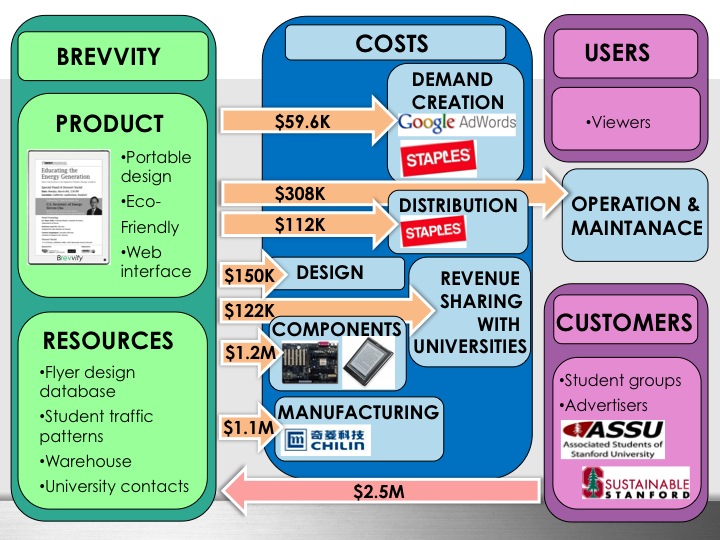
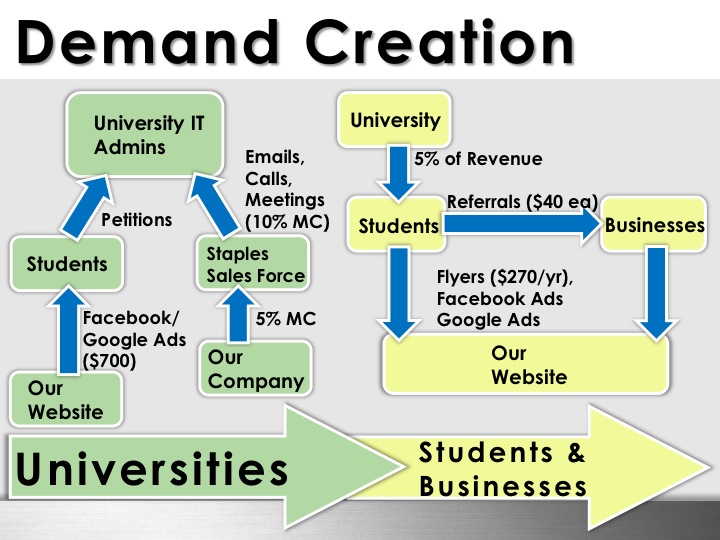
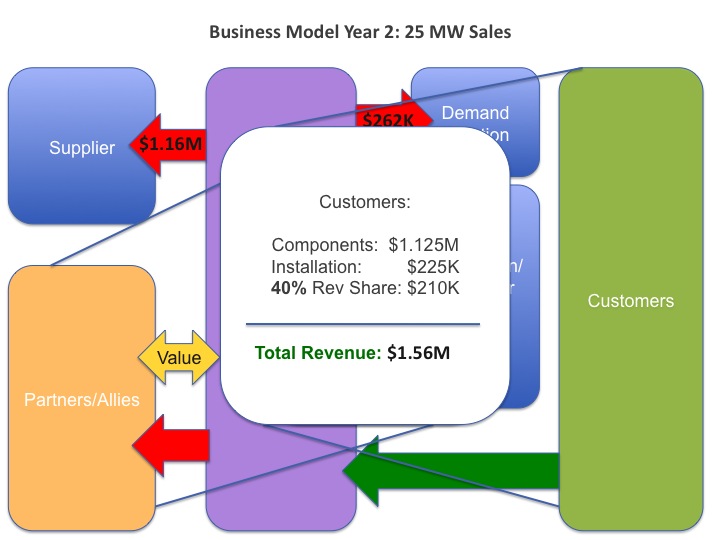
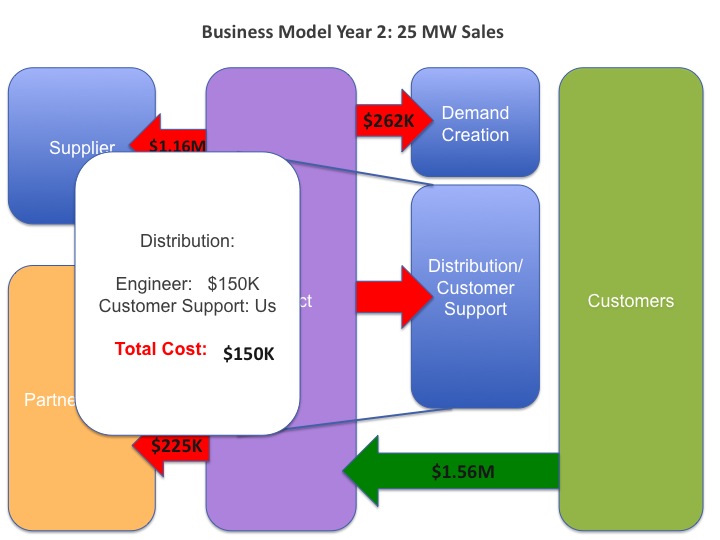
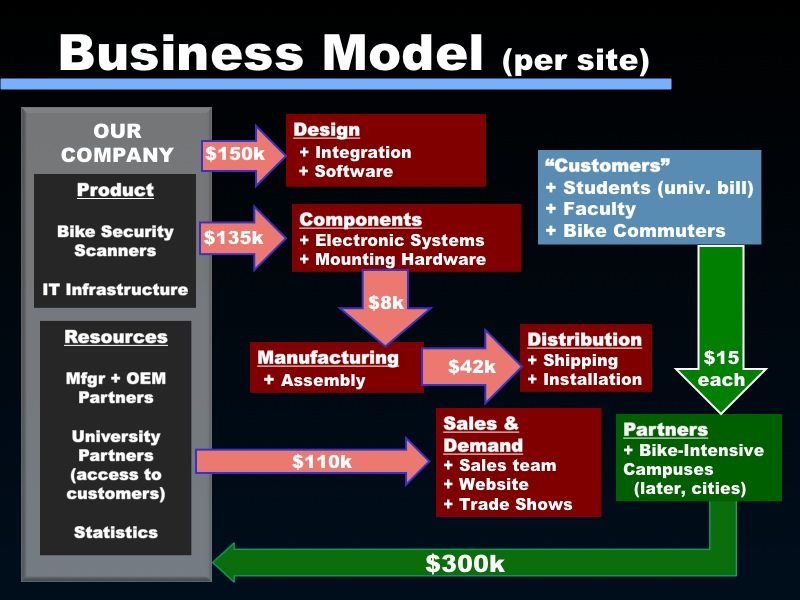
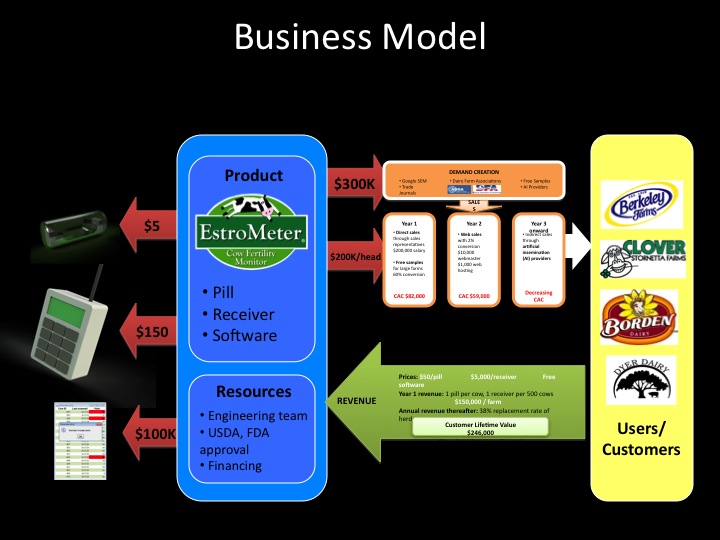
A business model describes how your company creates, delivers and captures value. It’s best understood as a diagram that shows all the flows between the different parts of your company. This includes how the product gets distributed to your customers and how money flows back into your company. And it shows your company’s cost structures, how each department interacts with the others and where your company can work with other companies or partners to implement your business.

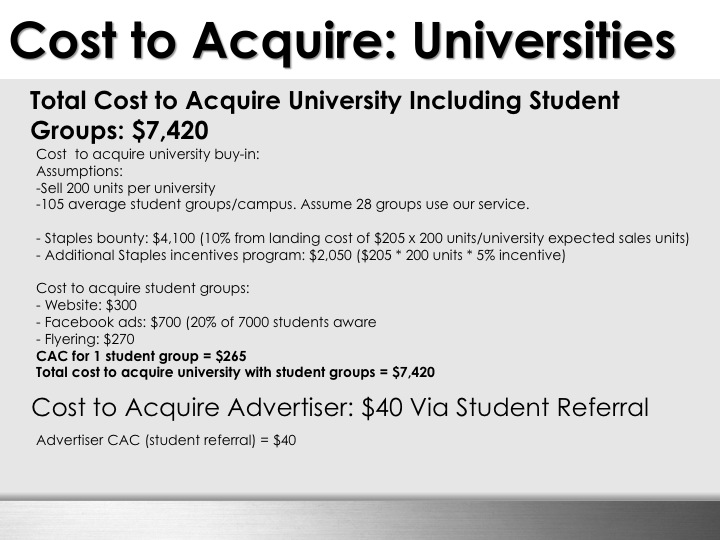
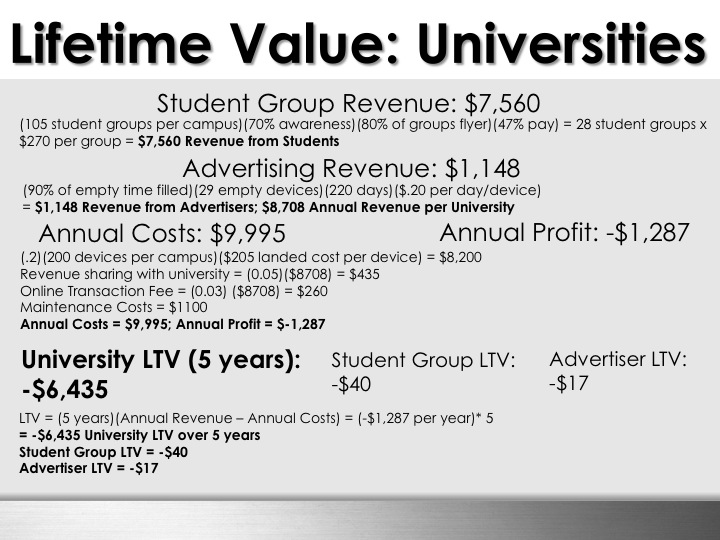
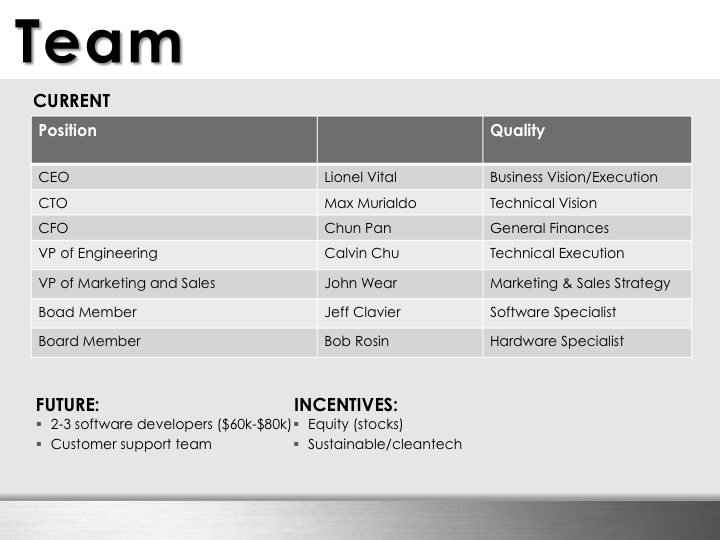
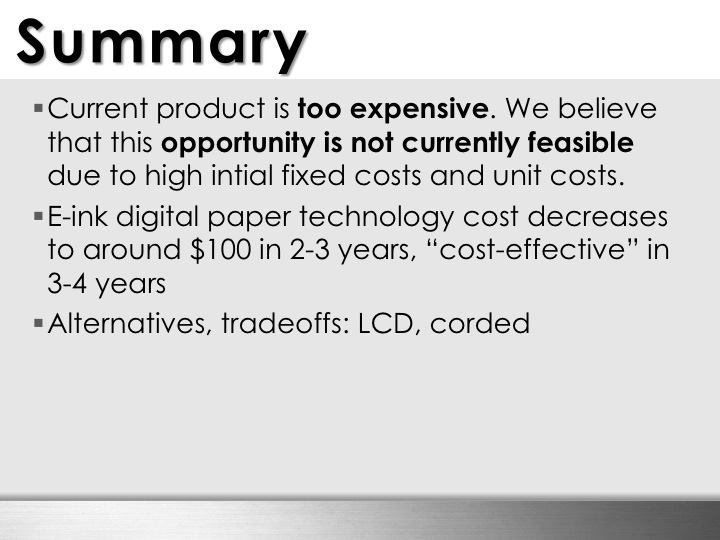
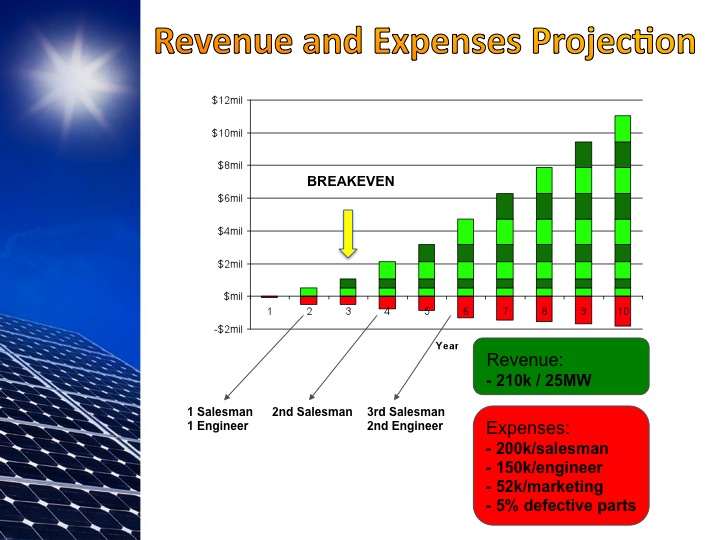
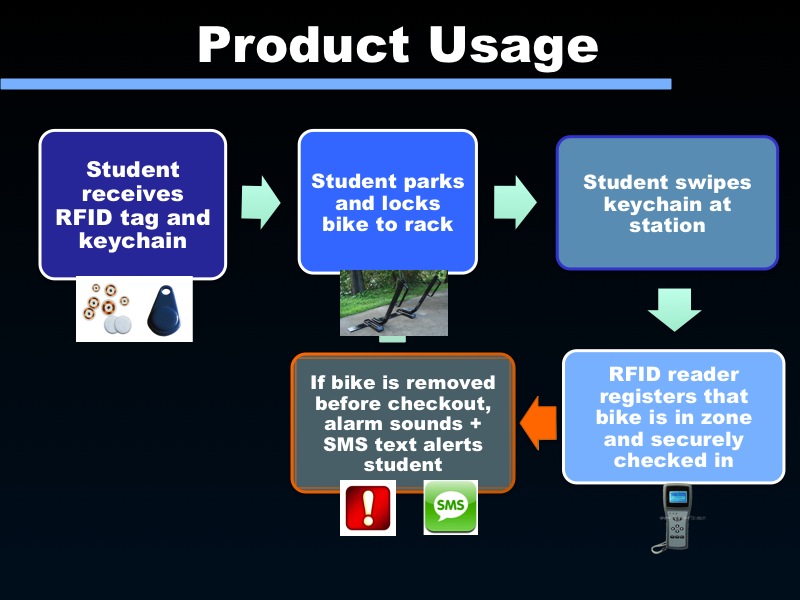
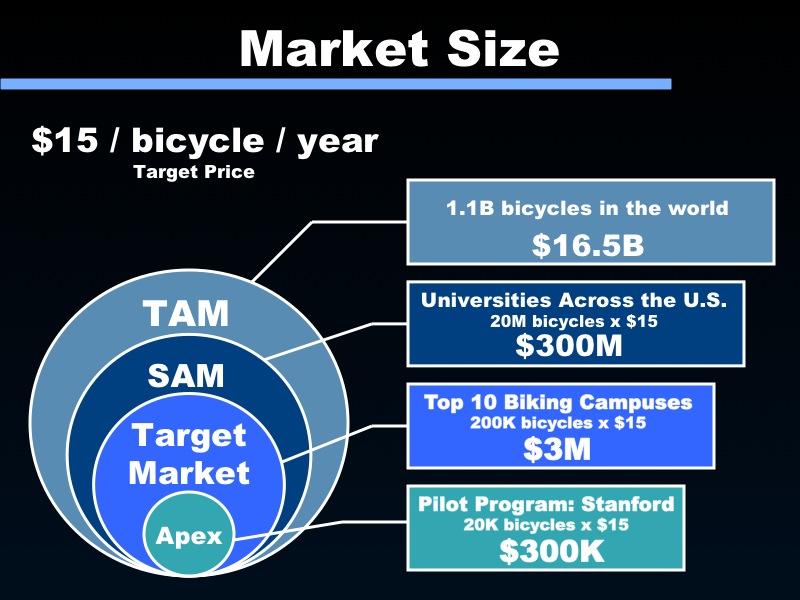
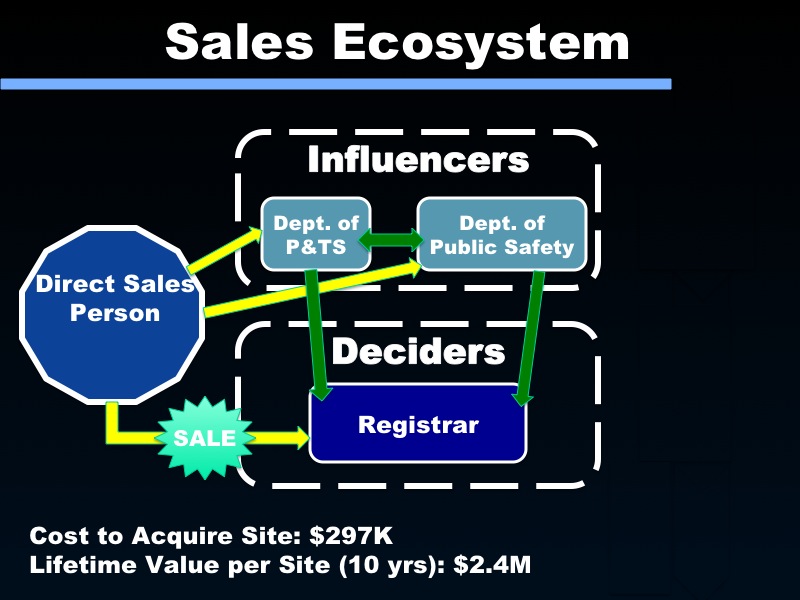
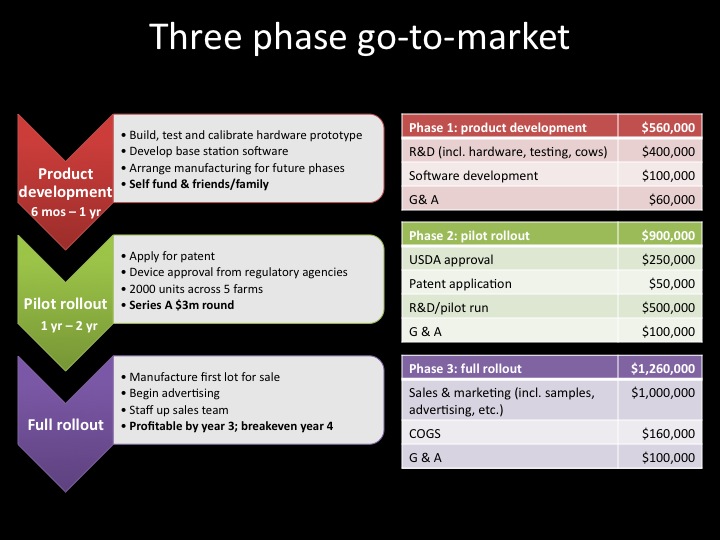
This team had spent their first two weeks laying out their hypotheses about sales, marketing, pricing, solution, competitors, etc. and put in their first-pass financial assumptions. It took just five PowerPoint slides to capture their assumptions and top line financials.

This team didn’t spend a lot of time justifying their assumptions because they knew facts would change their assumptions. Instead of writing a formal business plan they took their business model and got out of the building to gather feedback on their critical hypotheses (revenue model, pricing, sales, marketing, customer acquisition cost, etc.) They even mocked up their application and tested landing pages, keywords, customer acquisition cost and other critical assumptions. After three months they felt they had enough preliminary customer and user data to go back and write a PowerPoint presentation that summarized their findings.

This team had wanted to have coffee to chat about which of the four seed round offers they had received they should accept.

A plan is static, a model is dynamic
Entrepreneurs treat a business plan, once written as a final collection of facts. Once completed you don’t often hear about people rewriting their plan. Instead it is treated as the culmination of everything they know and believe.  It’s static.

In contrast, a business model is designed to be rapidly changed to reflect what you find outside the building in talking to customers.  It’s dynamic.

“So do you mean I should never have written a business plan?” asked the founder who had spent the time crafting the perfect plan. “On the contrary,” I said. “Business plans are quite useful. The writing exercise forces you to think through all parts of your business. Putting together the financial model forces you to think about how to build a profitable business. But you just discovered that as smart as you and your team are, there were no facts inside your apartment. Unless you have tested the assumptions in your business model first, outside the building, your business plan is just creative writing.

(Next post: Iterating the Business Model – The Pivot.)

Lessons Learned

  • A startup is an organization formed to search for a repeatable and scalable business model.
  • There are no facts inside your building, so get outside and get some.
  • Draw and test the Business Model first, the Business Plan then follows.
  • Few if any investors read your business plan to see if they’re interested in your business
  • They’re a lot more interested in what you learned

Add to FacebookAdd to DiggAdd to Del.icio.usAdd to StumbleuponAdd to RedditAdd to BlinklistAdd to TwitterAdd to TechnoratiAdd to Yahoo BuzzAdd to Newsvine

Teaching Entrepreneurship – The “Survey” Class

The Fundamentals of Technology Entrepreneurship course at Stanford taught undergraduates how to take a technical idea and turn it into a profitable and scalable company. By getting out of the building on a team project, the class helped students viscerally understand that a startup is a search for a profitable business model. Students formed teams, came up with a business idea then talked to customers, vendors and sales channel partners to validate their business model. (And learned how to pivot their model as reality intruded.)

For undergraduates taking multiple classes finding the time to do it well was tough. But for those with full time jobs this class was a disaster.

Too Much
The first time I taught the Fundamentals of Technology Entrepreneurship class, a quarter of the class were foreign students in a special engineering-entrepreneurship program where they took one entrepreneurship class each quarter at Stanford while working full time in technology startups in Silicon Valley. The Fundamentals of Technology Entrepreneurship was intended to be their introduction to entrepreneurship. However, working full time while simultaneously attempting to participate in a team based project and Customer Discovery outside the classroom just didn’t work. The foreign students felt overwhelmed and the full time Stanford students thought they weren’t carrying their weight (when in fact they were carrying much, much more.)

We quickly realized we needed a different class to introduce entrepreneurship to students who were already knee deep in working in a startup 24/7.

Design a New Class Around Entrepreneurial Guest Speakers
Brainstorming with Tina Seelig we came up with the idea of a survey course – an introduction to entrepreneurship built around Stanford’s Entreprenuerial Thought Leaders speakers series which brings technology speakers to campus every week. In this survey course, the students would listen to the speakers and then attend twice-weekly classes which focused on the basic concepts of a startup (demand creation, sales, partnerships, team building, financing, etc.) We’d use the lectures and guest speakers to help students new to the field understand that a startup is simply a temporary organization to search for a repeatable and profitable business model.  Then we’d have the students interact directly with entrepreneurs and industry leaders in the classroom.

The Spirit of Entrepreneurship – An Interactive Survey Class
We christened the class The Spirit of Entrepreneurship. Open to all students at Stanford it was taught as two, one-hour sessions, one held the day before the guest speaker and one immediately after each guest speaker. To prepare for each speaker, we asked students to analyze the speakers company over the weekend. (For the students who were working full-time this schedule gave them the time they needed to complete their analysis.)

This new class also appealed to a wide variety of non-engineering Stanford students. In addition to the overseas work/study students I found myself teaching history majors, English majors, education majors, et al who were interested in getting their toes wet but weren’t sure they wanted to commit to the hardcore Fundamentals of Technology Entrepreneurship course.

Each week the students had to submit a two-page analysis of the presenting company’s business model, distribution channels, demand creation activities, and engineering. As some of the companies were already large, the students had to find out how the founders discovered their business model, built their team and got funded.

Since I did not select the guest speakers, the course turned into a continual improv session as I tried to match my lectures to the unpredictable variety of industries (biotech, enterprise software, video games, media, web 2.0, etc.) and different life cycle stages of the guest speakers’ companies (startup to 20+billion.)

Guest Speakers
The students saw the guests speak before a live-audience of several hundred of their fellow Stanford students.  (The videos of these speakers are edited, indexed and available as 1600 free videos and podcasts as part of Stanford’s E-Corner, on-line here.)

The heart of the class and its improvisational nature came when every speaker agreed to walk over to our classroom and sit and chat with our class one-on-one for an hour. I would interview them for the first 20 minutes or so and then turn the questioning over to the class. This personal first-hand interaction with entrepreneurs created lots of opportunity for insights. For example, hearing David Heinemeir Hannson of 37Signals talk about why his company will never get “big” and then have Steve Case of AOL/TimeWarner talk the next week about why his did helped students understand that there is no “right answer”. Similarly having the students question Trip Adler from Scribd one week about why posting documents on-line is the future and hearing from Rashmi Sinha and Jonathan Boutelle of Slideshare the next week remind us that it’s all about PowerPoints, vividly demonstrated that entrepreneurs can interpret the same market in very different ways.

Dinners
I spent quite a few dinners with my students in this class. The Stanford students were curious whether startups were for them and we talked about whether entreprenuers are born or can be made (the nature versus nurture debate.) The overseas students were trying to make sense of Silicon Valley, its work ethic and how its entrepreneurial culture would fit back home. In Silicon Valley we take for granted that someone who failed in their previous company is considered an “experienced entrepreneur.”  I was reminded that in other cultures and countries the consequences of failure are much less benign.

Lessons Learned

  • Entrepreneurship is an art not a science.
  • Entrepreneurship is driven by people as well as business models.
  • Entrepreneurship only thrives in a culture that does not penalize risk-taking or failure.
  • There is no “right path” to success

Add to FacebookAdd to DiggAdd to Del.icio.usAdd to StumbleuponAdd to RedditAdd to BlinklistAdd to TwitterAdd to TechnoratiAdd to Yahoo BuzzAdd to Newsvine

Teaching Entrepreneurship – Logistics

Back from a family humanitarian trip/vacation to one of the last bastions of Communism where “marketing” isn’t even a profession and entrepreneurship is a crime.  The irony is that the “Revolutionary Square” in all these Communist countries will be the the first place the McDonald’s go when the system collapses.

——————-

In my last post I described my approach to one of the three classes I teach at Stanford in the engineering school: Fundamentals of Technology Entrepreneurship.  The key things I want students to take from the class are:

  • Understand that a startup is a temporary organization designed to search for a profitable business model
  • Learn how to put together a business model, not a business plan
  • Understand that a business model is only a series of hypotheses that need to be validated outside the building

Class Logistics
As described in the previous post, this is a hands-on class. The 55 students formed 11 teams, and each team had to come up with an original idea, size the opportunity, propose a Business Model, get out of the building and test their hypotheses and analyze and explain each of the parts of their model.

The class wouldn’t have been possible without lots of hands other than mine.

Teaching Team
Having a teaching partner makes life a lot easier and the class improves. A partner allows me the flexibility to miss a session or two (my job as a California Coastal Commissioner meets three days every month up and down the coast of California.)  But the best benefit is bringing a second set of eyeballs to the curriculum which always makes it better.

This was the year I finally got the “business model versus business plan” concept nailed down. In previous classes I had experimented with moving away from the traditional focus on writing a business plan to a hands-on approach to building a business model.

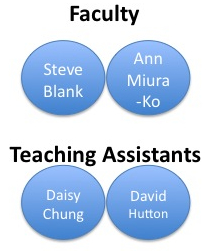
But it wasn’t until Ann Miura-Ko joined me as a teaching partner that this “teach the model not the plan” idea jelled. Ann who had been my Teaching Assistant while she had finished her PhD at Stanford felt the same frustration about teaching entrepreneurs to assemble a business plan that we knew in the real world wouldn’t survive first contact with customers. After Stanford, Ann joined Mike Maples’ Venture Capital firm Floodgate as a partner. Over the summer we had both been impressed with Alexander Osterwalder’s Business Model Template work. At first we thought of adopting his template for the class, but found that an even more simplified version of a canonical business model that Ann developed worked better.

Teaching Assistants
Teaching at both Stanford and Berkeley I get to see the difference between the resources in a private university and those of a state university. (For the first 5 years at Berkeley, I taught 60 students by myself with no teaching partner or teaching assistant.) As the Stanford entrepreneurship program for the engineering school sits in the Management Science and Engineering Department, most of our TA’s are students in the MS&E PhD program. For this class Daisy Chung and David Hutton were our Teaching Assistants (TA’s.) TA’s make managing 60 students working on cases and team projects manageable.

They set up and keep the class web site updated.  They provide logistical support for guest speakers. They answer enumerable emails about logistics as well as substantive questions about class content. In addition to Ann and my office hours, Daisy and David held their own office hours to provide student support.

Most importantly, while Ann I reviewed all the grades, the TA’s managed the logistics of grading: grading the homework (in this class the case study summaries) and the business model written summary, keeping track of class participation and rolling up all the grades from the formal presentation. And they gave us feedback after each class session letting us know if we were particularly incoherent and kept us abreast of the usual student and team dynamics/crisis.

Finally our TA’s managed the mentors we had supporting the students.

Mentors
One part of Silicon Valley culture that doesn’t get enough credit is the generosity of entrepreneurs and VC’s who are willing to share their time with students. Ann and I recruited VC’s and entrepreneurs to be mentors for each team. (We’ve never had a problem in getting help for these classes.) Typically we have a mix of new mentors and those who have volunteered their time before.)  I wrote a handbook for the mentors to explain their roles (here.)

Essentially mentors support and coach each team. They typically met once or twice in person with the team, help them network outside the building, answer emails, provide critiques, etc. On average, mentors spent about 6 to 8 hours of time over the quarter with students. Some even came into to class to cheer on their team for their final business model presentations.

Guest Speakers
Two important things I learned early on in teaching are: 1) regardless of how good you are, students get sick of hearing you drone on week after week, and 2) hearing a guest make a point you’ve been trying to get across often makes it stick.  So we tried to break up our lectures with guest speakers.

Ideally we attempt to match the guests with the case or class session subject. For example, when we taught the value of getting out of the building and agile development, we had Eric Ries talk about the Lean Startup. When we covered partnerships with the WebTV case, we had Spencer Tall who negotiated the deal with Sony for WebTV come in and explain to the class what really happened. (Ann also kept me in the 21st century by making sure we had several woman entrepreneurs as guest speakers.)

Results
In the last decade, entrepreneurship has become faddish, particularly in college. It’s now “cool” to be an entrepreneur, and every school wants some type of entrepreneurship course. While that’s gratifying, the fact is that most people are ill suited to survive in the wild as founders or early employees.

I taught this introductory undergraduate class without many compromises. If you want to know what being an entrepreneur is going to be like you didn’t get to sit in a classroom listening to lectures for a quarter and then write a business plan. (I also teach a less intense introduction class for engineers called the Spirit of Entrepreneurship and the Customer Development Class at Berkeley which I’ll describe in a future post.) I actually hoped that some students who were curious about entrepreneurship would discover that it is definitely not for them. Better to find it out in a classroom than as a career choice.

While that did happen to a few (some are still in shock that I “cold-call” in class, others can’t handle the team dynamics or complain that there is no “right” answer, or were disoriented that the mentors, professors and customers all had different answers) the class seems to have had the opposite effect on an interesting segment.

Sometimes you get emails like this at the end of class:

“Just want to say thank you for the “big ideas” you brought to us. Thanks to your class, I have been thinking thoroughly about my future career and have decided that I would become an entrepreneur rather than anything else. Actually I made up my mind just on my plane to my final round of interview with the Boston Consulting Group. I flew there and told the partner that I would become an entrepreneur instead.”

Oh, oh.

——–

Coming Soon
In the fall Ann and I are going to develop a new graduate-level class for Stanford that will take this one to the next level. Students will not only have to assemble a team, come up with the idea and leave the classroom to test the business model – they’ll need to come back with real customer orders.  (And if it’s a web-based product, they’ll have to build it.)

I wonder if we can fill the class.

———–

A few more of the final class presentations are here (click on the thumbnails to enlarge):

One last presentation here:


Add to FacebookAdd to DiggAdd to Del.icio.usAdd to StumbleuponAdd to RedditAdd to BlinklistAdd to TwitterAdd to TechnoratiAdd to Yahoo BuzzAdd to Newsvine

Teaching Entrepreneurship – By Getting Out of the Building

One of the classes I teach in the engineering school at Stanford is E145: the Fundamentals of Technology Entrepreneurship, an introduction to building a scalable startup. While the class is open to everyone at the University, we want to teach science and engineering undergraduates how they can take a technical idea and turn it into a profitable and scalable company.

The class which was authored by Tom Byers, is offered every quarter and taught by four different professors.  But thanks to Tom, we all get to teach it with a slightly emphasis.

I taught the class this semester with Ann Miura-Ko a partner at Maples Investments.

Teaching Goals
Our goal is to teach students the key concepts of the startup process and help them understand that a startup is a search for a profitable business model.  We did this with twice weekly lectures and seven case studies. Most importantly we tied the lectures to a hands-on team project. Students formed 5-person teams, came up with a business idea then got out of the building to validate their business model. (And learn how to pivot their model as reality intrudes.)

Our goal was not to teach the students to write a business plan nor were we trying to teach them how to give a pitch to VC’s.

A Startup is a Search For A Business Model
As I’ve described in previous posts; a startup is an organization formed to search for a repeatable and scalable business model.

A business model describes how your company creates, delivers and captures value. It’s best understood as a diagram that shows all the flows between the different parts of your company.  This includes how the product gets distributed to your customers and how money flows back into your company.  And it shows your company’s cost structures, how each department interacts with the others and where your company can work with other companies or partners to implement your business.

We want to teach our students to think about how their “idea” for a business translated into a business model and then to see if that business model will survive first contact with customers.

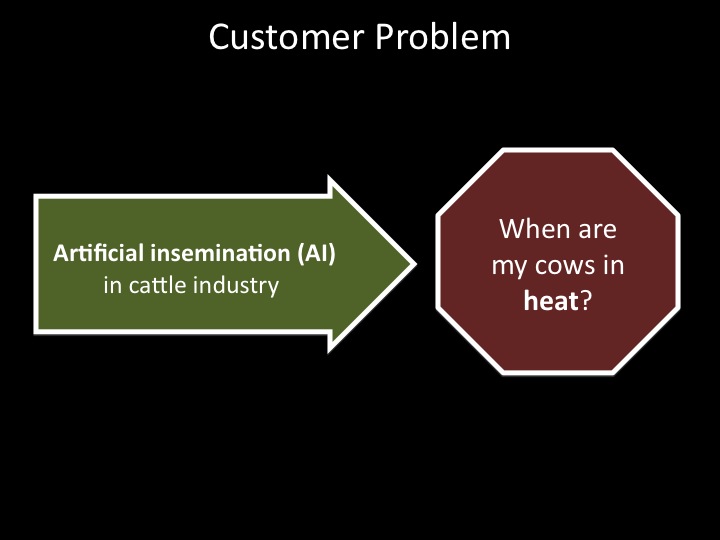
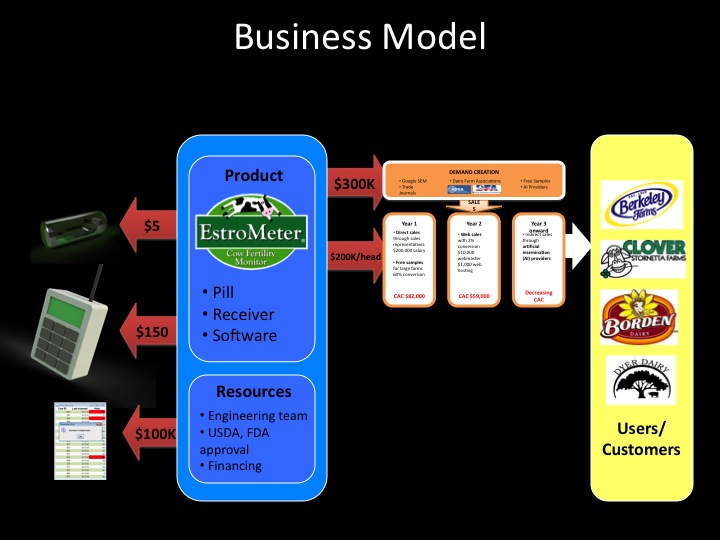
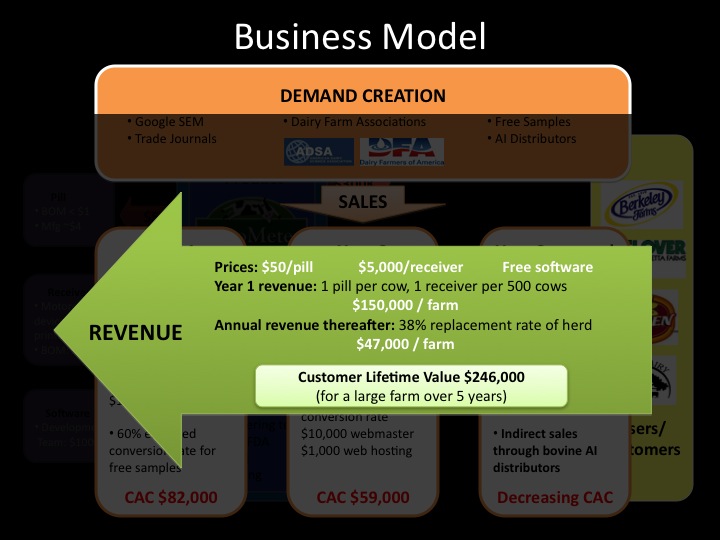
In our class Ann and I offered the students a template of a business model diagram.  Their job was to get out of the building and transform the boxes into real data.  (I’ll show you some of their examples at the end of this post.)

Class Lectures
We had ten weeks and an hour and fifty minutes twice a week to cover the basics of a startup.

Our lectures were organized as:

  • Where do ideas come from?
  • How to decide whether an idea is a scalable business opportunity.
  • What is a business model?
  • Distribution, Demand Creation and Partnerships
  • Customer Discovery
  • First Team Presentation – What’s the Idea and How Large is the Opportunity
  • Regulation and Intellectual Property
  • Building Startup Teams
  • Metrics That Matter (Business Model Metrics)
  • Accounting Basics and Multi-stage Finance
  • Liquidity – the End Game
  • Final Team Presentation – What’s the Business Model?

Interspersed among the lectures were seven “case studies”: Chegg, IMVU, WebTV. Nanogene, Wily, Solidworks and Barbara Arenson.  Each case study was a real world example of an issue an entrepreneur might encounter as they were building a company.

Final Team Project – What’s the Business Model?
11 student teams of 5 were working outside of class on the Opportunity Assessment Project. Each team had to take an original idea, come up with the positioning and analyze the potential size of the opportunity, propose a Business Model, and analyze and explain each of the parts of their model.

Customer Discovery
Only 5 out of the 55 students had taken an entrepreneurial class before. None of the students were domain experts in their areas, and each team had to figure out how to contact potential customers and channel partners. Yet every team did figure out how to conduct extensive out of building Customer Discovery.  (By design we didn’t give them too much Customer Development theory. The emphasis was on getting out of the building and testing their hypothesis.)

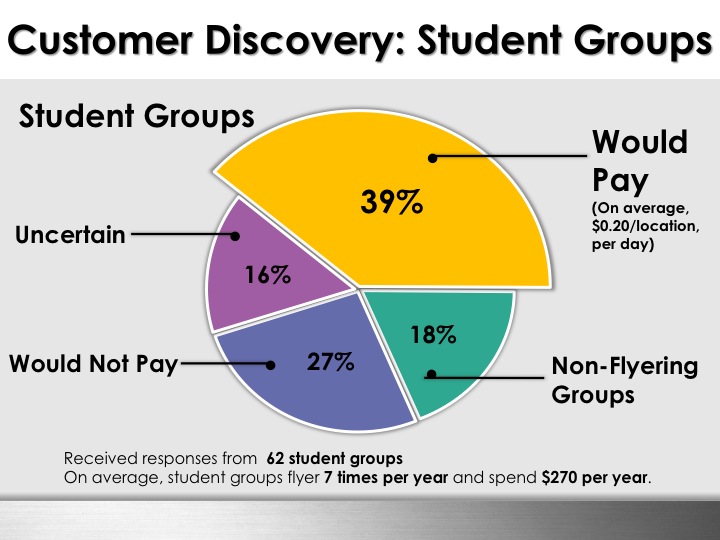
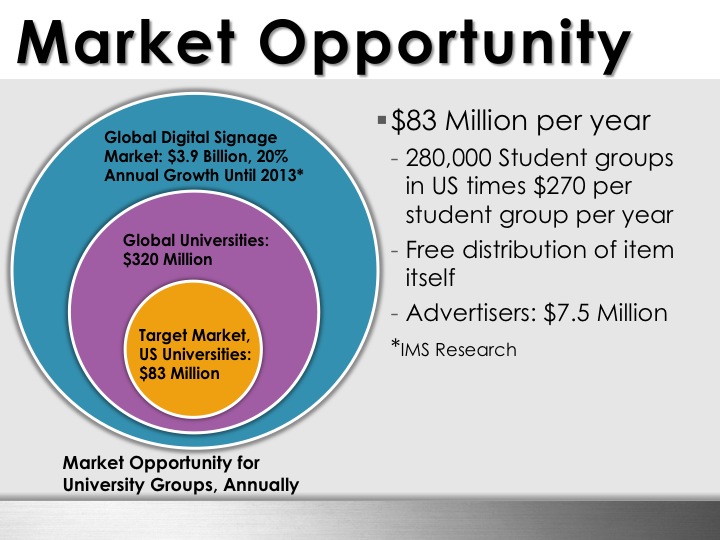
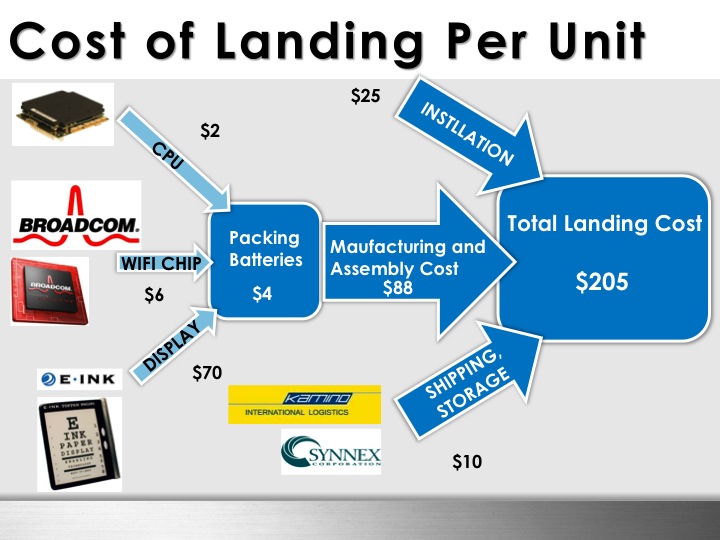
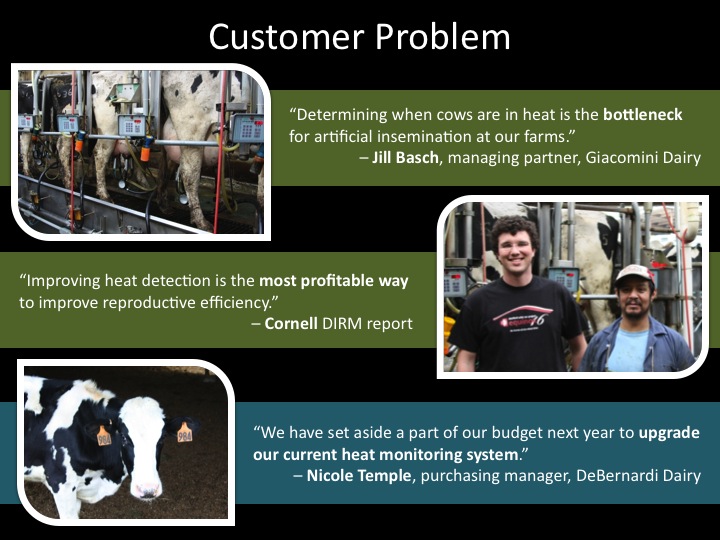
Here are some examples the “out of the building” work the students did.

Presenting the Project
As their final project, each of the 11 teams had 15 minutes to present their conclusions and then later submit a written summary.  (We were equally happy if the students discovered this would not be a profitable business as we were if they found a killer idea.) The presentations were graded on:

  • Did they quickly summarize their idea?
  • Did they articulate the problem?
  • Did they size the opportunity of solving the problem?
  • Was their solution clear? (for product companies, this should include manufacturing and cost of goods)
  • Did they describe demand creation and assign acquisition costs?
  • Did they describe lifetime value of a customer?
  • Did they describe distribution channel and assign channel costs?
  • Did they get out of the building?
  • Did they tell us what they learned from going out of the building?
  • Did they adequately diagram the business model?
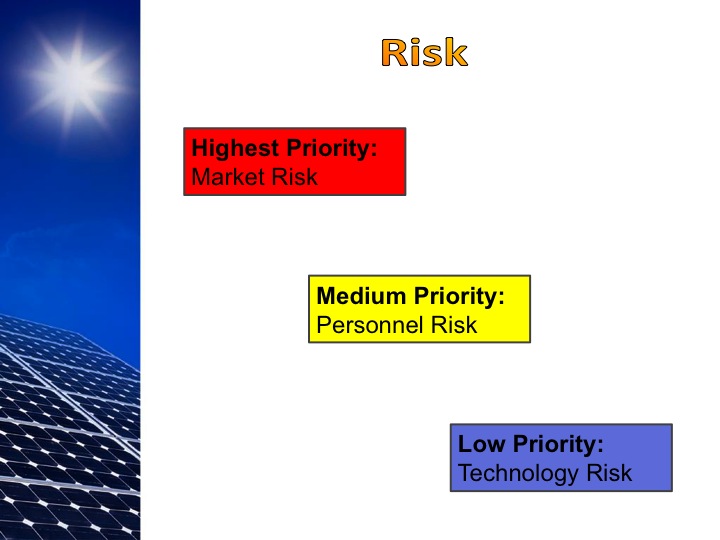
  • Did they describe the risks?

Remember the goal was not a fundable pitch deck or a full business plan with pages of spreadsheets.  Rather we wanted them to start with an idea and see what it would take to build a real business (and tell us in 15 minutes).

This post and the next will have a few of the final presentations (click on the thumbnails to enlarge.)

And here was another presentation in a very different market.

Lessons Taught

  • Entrepreneurship is an art not a science.
  • It is best learned by a combination of theory and practice.
  • No business model survives first contact with customers
  • You won’t believe this until you hear customers tell you you’re wrong.
  • Agility and resiliency are not tested inside the building.
  • They’re essential outside.

Add to FacebookAdd to DiggAdd to Del.icio.usAdd to StumbleuponAdd to RedditAdd to BlinklistAdd to TwitterAdd to TechnoratiAdd to Yahoo BuzzAdd to Newsvine

No Accounting For Startups

Startups that are searching for a business model need to keep score differently than large companies that are executing a known business model.

Yet most entrepreneurs and their VC’s make startups use financial models and spreadsheets that actually hinder their success.

Here’s why.

Managing the Business
When I ran my startups our venture investors scheduled board meetings each month for the first year or two, going to every six weeks a bit later, and then moving to quarterly after we found a profitable business model.

One of the ways our VC’s kept track of our progress was by taking a monthly look at three financial documents: Income Statement, Balance Sheet and Cash Flow Statement.

If I knew what I knew now, I never would have let that happen.  These financial documents were worse than useless for helping us understand how well we were (or weren’t) doing.  They were an indicator of “I went to business school but don’t really know what to tell you to measure so I’ll have you do these.”

To be clear – Income Statements, Balance Sheets and Cash Flow Statements are really important at two points in your startup.  First, when you pitch your idea to VC’s, you need a financial model showing VC’s what your company will look like after you are no longer a startup and you’re executing the profitable model you’ve found.  If this sounds like you’re guessing – you’re right – you are.  But don’t dismiss the exercise.  Putting together a financial model and having the founders understand the interrelationships of the variables that can make or break a business is a worthwhile exercise.

The second time you’ll need to know about Income Statements, Balance Sheets and Cash Flow Statements is after you’ve found your repeatable and profitable business model.  You’ll then use these documents to run your business and monitor your company’s financial health as you execute your business model.

The problem is that using Income Statement, Balance Sheets and Cash Flow Statements any other time, particularly in a startup board meeting, has the founding team focused on the wrong numbers.  I had been confused for years why I had to update an income statement each board meeting that said zero for 18 months before we had any revenue.

But What Does a Business Model Have to Do With Accounting in My Startup?
A startup is a search for a repeatable and scalable business model.  As a founder you are testing a series of hypotheses about all the pieces of the business model: Who are the customers/users? What’s the distribution channel? How do we price and position the product? How do we create end user demand? Who are our partners? Where/how do we build the product? How do we finance the company, etc.

An early indication that you’ve found the right business model is when you believe the cost of getting customers will be less than the revenues the customers will generate. For web startups, this is when the cost of customer acquisition is less than the lifetime value of that customer.  For biotech startups, it’s when the cost of the R&D required to find and clinically test a drug is less than the market demand for that drug.  These measures are vastly different from those captured in balance sheets and income statements especially in the near term.

What should you be talking about in your board meeting? If you are following Customer Development, the answer is easy.  Board meetings are about measuring progress measured against the hypotheses in Customer Discovery and Validation. Do the metrics show that the business model you’re creating will support the company you’re trying to become?

Startup Metrics
Startups need different metrics than large companies.  They need metrics to tell how well the search for the business model is going, and whether at the end of that search is the business model you picked worth scaling into a company. Or is it time to pivot and look for a different business model?

Essentially startups need to “instrument” all parts of their business model to measure how well their hypotheses in Customer Discovery and Validation are faring in the real world.

For example, at a minimum, a web based startup needs to understand the Customer Lifecycle, Customer Acquisition Cost, Marketing Cost, Viral Coefficient, Customer Lifetime Value, etc.  Dave McClure’s AARRR Model is one illustration of the web sales pipeline.

At a web startup, our board meetings were discussions of the real world results of testing our hypotheses from Customer Discovery.  We had made some guesses about the customer pipeline and now we had a live web site.  So we put together a spreadsheet that tracked these actual customer numbers every month.  Every month we reported to our board progress on registrations, activations, retained users, etc. They looked like this:

User Base

  • Registrations (Customers who completed the registration process during the month)
  • Activations (Customers who had activity 3 to 10 days after they registered.  Measures only customers that registered during that month)
  • Activation/Registrations %
  • Retained 30+ Days
  • Retained 30+/ Total Actives %
  • Retained 90+ Days
  • Retained 90+/Total Actives %
  • Paying Customers (How many customers made $ purchases that month)
  • Paying/(Activations + Retained 30+)

Financials

  • Revenue
  • Contribution Margin

Cash

  • Burn Rate
  • Months of cash left

Customer Acquisition

  • Cost Per Acquisition Paid
  • Cost Per Acquisition Net
  • Advertising Expenses
  • Viral Acquisition Ratio

Web Metrics

  • Total Unique Visitors
  • Total Page Views
  • Total Visits
  • PV/visit

A startup selling via a direct sales force will want to understand: average order size, Customer Lifetime Value, average time to first order, average time to follow-on orders, revenue per sales person, time to salesperson becomes effective.

Regardless of your type of business model you should be tracking cash burn rate, months of cash left, time to cash flow breakeven.

Tell Them No
If you have venture investors, work with them to agree what metrics matter.  What numbers are life and death for the success of your startup?  (These numbers ought to be the hypotheses you’re testing in Customer Discovery and Validation.) Agree that these will be the numbers that you’ll talk about in your board meeting.  Agree that there will come times that the numbers show that the business model you picked is not worth scaling into a company. Then you’ll all agree it’s time to pivot and look for a different business model.

You’ll all feel like you’re focused on what’s important.

Lessons Learned

  • Large companies need financial tools to monitor how well they are executing a known business model.
  • Income Statements, Balance Sheets and Cash Flow Statements are good large company financial monitoring tools.
  • Startups need metrics to monitor how well their search for a business model is going.
  • Startups need metrics to evaluate wither the business model you picked is worth scaling into a company.
  • Using large company financial tools to measure startup progress is like giving the SAT to a first grader.  It may measure something in the future but can only result in frustration and confusion now.

Add to FacebookAdd to DiggAdd to Del.icio.usAdd to StumbleuponAdd to RedditAdd to BlinklistAdd to TwitterAdd to TechnoratiAdd to Yahoo BuzzAdd to Newsvine

Death By Revenue Plan

In my last post I described what happened when a company prematurely scales sales and marketing before adequately testing its hypotheses in Customer Discovery.  You would think that would be enough to get wrong, but entrepreneurs and investors compound this problem by assuming that all startups grow and scale by executing the Revenue Plan.

They don’t.

The Appendix of your business plan has one of the leading cause of death of startups: the financial spreadsheets you attached as your Income Statement, Balance Sheets and Cash Flow Statements.

Reality Meets the Plan
I got to see this first hand as an observer at a board meeting I wish I could have skipped.

We were at the board meeting of company building a radically new type of communication hardware. The company was going through some tough times. It had taken the company almost twice as long as planned to get their product out the door. But that wasn’t what the heat being generated at this board meeting was about. All discussion focused on “missing the revenue plan.”

Spread out in front of everyone around the conference table were the latest Income Statement, Balance Sheets and Cash Flow Statements. The VC’s were very concerned that the revenue the financial plan called for wasn’t being delivered by the sales team. They were also looking at the Cash Flow Statement and expressed their concern (i.e. raised their voices in a annoyed investor tone) that the headcount and its attendant burn rate combined with the lack of revenue meant the company would run out of money much sooner than anyone planned.

Lets Try to Make the World Match Our Spreadsheet
The VC’s concluded that the company needed to change direction and act aggressively to increase revenue so the company could “make the plan.”  They told the CEO (who was the technical founder) that the sales team should focus on “other markets.” Another VC added that engineering should redesign the product to meet the price and performance of current users in an adjacent market.

The founder was doing his best to try to explain that his vision today was the same as when he pitched the company to the VC’s and when they funded the company. He said, “I told you it was going to take it least five years for the underlying industry infrastructure to mature, and that we had to convince OEMs to design in our product. All this takes time.” But the VC’s kept coming back to the lack of adoption of the product, the floundering sales force, the burn rate – and “the plan.”

Given the tongue-lashing the VC’s were giving the CEO and the VP of Sales, you would have thought that selling the product was something any high-school kid could have done.

What went wrong?

Revenue Plan Needs to Match Market Type
What went wrong was that the founder had built a product for a New Market and the VC’s allowed him to execute, hire and burn cash like he was in an Existing Market.

The failure of this company’s strategy happened almost the day the company was funded.

Make the VC’s Happy – Tell Them It’s a Big Market
There’s a common refrain that VC’s want to invest in large markets >$500Million and see companies that can generate $100M/year in revenue by year five. Enough entrepreneurs have heard this mantra that they put together their revenue plan working backwards from this goal. This may actually work if you’re in an existing market where customers understand what the product does and how to compare it with products that currently exist. The company I observed had in fact hired a VP of Sales from a competitor and staffed their sales and marketing team with people from an existing market.

Inconsistent Expectations
The VC’s had assumed that the revenue plan for this new product would look like a straight linear growth line. They expected that sales should be growing incrementally each month and quarter.

Why did the VC’s make this assumption? Because the company’s initial revenue plan (the spreadsheet the founders attached to the business plan) said so.

What Market Type Are We?
Had the company been in an Existing Market, this would have been a reasonable expectation.

Existing Market Revenue Curve

But no one (founders, management, investors) bothered to really dig deep into whether that sales and marketing strategy matched the technical founder’s vision or implementation.  Because that’s not what the founders had built.  They had designed something much, much better  – and much worse.

The New Market
The founders had actually built a new class of communication hardware, something the industry had never seen before.  It was going to be the right product – someday – but right now it was not the mainstream.

This meant that their revenue plan had been a fantasy from day one. There was no chance their revenue was going to grow like the nice straight line of an existing market.  More than likely the revenue projection would resemble the hockey stick like the graph on the right.

New Market Revenue Curve

(The small hump in year 1 is from the early adopters who buy one of anything. The flat part of the graph, years 1 to 4 is the Death Valley many companies never leave.)

Companies in New Markets who hire and execute like they’re in an Existing Market burn through their cash and go out of business.

Inexperienced Founders and Investors
I realized I was watching the consequences of Catch 22 of fundraising. Most experienced investors would have understood new markets take time, money and patience. This board had relatively young partners who hadn’t quite grasped the consequences of what they had funded and had allowed the founder to execute a revenue plan that couldn’t be met.

Six months later the VC’s were still at the board table but the founder was not.

Lessons Learned

  • Customers don’t read your revenue plan.
  • Market Type matters. It affects timing of revenue, timing of spending to create demand, etc.
  • Make sure your revenue and spending plan matches your Market Type.
  • Make sure the founders and VC’s agree on Market Type strategy.

It Must Be A Marketing Problem

The Customer Development process is the way startups quickly iterate and test each element of their business model, reducing customer and market risk. The first step of Customer Development is called Customer Discovery. In Discovery startups take all their hypotheses about the business model: product, market, customers, channel, etc. outside the building and test them in front of customers.

At least that’s the theory. Helping out some friends I got to see firsthand the consequence of skipping Customer Discovery.

It’s A Marketing Problem
After I retired I would get calls from VC’s to help with “marketing problems” in their portfolio companies. The phone call would sound something like: “We have a company with great technology and a hot product but at the last board meeting we determined that they have a marketing problem. Can you take a look and tell us what you think?”

A week later I was in the conference room of the company having a meeting with the CEO.

We Have a Marketing Problem
“So VC x says you guys have a marketing problem. How can I help?” CEO – “Well, we’ve missed our sales numbers for the last six months.”  Me – “I’m confused. I thought you guys have a marketing problem.  What does this have to do with missing your sales plan? CEO – “Well our VP of Sales isn’t making the sales plan and he says it’s a marketing problem, and he’s a really senior guy.”

Now, I’m intrigued. The CEO asks the VP of Sales to join us in the conference room. (Note that most VP of Sales’ have world-class antenna for career danger. Being invited to chat with the CEO and an outside consultant that a board member brought in creates enough tension in a room to create static discharge.)

No One is Buying Our Product
“Tell me about the marketing problem.” VP of Sales – “Marketing’s positioning and strategy is all wrong.” Me – “How’s that?” VP of Sales – “No one is interested in buying our product.”

If you’ve been in marketing long enough you recognize the beginning of the sales versus marketing finger pointing.  (It usually ends up bad for all concerned.) Sales’ is on the hook for making the numbers and things aren’t looking good.

Six is a Proxy for Burn Rate
“How many salespeople do you have?” VP of Sales – “Six in the field, plus me.”  Later I realized six salespeople without revenue to match was a proxy for an out of control burn rate that now had the boards serious attention.

There’s Always One in Boston
“Is there a salesperson in Boston?” VP of Sales – “Sure.”  Me – “What sales presentation is he using? VP of Sales – “The corporate presentation. What else do you think he’d be using?”  Me – “Let’s get him on the phone and ask.”

Sure enough we’d get the sales person on the phone and find out that he stopped using the corporate presentation months ago. Why?  The standard corporate presentation wasn’t working, so the Boston sales rep made up his own. (I asked for the Boston sales rep because in the U.S. they’re furthest from the Silicon Valley corporate office and any oversight.)

We call the five other sales people and find that they are also “winging it.”

Early Orders Were a Detriment
I learned that the founders received their initial product orders from their friends in the industry and through board members personal connections. These “friends and family orders” made the first nine months of their revenue plan. With that initial sales “success” they began to hire and staff the sales department per the ”plan.”  That’s how they ended up with seven people in sales (plus three more in marketing.)

But now the bill had come due. It turned out that these “friends and family orders” meant the company really hadn’t understood how and why customers would buy their product. There was no deep corporate understanding about customers or their needs. The company had designed and built their product and assumed it was going to sell well based on their initial early orders. Marketing was writing presentations and data sheets without having a clue what real problems customers had.  And without that knowledge, sales essentially was selling blind.

Advice You Don’t Want to Hear
My report back to the VC?  Missing the sales numbers had nothing to do with marketing. The problem was much, much worse. The company had failed to do any Customer Discovery. Neither the CEO, VP of Sales or VP of Marketing had any idea what a repeatable sales model would look like before they scaled the sales force. Now they had a sales force in Brownian motion in the field, and a marketing department changing strategy and the corporate slide deck weekly. Cash was flowing out of the company and the VP of Sales was still hiring.

I suggested they cut the burn rate back by firing all the salespeople in the field, (keeping one in Silicon Valley,) and get rid of all of marketing. The CEO needed to get back to basics and personally get out of the building in front of customers to learn and discover what problems customers had and why the company’s product solved them.

The VC’s response?  “Nah, it can’t be that bad, it’s a marketing problem.”

I’ll leave it to you to guess what the VC’s did six months later.

Lessons Learned

  • Premature Scaling of sales and marketing is the leading cause of hemorrhaging cash in a startup.
  • Scale sales and marketing after the founders and a small team have found a repeatable sales model.
  • Early sales from board members or friends are great for morale and cash but may not be indicative of learning and discovering a business model.

Add to FacebookAdd to DiggAdd to Del.icio.usAdd to StumbleuponAdd to RedditAdd to BlinklistAdd to TwitterAdd to TechnoratiAdd to Yahoo BuzzAdd to Newsvine

What’s A Startup? First Principles.

Success consists of going from failure to failure without loss of enthusiasm.
Winston Churchill

Everyone knows what a startup is for – don’t they?

In this post we’re going to offer a new definition of why startups exist: a startup is an organization formed to search for a repeatable and scalable business model.

A Business Model
Ok, but what is a business model?

A business model describes how your company creates, delivers and captures value.

Or in English: A business model describes how your company makes money.
(Or depending on your metrics for success, get users, grow traffic, etc.)

Think of a business model as a drawing that shows all the flows between the different parts of your company.  A business model diagram also shows how the product gets distributed to your customers and how money flows back into your company.  And it shows your company’s cost structures, how each department interacts with the others and where your company fits with other companies or partners to implement your business.

While this is a mouthful, it’s a lot easier to draw.

Drawing A Business Model
Lots of people have been working on how to diagram and draw a business. I had my students drawing theirs for years, but Alexander Osterwalder’s work on business models is the clearest description I’ve read in the last decade. The diagram below is his Business Model template. In your startup’s business model, the boxes will have specific details of your company’s strategy.

Alexander Osterwalder's Business Model Template

(At Stanford, Ann Miura-Ko and I have been working on a simplified Silicon Valley version of this model. Ann will be guest posting more on business models soon.)

But What Does a Business Model Have to Do With My Startup?
Your startup is essentially an organization built to search for a repeatable and scalable business model.  As a founder you start out with:

1) a vision of a product with a set of features,

2) a series of hypotheses about all the pieces of the business model: Who are the customers/users? What’s the distribution channel. How do we price and position the product? How do we create end user demand? Who are our partners? Where/how do we build the product? How do we finance the company, etc.

Your job as a founder is to quickly validate whether the model is correct by seeing if customers behave as your model predicts. Most of the time the darn customers don’t behave as you predicted.

How Does Customer Development, Agile Development and Lean Startups Fit?
The Customer Development process is the way startups quickly iterate and test each element of their business model. Agile Development is the way startups quickly iterate their product as they learn. A Lean Startup is Eric Ries’s description of the intersection of Customer DevelopmentAgile Development and if available, open platforms and open source. (This methodology does for startups what the Toyota Lean Production System did for cars.)

Business Plan Versus Business Model
Wait a minute, isn’t the Business Model the same thing as my Business Plan?  Sort of…but better.  A business plan is useful place for you to collect your hypotheses about your business, sales, marketing, customers, market size, etc. (Your investors make you write one, but they never read it.)  A Business Model is how all the pieces in your business plan interconnect.

The Pivot
How do you know your business model is the right one? When revenue, users, traffic, etc., start increasing in a repeatable way you predicted and make your investors happy. The irony is the first time this happens, you may not have found your company’s optimal model.  Most startups change their business model at least once if not several times.  How do you know when reached the one to scale?

Stay tuned. More in future posts.

Lessons Learned

  • A startup is an organization formed to search for a repeatable and scalable business model.
  • The goal of your early business model can be revenue, or profits, or users, or click-throughs – whatever you and your investors have agreed upon.
  • Customer and Agile Development is the way for startups to quickly iterate and test their hypotheses about their business model
  • Most startups change their business model multiple times.

Add to FacebookAdd to DiggAdd to Del.icio.usAdd to StumbleuponAdd to RedditAdd to BlinklistAdd to TwitterAdd to TechnoratiAdd to Yahoo BuzzAdd to Newsvine

I’ve seen the Promised Land. And I might not get there with you.

…I’ve been to the mountaintop and I’ve seen the Promised Land. And I might not get there with you… Martin Luther King

The startup founder who gets fired just as his/her company is growing into large company could be a cliché – if it wasn’t so true – and painful.

Let’s take a look at why.

Full disclosure: I’ve worn all the hats in this post. I’ve been the founder who got fired, I’ve been on the board as my friends got fired and I’ve been the board member who fired the founders.

Scalable Startups at Adolescence
In our previous post we posited that Scalable Startups are designed to become large companies.  Yet at their early stages, they are not small versions of larger established companies. They are different in every possible way – people, culture, goals, etc.  Scalable startups go through an transitional form, as unique as a startup or large company, before they can grow into a large company

Management in the Transition
When Startups reach the Transition stage, it’s time to look inward and decide whether the current CEO and executive staff are capable of scaling to a large company.

To get to this Transition stage, the company needed passionate visionaries who can articulate a compelling vision, agile enough to learn and discover in real time, resilient enough to deal with countless failures, and responsive enough to capitalize on what they learned in order to secure early customers. The good news is this team found a business model, product/market fit and a repeatable sales model.

What lies ahead, however, is a different set of challenges: finding the new set of mainstream customers on the other side of the chasm and managing the sales growth curve. These new challenges require a different set of management and leadership skills. Critical for this transition are a CEO and executive staff who are clear-eyed pragmatists, capable of crafting and articulating a coherent mission for the company and distributing authority down to departments that are all driving toward the same goal.

What’s Next
By now, the board has a good sense of the skill set of the CEO and executive team as entrepreneurs. What makes the current evaluation hard is that is based not on an assessment of what they have done, but on a forecast of what they are capable of becoming. This is the irony of successful entrepreneurial executives: their very success may predicate their own demise.

The table below helps elucidate some of the characteristics of entrepreneurial executives by stage of the company. One of the most striking attributes of founders is their individual contribution to the company, be it in sales or product development. As technical or business visionaries, they are leaders by the dint of their personal achievements. As the company grows, however, it needs less of an iconoclastic superstar and more of a leader who is mission- and goal-driven.

Management Skills Needed as a Startup Grows into Large CompanyLeaders at this Transition stage must be comfortable driving the company goals down the organization and building and encouraging mission-oriented leadership on the departmental level. This Transition stage also needs less of a 24/7 commitment from its CEO and more of an as-needed time commitment to prevent burnout.

Planning is another key distinction. The Scalable Startup stage called for opportunistic and agile leadership. As the company gets bigger, it needs leaders who can keep a larger team focused on a single-minded mission. In this mission-centric Transition stage, hierarchy is added, but responsibility and decision making become more widely distributed as the span of control gets broader than one individual can manage. Keeping this larger organization agile and responsive is a hallmark of mission-oriented management.

I Don’t Get It – I Built This Company – I Deserve to Run It
This shift from Customer and Agile Development teams to mission-centric organization may be beyond the scope and/or understanding of a first-time CEO and team. Some never make the transition from visionary autocrats to leaders. Others understand the need for a transition and adapt accordingly. It’s up to the board to decide which group the current executive team falls into.

This assessment involves a careful consideration of the risks and rewards of abandoning the founders. Looking at the abrupt change in skills needed in the transition from Customer Development to a mission-centric organization to process-driven growth and execution, it’s tempting for a board to say: Maybe it’s time to get more experienced executives. If the founders and early executives leave, that’s OK; we don’t need them anymore. The learning and discovery phase is over. Founders are too individualistic and cantankerous, and the company would be much easier to run and calmer without them. All of this is often true. It’s particularly true in a company in an existing market, where the gap between early customers and the mainstream market is nonexistent, and execution and process are paramount. A founding CEO who wants to chase new markets rather than reap the rewards of the existing one is the bane of investors, and an unwitting candidate for unemployment.

Don’t Fire the Founders
Nevertheless, the jury is still out on whether more startups fail in the long run from getting the founders completely out of the company or from keeping founders in place too long. In some startups (technology startups especially), product life cycles are painfully short. Regardless of whether a company is in a new market, an existing market, or a resegmented market, the one certainty is that within three years the company will be faced with a competitive challenge. The challenge may come from small competitors grown bigger, from large companies that now find the market big enough to enter, or from an underlying shift in core technology. Facing these new competitive threats requires all the resourceful, creative, and entrepreneurial skills the company needed as a startup.

Time after time, startups that have grown into adolescence stumble and succumb to voracious competitors large and small because they have lost the corporate DNA for innovation and learning and discovery. The reason? The new management team brought in to build the company into a profitable business could not see the value of founders who kept talking about the next new thing and could not adapt to a process-driven organization. So they tossed them out and paid the price later.

Take the Money and Let Someone Else Sort it Out
In an overheated economic climate, where investors could get their investments liquid early via a public offering, merger or acquisition, none of this was their concern. Investors could take a short-term view of the company and reap their profit by selling their stake in the company long before the next crisis of innovation occurred. However, in an economy where startups need to build for lasting value, boards and investors may want to consider the consequences of losing the founder instead of finding a productive home to hibernate the creative talent for the competitive storm that is bound to come.

Instead of viewing the management choices in a startup as binary—entrepreneur-driven on Monday, dressed up in suits and processes on Tuesday—the Transition stage and mission-oriented leadership offers a middle path that can extend the life of the initial management team, focus the company on its immediate objectives, and build sufficient momentum to cross the chasm.  We’ll cover the details in a future post.

Lessons Learned

  • Founder/Investor struggles about leadership are not about past successes – they’re about who’s best to lead future growth
  • Founder success in the Startup stage is not a predictor for success in the next stages
  • Few founders make great large company execs
  • The exceptions, Gates, Jobs, Ellison, etc. are founders who grew into large company executives while retaining founder instincts

A Startup is Not a Smaller Version of a Large Company

A journey of a thousand miles begins with a single step.      Lao-tzu

If you read the academic literature or business press, you might believe that large companies and their business models are brought by the stork.

This series of posts are going to offer a new three-stage model of how startups grow into large companies. And I’ll end with some thoughts about a new approach to entrepreneurial education using this model.

Children, Adolescents and Adults
In the Middle Ages children were considered to be smaller versions of adults. We now know that the human life cycle is more complex; children aren’t just small adults, and adolescents are not simply large children. Instead each is a unique stage of development with distinctive behavior, modes of thinking, physiology and more.

The same is true for startups and companies.

In the past, most business literature has treated the life cycle of corporation as if the practices that make sense for a large corporation were equally appropriate for a startup. They only differed by timing or scale.

I argue that as a scalable startup grows from a garage into a Google, it progresses through three distinct stages – each presenting a unique set of challenges and decisions – and each requiring vastly different resources, skills and strategy.

Let’s take a closer look at the first two of these stages.

Stage 1: The Scalable Startup
A scalable startup is designed by intent from day one to become a large company. The founders believe they have a big idea – one that can grow to $100 million or more in annual revenue—by either disrupting  an existing market and taking customers from existing companies or creating a new market. Scalable startups aim to provide an obscene return to their founders and investors using all available outside resources.

Entrepreneurs who have run a startup know that startups are not small versions of big companies. Rather they are different in every possible way – from goals, to measurements, from employees to culture. Very few skills, process, people or strategies that work in a startup are successful in a large established company and vice versa because a startup is a different organizational entity than a large established company.

Therefore, it follows that:

a)  Startups need different management principles, people and strategies than large established companies

b)  Any advice that’s targeted to large established companies is irrelevant, distracting and potentially damaging in growing and managing a startup

Getting From Here to There
If you would ask a startup CEO to create a diagram showing how their startup will become a large company, you’d probably get a simple line extending from “here’s where we are” to “here’s where we’re going.”

All the activities of a scalable startup such as Customer Development, Agile Development, Pivots, search for a repeatability, scale, business model, team building etc. would be inside the box to the left. In this simplistic model, on the day a startup achieves product/market fit, they would stop doing all the startup activities and magically become a “large company” – somehow acquiring a completely new set of skills, executing a known business model, generating profits and achieving liquidity for its founders and investors.

Since we know the world doesn’t work like this, the question is, “what is the process that transforms a a startup into a large company?”

Stage 2: Metamorphosis – the Transition
Any entrepreneur who has been successful (lucky) enough to grow their startup into a large company knows that this process is not a simple linear transition – it’s a metamorphosis. Startups traverse a clearly defined and chaotic stage before they become a large enterprise.

And once again, very few skills, processes, people or strategies that work in a scalable startup or in a large established company are successful in this transitional stage.

The transitional period between a startup and a company is a different organizational entity than either a startup or a large enterprise. While it is no longer an early stage scalable startup, it is not yet a large company.

This is the “they fired the founders and took away the free sodas” stage.

Summary
The new taxonomy for understanding how startups differ and grow into large company’s looks like this:

Each stage is an entirely different business entity with different management needs and requirements. In the next few posts I will explore how they differ in:

  • Management
  • Culture
  • Sales
  • Marketing
  • Strategy

Then I’ll propose why this three step model calls for a new approach to entrepreneurial education—Durant School of Entrepreneurship™.

Add to FacebookAdd to DiggAdd to Del.icio.usAdd to StumbleuponAdd to RedditAdd to BlinklistAdd to TwitterAdd to TechnoratiAdd to Yahoo BuzzAdd to Newsvine