No Plan Survives First Contact With Customers – Business Plans versus Business Models

No campaign plan survives first contact with the enemy
Field Marshall Helmuth Graf von Moltke

I was catching up with an ex-graduate student at Café Borrone, my favorite coffee place in Menlo Park. This was the second of three “office hours” I was holding that morning for ex students. He and his co-founder were both PhD’s in applied math who believe they can make some serious inroads on next generation search. Over coffee he said, “I need some cheering up.  I think my startup is going to fail even before I get funded.” Now he had my attention. I thought his technology was was potentially a killer app. I put down my coffee and listened.

He said, “After we graduated we took our great idea, holed up in my apartment and spent months researching and writing a business plan. We even entered it in the business plan competition. When were done we followed your advice and got out of the building and started talking to potential users and customers.” Ok, I said, “What’s the problem?” He replied, “Well the customers are not acting like we predicted in our plan!  There must be something really wrong with our business. We thought we’d take our plan and go raise seed money. We can’t raise money knowing our plan is wrong.”

I said, “Congratulations, you’re not failing, you just took a three and a half month detour.”

Here’s why.

No Plan Survives First Contact With Customers
These guys had spent 4 months writing a 60-page plan with 12 pages of spreadsheets. They collected information that justified their assumptions about the problem, opportunity, market size, their solution and competitors and their team, They rolled up a 5-year sales forecast with assumptions about their revenue model, pricing, sales, marketing, customer acquisition cost, etc. Then they had a five-year P&L statement, balance sheet, cash flow and cap table. It was an exquisitely crafted plan. Finally, they took the plan and boiled it down to 15 of the prettiest slides you ever saw.

The problem was that two weeks after they got out of the building talking to potential customers and users, they realized that at least 1/2 of their key assumptions in their wonderfully well crafted plan were wrong.

Why a business plan is different than a business model
As I listened, I thought about the other startup I had met an hour earlier. They also had been hard at work for the last 3½ months. But they spent their time differently. Instead of writing a full-fledged business plan, they had focused on building and testing a business model.

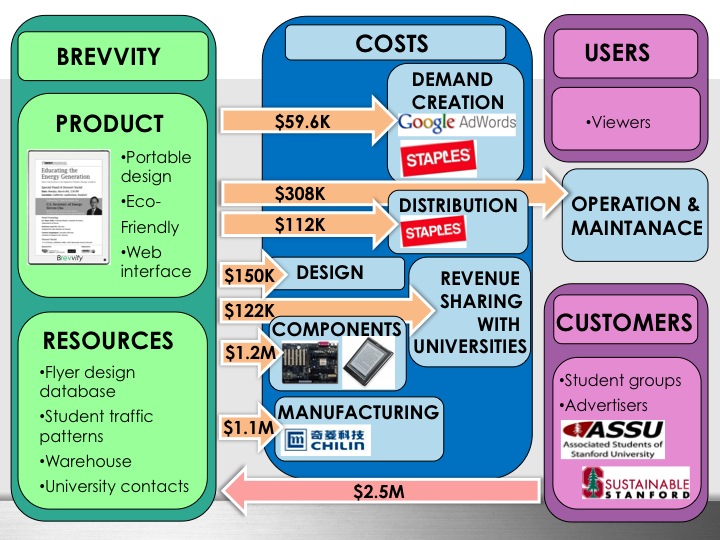
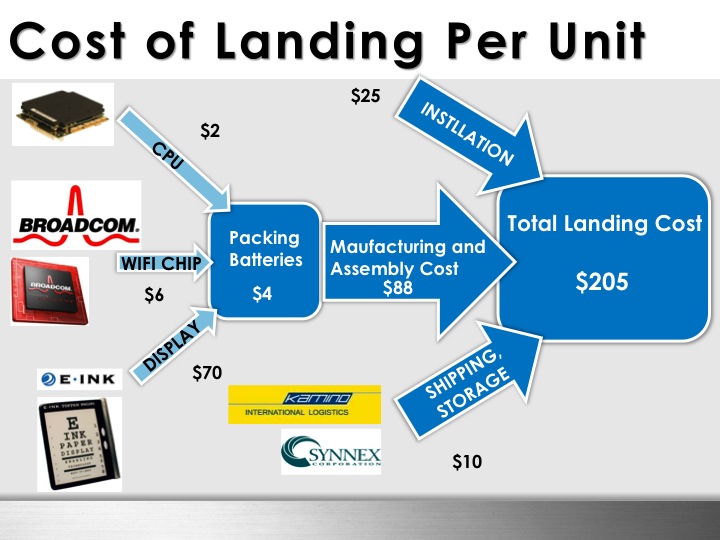
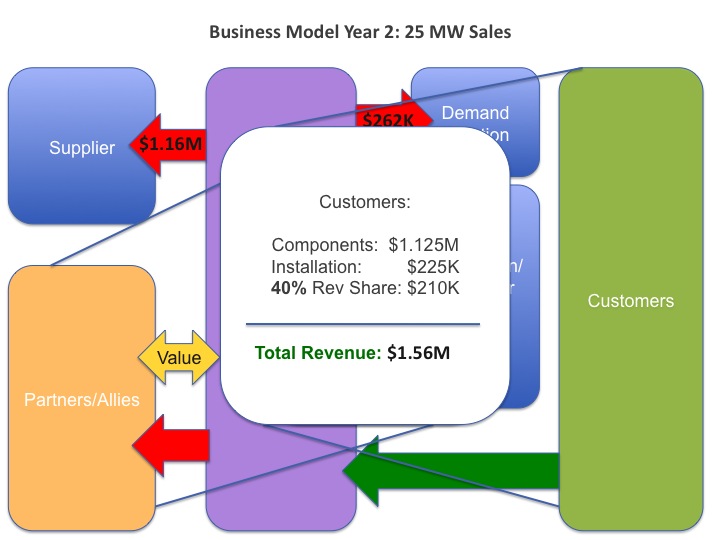
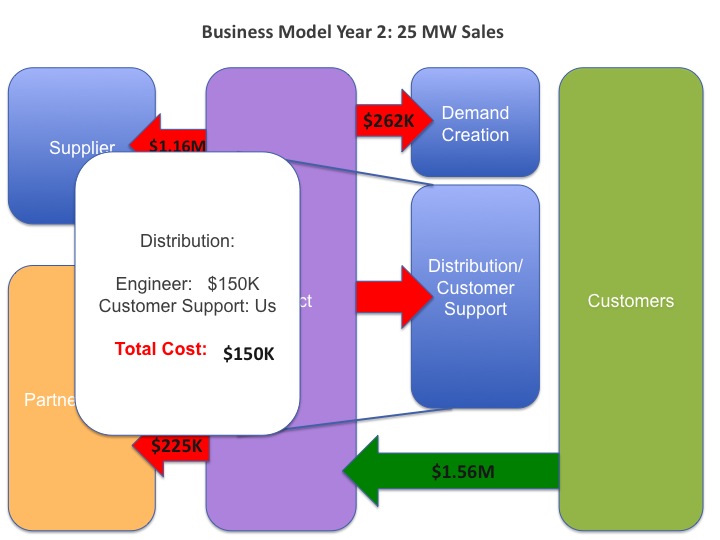
A business model describes how your company creates, delivers and captures value. It’s best understood as a diagram that shows all the flows between the different parts of your company. This includes how the product gets distributed to your customers and how money flows back into your company. And it shows your company’s cost structures, how each department interacts with the others and where your company can work with other companies or partners to implement your business.

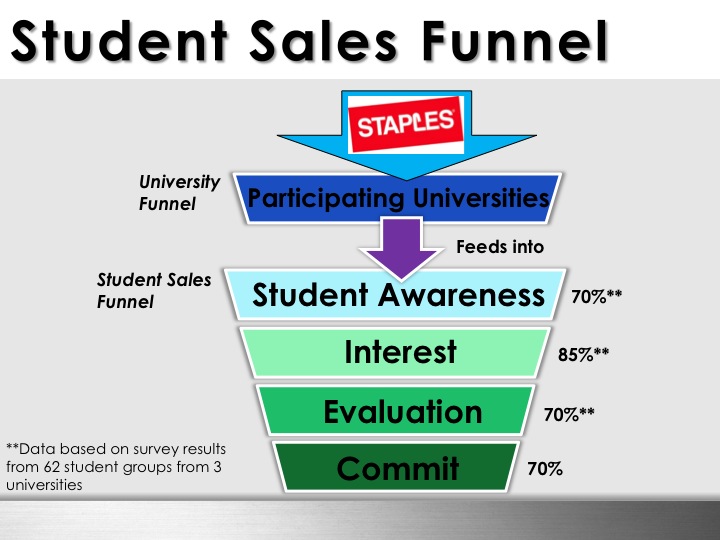
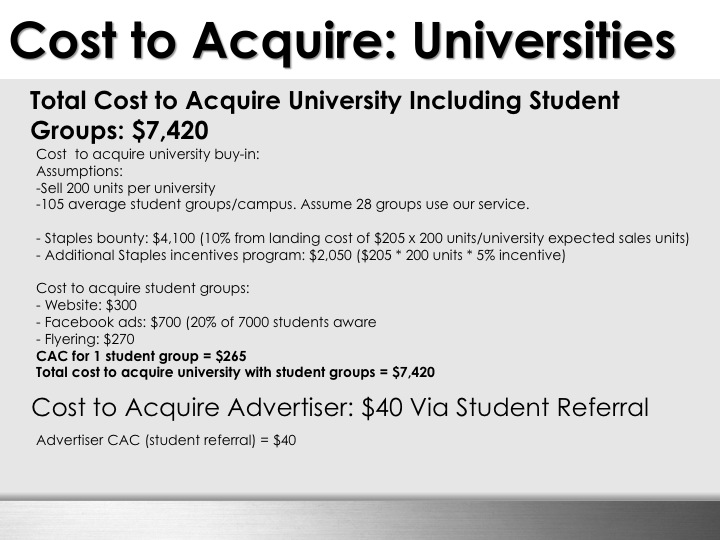
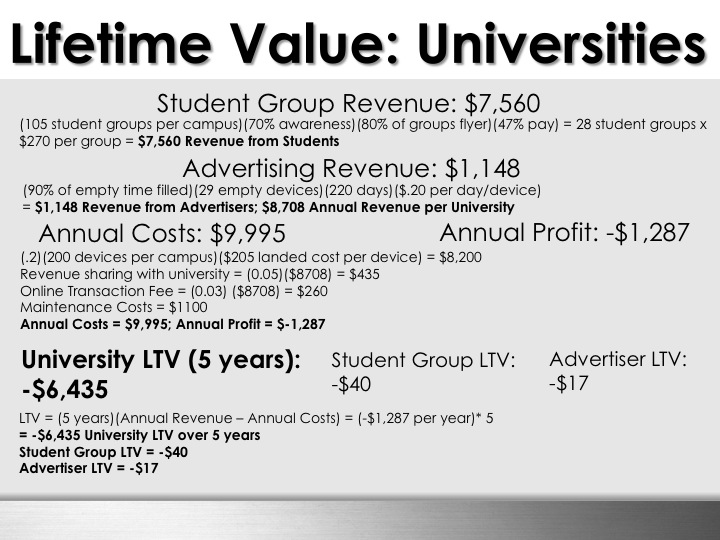
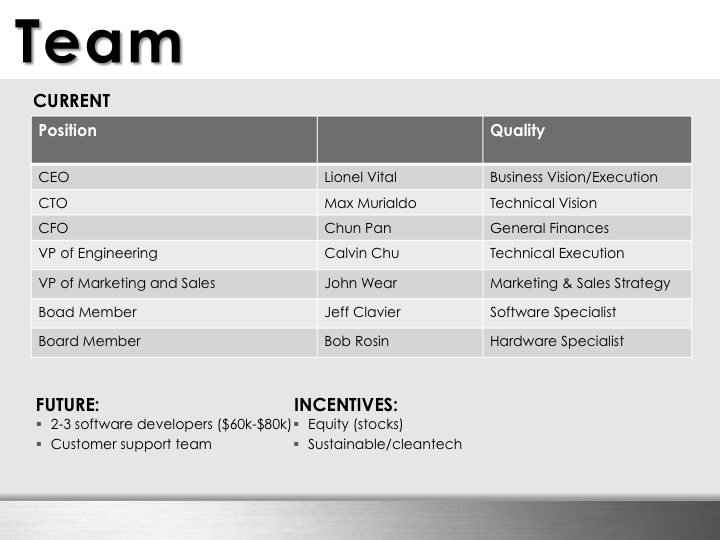
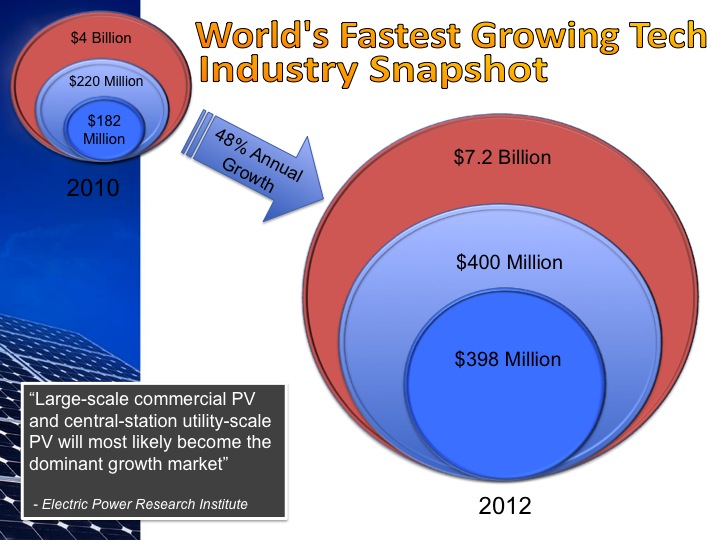
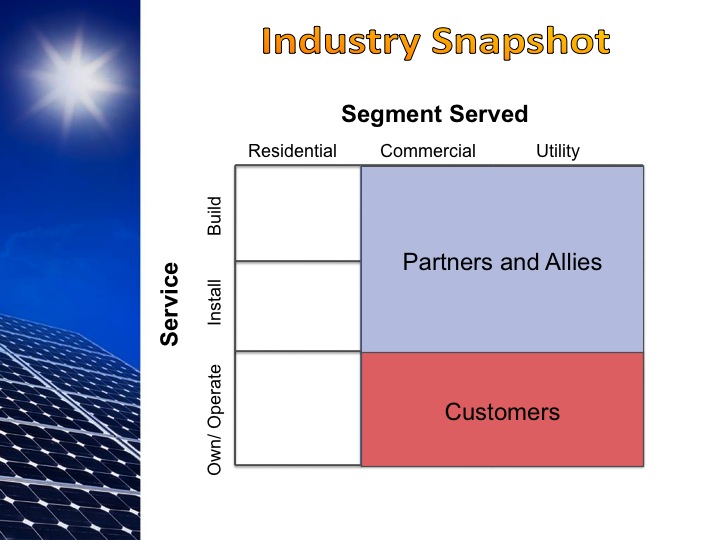
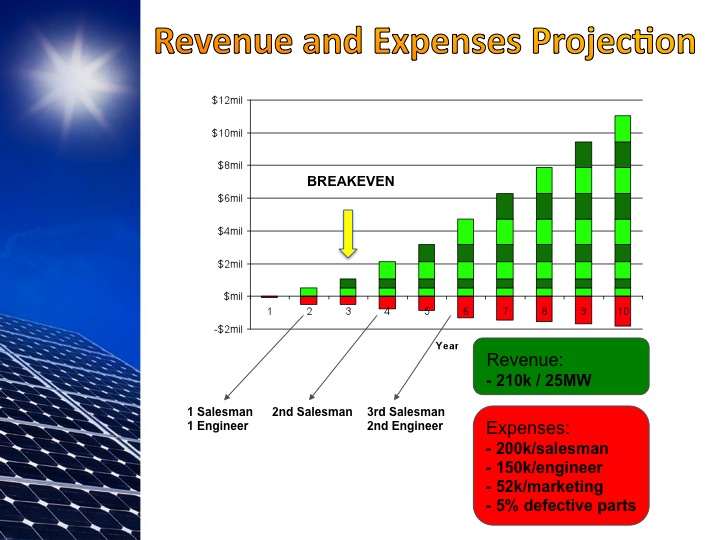
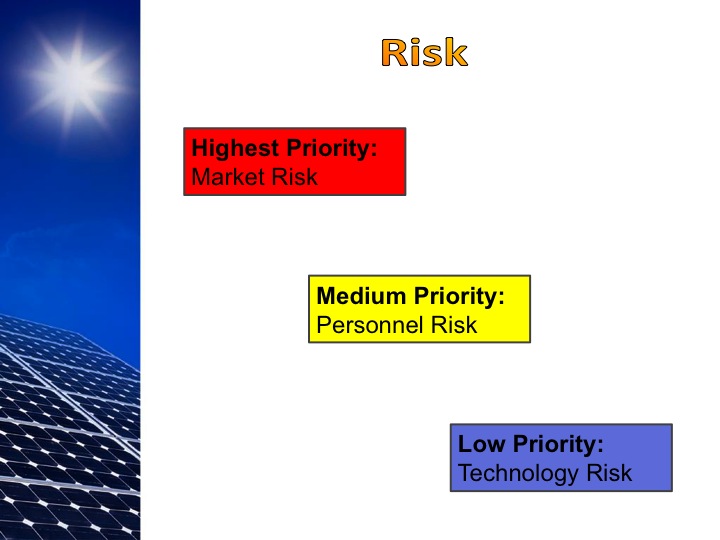
This team had spent their first two weeks laying out their hypotheses about sales, marketing, pricing, solution, competitors, etc. and put in their first-pass financial assumptions. It took just five PowerPoint slides to capture their assumptions and top line financials.

This team didn’t spend a lot of time justifying their assumptions because they knew facts would change their assumptions. Instead of writing a formal business plan they took their business model and got out of the building to gather feedback on their critical hypotheses (revenue model, pricing, sales, marketing, customer acquisition cost, etc.) They even mocked up their application and tested landing pages, keywords, customer acquisition cost and other critical assumptions. After three months they felt they had enough preliminary customer and user data to go back and write a PowerPoint presentation that summarized their findings.

This team had wanted to have coffee to chat about which of the four seed round offers they had received they should accept.

A plan is static, a model is dynamic
Entrepreneurs treat a business plan, once written as a final collection of facts. Once completed you don’t often hear about people rewriting their plan. Instead it is treated as the culmination of everything they know and believe.  It’s static.

In contrast, a business model is designed to be rapidly changed to reflect what you find outside the building in talking to customers.  It’s dynamic.

“So do you mean I should never have written a business plan?” asked the founder who had spent the time crafting the perfect plan. “On the contrary,” I said. “Business plans are quite useful. The writing exercise forces you to think through all parts of your business. Putting together the financial model forces you to think about how to build a profitable business. But you just discovered that as smart as you and your team are, there were no facts inside your apartment. Unless you have tested the assumptions in your business model first, outside the building, your business plan is just creative writing.

(Next post: Iterating the Business Model – The Pivot.)

Lessons Learned

  • A startup is an organization formed to search for a repeatable and scalable business model.
  • There are no facts inside your building, so get outside and get some.
  • Draw and test the Business Model first, the Business Plan then follows.
  • Few if any investors read your business plan to see if they’re interested in your business
  • They’re a lot more interested in what you learned

Add to FacebookAdd to DiggAdd to Del.icio.usAdd to StumbleuponAdd to RedditAdd to BlinklistAdd to TwitterAdd to TechnoratiAdd to Yahoo BuzzAdd to Newsvine

Teaching Entrepreneurship – Logistics

Back from a family humanitarian trip/vacation to one of the last bastions of Communism where “marketing” isn’t even a profession and entrepreneurship is a crime.  The irony is that the “Revolutionary Square” in all these Communist countries will be the the first place the McDonald’s go when the system collapses.

——————-

In my last post I described my approach to one of the three classes I teach at Stanford in the engineering school: Fundamentals of Technology Entrepreneurship.  The key things I want students to take from the class are:

  • Understand that a startup is a temporary organization designed to search for a profitable business model
  • Learn how to put together a business model, not a business plan
  • Understand that a business model is only a series of hypotheses that need to be validated outside the building

Class Logistics
As described in the previous post, this is a hands-on class. The 55 students formed 11 teams, and each team had to come up with an original idea, size the opportunity, propose a Business Model, get out of the building and test their hypotheses and analyze and explain each of the parts of their model.

The class wouldn’t have been possible without lots of hands other than mine.

Teaching Team
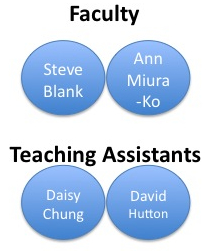
Having a teaching partner makes life a lot easier and the class improves. A partner allows me the flexibility to miss a session or two (my job as a California Coastal Commissioner meets three days every month up and down the coast of California.)  But the best benefit is bringing a second set of eyeballs to the curriculum which always makes it better.

This was the year I finally got the “business model versus business plan” concept nailed down. In previous classes I had experimented with moving away from the traditional focus on writing a business plan to a hands-on approach to building a business model.

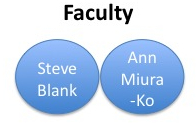
But it wasn’t until Ann Miura-Ko joined me as a teaching partner that this “teach the model not the plan” idea jelled. Ann who had been my Teaching Assistant while she had finished her PhD at Stanford felt the same frustration about teaching entrepreneurs to assemble a business plan that we knew in the real world wouldn’t survive first contact with customers. After Stanford, Ann joined Mike Maples’ Venture Capital firm Floodgate as a partner. Over the summer we had both been impressed with Alexander Osterwalder’s Business Model Template work. At first we thought of adopting his template for the class, but found that an even more simplified version of a canonical business model that Ann developed worked better.

Teaching Assistants
Teaching at both Stanford and Berkeley I get to see the difference between the resources in a private university and those of a state university. (For the first 5 years at Berkeley, I taught 60 students by myself with no teaching partner or teaching assistant.) As the Stanford entrepreneurship program for the engineering school sits in the Management Science and Engineering Department, most of our TA’s are students in the MS&E PhD program. For this class Daisy Chung and David Hutton were our Teaching Assistants (TA’s.) TA’s make managing 60 students working on cases and team projects manageable.

They set up and keep the class web site updated.  They provide logistical support for guest speakers. They answer enumerable emails about logistics as well as substantive questions about class content. In addition to Ann and my office hours, Daisy and David held their own office hours to provide student support.

Most importantly, while Ann I reviewed all the grades, the TA’s managed the logistics of grading: grading the homework (in this class the case study summaries) and the business model written summary, keeping track of class participation and rolling up all the grades from the formal presentation. And they gave us feedback after each class session letting us know if we were particularly incoherent and kept us abreast of the usual student and team dynamics/crisis.

Finally our TA’s managed the mentors we had supporting the students.

Mentors
One part of Silicon Valley culture that doesn’t get enough credit is the generosity of entrepreneurs and VC’s who are willing to share their time with students. Ann and I recruited VC’s and entrepreneurs to be mentors for each team. (We’ve never had a problem in getting help for these classes.) Typically we have a mix of new mentors and those who have volunteered their time before.)  I wrote a handbook for the mentors to explain their roles (here.)

Essentially mentors support and coach each team. They typically met once or twice in person with the team, help them network outside the building, answer emails, provide critiques, etc. On average, mentors spent about 6 to 8 hours of time over the quarter with students. Some even came into to class to cheer on their team for their final business model presentations.

Guest Speakers
Two important things I learned early on in teaching are: 1) regardless of how good you are, students get sick of hearing you drone on week after week, and 2) hearing a guest make a point you’ve been trying to get across often makes it stick.  So we tried to break up our lectures with guest speakers.

Ideally we attempt to match the guests with the case or class session subject. For example, when we taught the value of getting out of the building and agile development, we had Eric Ries talk about the Lean Startup. When we covered partnerships with the WebTV case, we had Spencer Tall who negotiated the deal with Sony for WebTV come in and explain to the class what really happened. (Ann also kept me in the 21st century by making sure we had several woman entrepreneurs as guest speakers.)

Results
In the last decade, entrepreneurship has become faddish, particularly in college. It’s now “cool” to be an entrepreneur, and every school wants some type of entrepreneurship course. While that’s gratifying, the fact is that most people are ill suited to survive in the wild as founders or early employees.

I taught this introductory undergraduate class without many compromises. If you want to know what being an entrepreneur is going to be like you didn’t get to sit in a classroom listening to lectures for a quarter and then write a business plan. (I also teach a less intense introduction class for engineers called the Spirit of Entrepreneurship and the Customer Development Class at Berkeley which I’ll describe in a future post.) I actually hoped that some students who were curious about entrepreneurship would discover that it is definitely not for them. Better to find it out in a classroom than as a career choice.

While that did happen to a few (some are still in shock that I “cold-call” in class, others can’t handle the team dynamics or complain that there is no “right” answer, or were disoriented that the mentors, professors and customers all had different answers) the class seems to have had the opposite effect on an interesting segment.

Sometimes you get emails like this at the end of class:

“Just want to say thank you for the “big ideas” you brought to us. Thanks to your class, I have been thinking thoroughly about my future career and have decided that I would become an entrepreneur rather than anything else. Actually I made up my mind just on my plane to my final round of interview with the Boston Consulting Group. I flew there and told the partner that I would become an entrepreneur instead.”

Oh, oh.

——–

Coming Soon
In the fall Ann and I are going to develop a new graduate-level class for Stanford that will take this one to the next level. Students will not only have to assemble a team, come up with the idea and leave the classroom to test the business model – they’ll need to come back with real customer orders.  (And if it’s a web-based product, they’ll have to build it.)

I wonder if we can fill the class.

———–

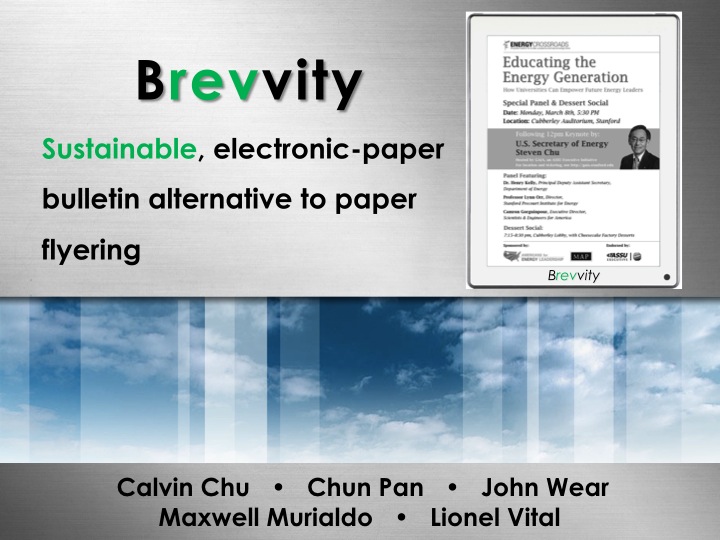
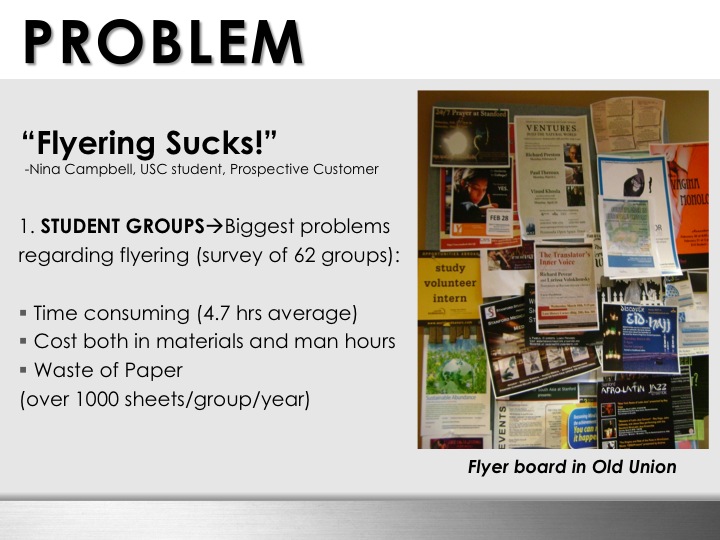
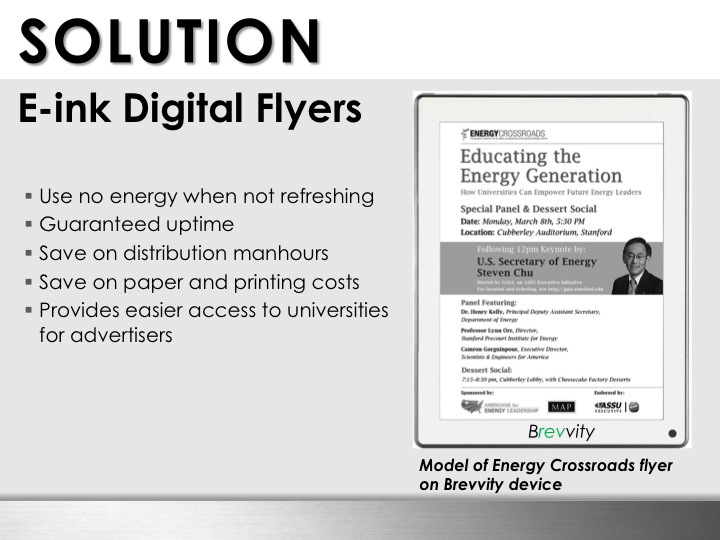
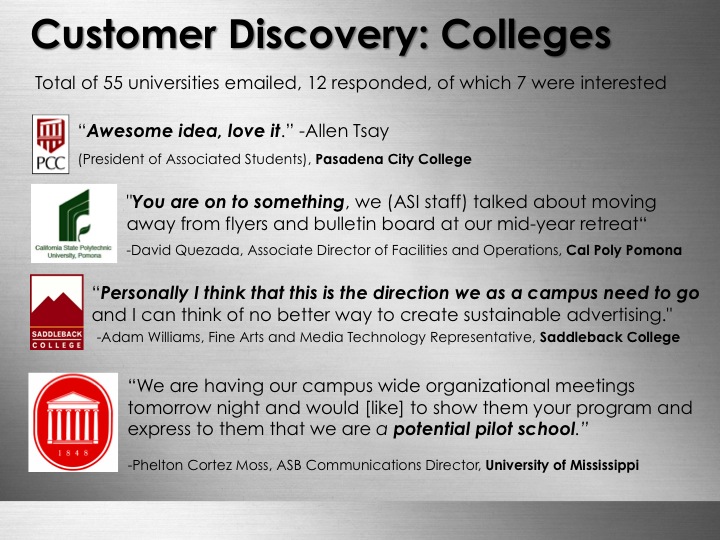
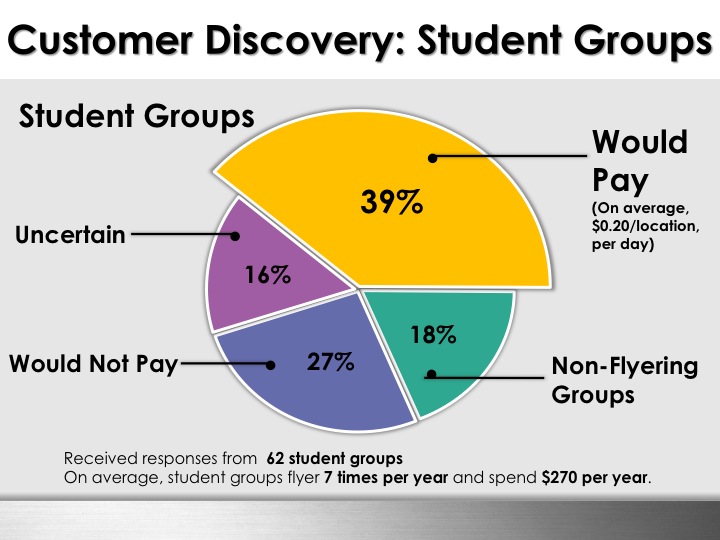
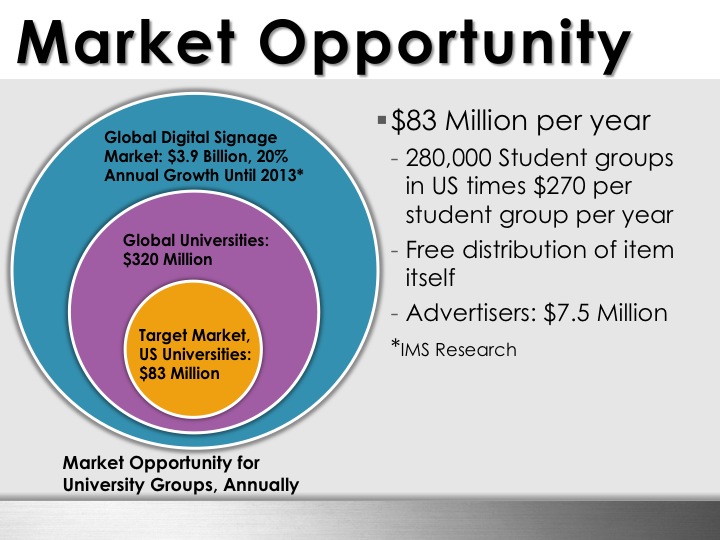
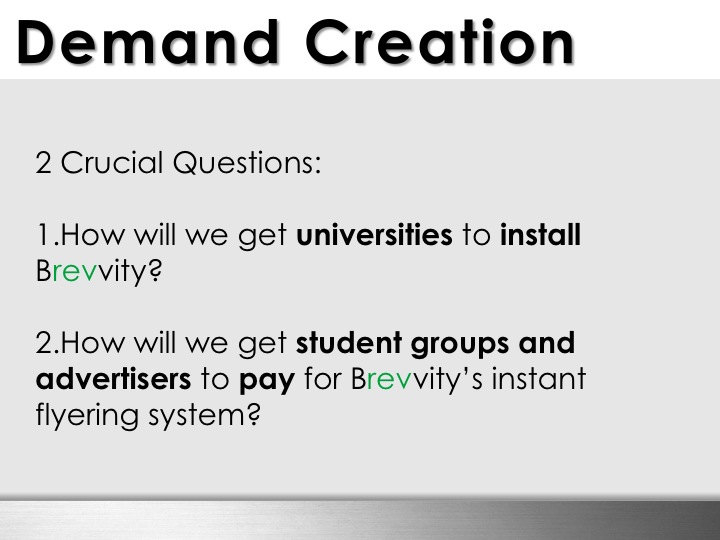
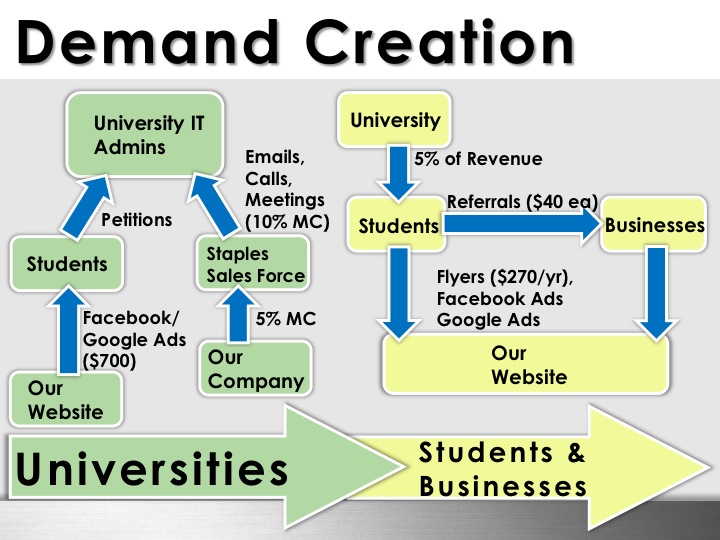
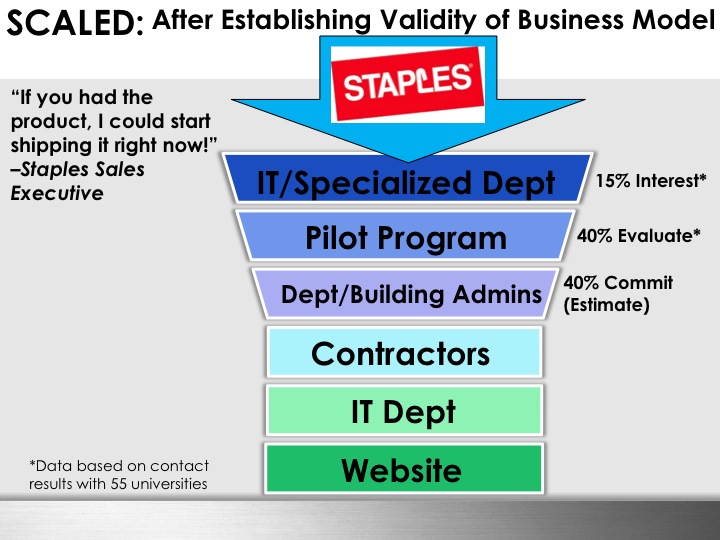
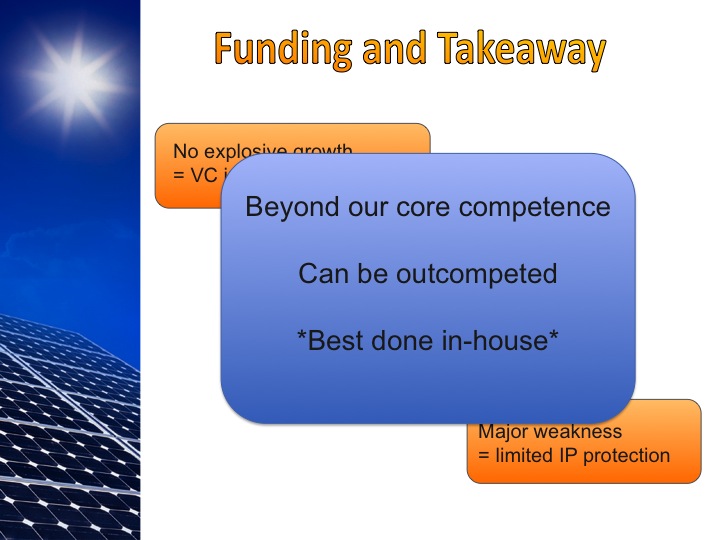
A few more of the final class presentations are here (click on the thumbnails to enlarge):

One last presentation here:


Add to FacebookAdd to DiggAdd to Del.icio.usAdd to StumbleuponAdd to RedditAdd to BlinklistAdd to TwitterAdd to TechnoratiAdd to Yahoo BuzzAdd to Newsvine

“Lessons Learned” – A New Type of Venture Capital Pitch

I joined the board of Cafepress.com when it was a startup. It was amazing to see the two founders, Fred Durham and Maheesh Jain, build a $100 million company from coffee cups and T-shirts.

But Cafepress’s most memorable moment was when the founders used a “Lessons Learned” VC pitch to raise their second round of funding and got an 8-digit term sheet that same afternoon.

Here’s how they did it.

Fail Fast and Cheap
Fred and Maheesh had started 9 previous companies in 6 years.  Their motto was: “Fail fast and cheap. And learn from it.” Cafepress literally started in their garage and was another set of experiments only this time it caught fire.  They couldn’t keep up with the orders.

Tell the Story of the Journey
The company got to a point where additional capital was needed to expand just to keep up with the business (a warehouse/shipping center collocated with UPS, etc.) Rather than a traditional VC pitch I suggested that they do something unconventional and tell the story of their journey in Customer Discovery and Validation.  The heart of the Cafepress presentation is the “Lessons Learned from our Customerssection. Their presentation looked like this:

  • Market/Opportunity
  • Lessons Learned Slide 1
  • Lessons Learned Slide 2
  • Lessons Learned Slide 3
  • Why We’re Here

Cafepress Sequioa Pitch-1Telling the Cafepress Customer Discovery and Customer Validation story allowed Fred and Maheesh to take the VC’s on their journey year by year.

Cafepress Sequioa Pitch-2After these slides, these VC’s recognized that this company had dramatically reduced risk and built a startup that was agile, resilient and customer-centric.

Cafepress Sequioa Pitch-3The presentation didn’t have a single word about Lean Startups or Customer Development. There was no proselytizing about any particular methodology, yet the results are compelling.

The VC firm delivered a term sheet for an 8-digit second round that afternoon.

Your results may vary.

Add to FacebookAdd to DiggAdd to Del.icio.usAdd to StumbleuponAdd to RedditAdd to BlinklistAdd to TwitterAdd to TechnoratiAdd to FurlAdd to Newsvine

Raising Money Using Customer Development

Getting “funded” is the holy grail for most entrepreneurs. Unfortunately in early stage startups the drive for financing hijacks the corporate DNA and becomes the raison d’etre of the company. Chasing funding versus chasing customers and a repeatable and scalable business model, is one reason startups fail.

This post describes how companies using the Customer Development model can increase their credibility, valuation and probability of getting a first round of funding by presenting their results in a “Lesson Learned” venture pitch.

It should go without saying that this post is not advice, nor is it recommendation of what you should do, it’s simply my observation of how companies using Customer Development positioned themselves to successfully raise money from venture investors.

Product Development – Getting Funded as The Goal
In a traditional product development model, entrepreneurs come up with an idea or concept, write a business plan and try to get funding to bring that idea to fruition. The goal of their startup in this stage becomes “getting funded.” Entrepreneurs put together their funding presentation by extracting the key ideas from their business plan, putting them on PowerPoint/Keynote and pitching the company – until they get funded or exhausted.

Fund Raising.jpg

What are Early Stage VC’s Really Asking?
When you are presenting to a VC there are two conversations going on – the one you are presenting and the one that investors are thinking as they are listening to your presentation. (If they’re not busy looking at their Blackberry’s/iPhone’s.)

A VC listening to your presentation is thinking, “Are you going to blow my initial investment, or are you going to make me a ton of money? Are there customers for what you are building? How many are there?  Now?  Later?” Is there a profitable business model? Can it scale?”  And finally, “Is this a team that can build this company?”

The Traditional VC Pitch
Entrepreneurs who pursue the traditional product development model don’t have customer data to answer these questions. Knowing this venture firms have come up with a canonical checklist of what they would like to see.  A typical pitch to a venture firm might cover:

  • Technology/Product
  • Team
  • Opportunity/Market
  • Customer Problem
  • Business Model
  • Go to Market Strategy
  • Financials

Given that the traditional pitch has no hard customer metrics, (and VC’s don’t demand them,) you get funded on the basis of intangibles that vary from firm to firm: Do you fit the theme or thesis of the venture firm? Did the VC’s like your team? Do they believe you have a big enough vision and market. Did the partner have a good or bad day, etc.  Tons of advice is available on how to pitch, present and market your company.

I believe all this advice is wrong. It’s akin to putting lipstick on a pig.  The problem isn’t your pitch, it’s your fundamental assumption that you can/should get funded without having real customer and product feedback. No amount of learning how to get a VC meeting or improving your VC demo skills will fix the lack of concrete customer data. You might as well bring your lucky rabbits foot to the VC meeting.

Customer Development – Getting Funded After You Find a Repeatable Model
In contrast, if you are following a Customer Development process you have a greater chance of getting listened to, believed and funded.

Just as a refresher.  The first step in Customer Development was Customer Discovery; extracting hypotheses from the business plan and getting the founders out of the building to test the hypotheses in front of customers. Your goal was to preserve your cashwhile you turned these guesses into facts and searched for a repeatable and scalable sales model. Your proof that you have a business rather than a hobby comes from customer orders or users for your buggy, unfinished product with a minimum feature set.

If you’re following Customer Development you are now raising money because even with this first rev of the product you think you’ve found product/market fit and you want to scale.

Customer Development Fund Raising

What VC’s Really Want But Don’t Know How to Ask For or Get
Mike Maples at Maples Investments observes that the quality of pitches from entrepreneurs get better as you climb the “Hierarchy of Proof.”

  1. On the bottom, and least convincing are statements about your “idea.”
  2. Next are hypothesis – “I think customers will care about x or y “
  3. Better are facts from customers – “We interviewed 30 customers with 20 questions”
  4. Even better is “Customer Validation”– “We just got $50K from a customer” or “we got 100,000 users spending x minutes on our site”
  5. Finally if you’re ever so lucky – “Everyone’s buying in droves and we’re here because we need money to scale and execute”

If you’ve actually been doing Customer Development at a minimum you’re at step 3 or 4.  If not, you don’t have enough data for a VC presentation.  Get out of the building, get some more customer feedback, spin your product and go back and read the book.

“Lessons Learned” – A New Type of VC Pitch
A Customer Development fundraising presentation tells the story of your journey in Customer Discovery and Validation.  While your presentation will cover some of the same ground as the traditional VC pitch, the heart of the presentation is the “Lessons Learned from our Customerssection. The overall presentation looks something like this:

  • Market/Opportunity
  • Team
  • Lessons Learned Slide 1
  • Lessons Learned Slide 2
  • Lessons Learned Slide 3
  • Why We’re Here
IMVU's Original VC Presentation - Will Harvey & Eric Ries

IMVU’s Original VC Presentation – Will Harvey & Eric Ries

Here’s What We Thought, What We Did, What We Learned
Notice that each of the “Lessons Learned” slide has three major subheads and a graph:

  • “Here’s What We Thought.”
  • “Here’s What We Did.”
  • Here’s What Happened.”
  • A Progress Graph

Here’s What We Thought is you describing your initial set of hypotheses. Here’s What We Did allows you to talk about building the first-pass of the products minimum feature set. Here’s What Happened is the not so surprising story of why customers didn’t react the way you thought they would. A Progress Graph on the right visually shows how far you’ve come (in whatever units of goodness you’re tracking – revenue, units, users, etc.)

Telling the Customer Discovery and Customer Validation story this way allows you to take VC’s on your journey through all the learning and discovery you’ve done. After three of these slides, smart VC’s will recognize that by iterating on your assumptions you have dramatically reduced risk– on your nickel, not theirs.  They will realize that you have built a startup that’s agile, resilient and customer-centric.

Your presentation doesn’t have a single word about Lean Startups or Customer Development. There is no proselytizing about any particular methodology, yet the results are compelling.

This is a radical departure from a traditional VC pitch. It will blow the minds of 70-80% of investors.  The others will throw you out of their office.

Guaranteed Funding – Not
Will this type of presentation guarantee you funding? Of course not. Even if you have the worlds best Lessons Learned slides you might find out that your particular market (i.e. consumer Internet) might have a really, really high bar of achievement for funding.

In fact, just trying to put three Lessons Learned slides together showing tangible progress will make most startups realize how hard really doing Customer Development is.

Try it.

Add to FacebookAdd to DiggAdd to Del.icio.usAdd to StumbleuponAdd to RedditAdd to BlinklistAdd to TwitterAdd to TechnoratiAdd to FurlAdd to Newsvine